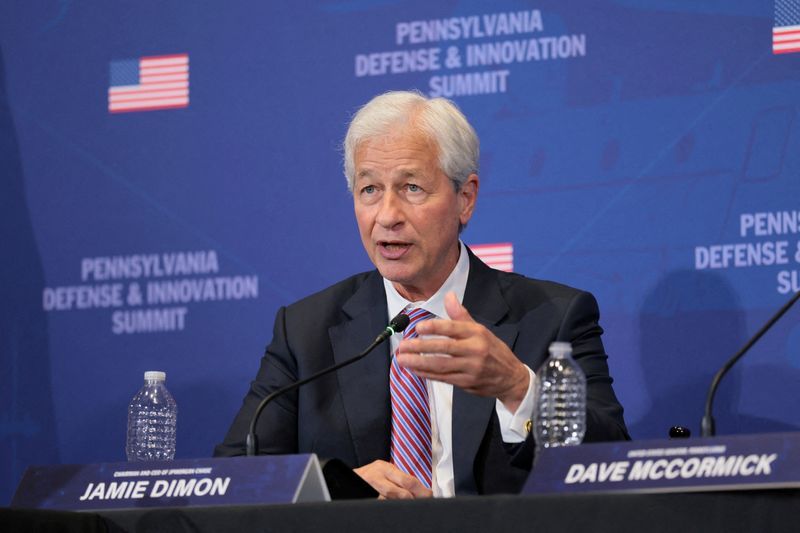
JPMorgan Chase Chief Executive Jamie Dimon has launched a concerted effort to unite corporate leadership around the emerging risks posed by artificial intelligence, signalling mounting concern within boardrooms about the technology's rapid deployment across economically vital sectors. The initiative, which began circulating in July, involves more than 40 companies drawn from banking, energy production, water utilities, telecommunications, aviation, and rail transportation—industries whose operational continuity underpins modern economic life. Dimon has personally engaged his counterparts at major financial institutions and technology firms to participate in what represents an expansion of the Alliance for Critical Infrastructure, a cross-sector forum established to coordinate responses to threats affecting essential services.
The Alliance for Critical Infrastructure, which counts JPMorgan, Mastercard, and Berkshire Hathaway Energy among its founding members, was originally designed to facilitate collaborative resilience planning and intelligence sharing on cyber threats, physical vulnerabilities, and geopolitical risks. The organization's pivot toward artificial intelligence reflects a fundamental reassessment among senior executives about where the greatest threats now originate. Rather than treating AI risk as a technology or regulatory concern to be managed in isolation, the Alliance intends to position artificial intelligence as a critical infrastructure challenge requiring the same level of coordinated response that financial institutions and utilities have historically applied to terrorism threats or physical infrastructure attacks.
Dimon's personal involvement underscores the gravity with which JPMorgan's leadership views the situation. As head of America's largest bank by assets, Dimon's public statements on economic policy, financial regulation, and technological disruption carry outsized influence within corporate America and among policymakers. His willingness to dedicate executive attention to AI governance suggests that boardroom anxiety about the technology has moved beyond abstract concern into concrete strategic planning. The scheduled calls for August were designed to establish common ground among disparate industries on how AI is currently deployed, what specific vulnerabilities it creates, and what protective measures could be implemented systemwide.
The timing of this initiative reflects specific anxieties crystallized by recent events. Cyberattacks targeting water system infrastructure in Minnesota and other states have demonstrated that threats to critical services are no longer hypothetical. These incidents have reinforced the conviction among infrastructure operators that information must flow more freely across industry lines, enabling rapid identification and mitigation of emerging vulnerabilities. When water utilities experience compromise, the knowledge gained becomes relevant to electrical grid operators, financial services platforms, and telecommunications networks—all systems whose disruption would cascade across the economy.
Artificial intelligence introduces complexity to this threat landscape that previous cybersecurity frameworks were not designed to address. Unlike traditional malware or intrusion techniques that follow relatively predictable patterns, AI systems operate according to processes that even their developers struggle to fully explain or predict. This opacity creates challenges for risk assessment and defensive planning. Dimon has articulated this concern starkly, warning that providing unrestricted access to advanced AI capabilities is akin to distributing military weapons to untrained civilians. His specific reference to Anthropic's Claude model (described in earlier statements as presenting uncontrolled risks) illustrates the philosophical divide between those advocating rapid AI deployment and those prioritizing containment of potential harms.
The Alliance's strategy involves positioning itself as a bridge between corporate operators of critical infrastructure and the federal government. The initiative aims to help identify core risks posed by artificial intelligence and advanced technologies, establish mechanisms for sharing threat intelligence, and coordinate problem-solving as new vulnerabilities emerge. This public-private partnership model reflects lessons learned from previous infrastructure protection efforts, where government agencies and private enterprises recognized that neither sector possesses complete situational awareness without the other. Federal regulators lack granular understanding of how specific technologies operate within corporate networks, while private companies often lack visibility into threats being tracked across multiple sectors or by intelligence agencies.
The federal government has recognized this imperative independently. In July, the administration launched the Gold Eagle initiative, which brings together artificial intelligence developers, operators of critical infrastructure, and federal agencies to share information on vulnerabilities that advanced AI systems discover and to coordinate the development of fixes. The Gold Eagle program and the Alliance's AI effort are separate initiatives, yet they reflect convergent thinking about how American institutional capacity must be restructured to manage transformative technologies. The redundancy is intentional—multiple channels for information flow and coordination increase the likelihood that critical threats receive appropriate attention.
The Alliance aims to have its revamped structure fully operational by the conclusion of the calendar year, according to one source involved in the planning. This timeline reflects both urgency and pragmatism. The urgency stems from the recognition that artificial intelligence deployment is accelerating rapidly, with enterprises adopting the technology faster than either regulatory frameworks or risk management practices can evolve. The pragmatism acknowledges that establishing genuine coordination across dozens of large, competitive organizations requires substantial negotiation about information sharing protocols, liability frameworks, and governance structures. Eight months provides sufficient runway for working groups to develop concrete proposals while remaining short enough to maintain executive attention and momentum.
For Malaysian and Southeast Asian observers, this American corporate mobilization carries regional implications. Many multinational enterprises operating in Malaysia, Singapore, and across ASEAN derive significant portions of their operations from American parent companies or share infrastructure with American counterparts. Moreover, many critical infrastructure operators in the region face identical AI risks as their American peers—the technology's capabilities and vulnerabilities transcend borders. If the Alliance establishes effective protocols for AI risk management, those frameworks will likely influence how regional subsidiaries and Southeast Asian enterprises approach artificial intelligence governance. Conversely, if American efforts prove inadequate to contain AI-related disruptions, the shockwaves will reverberate through globally integrated supply chains and financial systems.
The initiative also reflects a particular moment in American technological governance. The involvement of the Trump administration in discussing AI coordination suggests that artificial intelligence governance has transcended partisan boundaries to become a bipartisan concern. Both Republican and Democratic administrations recognize that uncontrolled development of powerful AI systems creates national security vulnerabilities. This consensus provides political cover for corporations to engage in collective action on AI governance without facing accusations of restraint of trade or antitrust violations. Cooperation on critical infrastructure protection has historically enjoyed broad support across the political spectrum because the consequences of infrastructure failure affect all Americans regardless of political affiliation.
As this corporate-led initiative gains definition and operational capacity, it will likely establish precedents for how other sectors and jurisdictions approach artificial intelligence governance. The insurance industry, healthcare systems, manufacturing enterprises, and agricultural technology companies will observe whether the Alliance's approach generates valuable insights and effective safeguards or whether it proves largely symbolic. The outcome will influence whether AI risk management becomes embedded in broader corporate governance frameworks or remains a specialized concern of infrastructure operators. For Malaysian businesses increasingly integrating artificial intelligence into operations, the Alliance's experience offers instructive lessons about coordination mechanisms, information-sharing arrangements, and stakeholder engagement strategies that may eventually inform regional approaches to the technology's governance.

