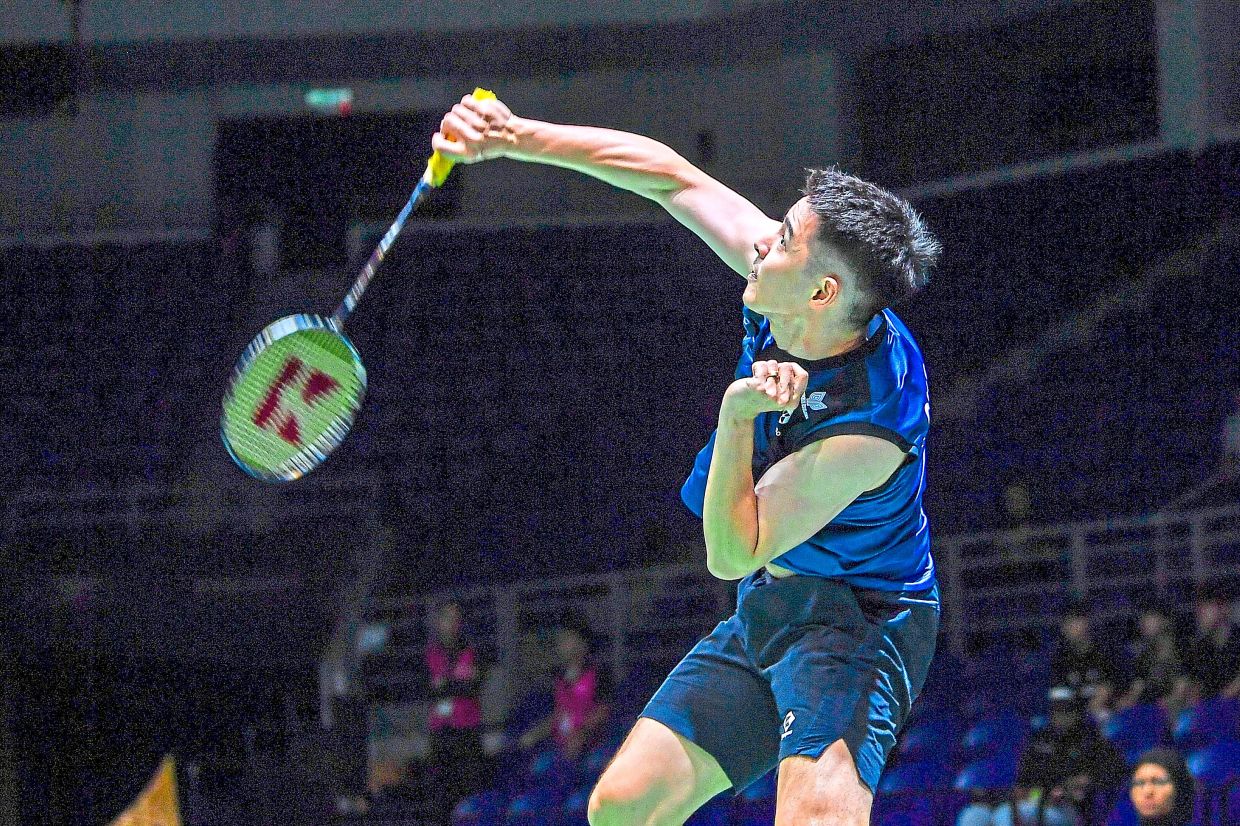
Cheam June Wei's remarkable ascent through the Korean Masters bracket continued on Friday when the independent Malaysian shuttler dispatched Taiwan's Su Li-yang in a competitive quarter-final clash at the Asan Yi Sun-sin Gymnasium in Petaling Jaya. The encounter, played on August 7, showcased June Wei's capacity to maintain composure in high-pressure moments, as he sealed a 23-21, 10-21, 21-18 victory to advance into the semifinals of the prestigious badminton tournament.
What makes June Wei's progression particularly noteworthy is the calibre of opposition he has consistently overcome. Entering the quarter-finals, the 29-year-old had already dispatched Jason Teh, a player ranked 29th in the world, in the opening round before navigating past China's Dong Tianyao, who carries a world ranking of 49th, in the subsequent stage. Each victory has come against seeded or highly-ranked competitors, suggesting that June Wei's surge is built on substance rather than fortunate draws.
The third-round encounter against Su Li-yang proved to be a test of mental fortitude as much as technical prowess. After claiming the opening set with a narrow 23-21 margin, June Wei experienced a significant momentum swing in the second set, losing decisively 10-21. Rather than allowing this reversal to undermine his confidence, he regrouped and dominated the decisive third set, prevailing 21-18 to secure his semifinal berth. This capacity to recover from setbacks is a hallmark of tournament-seasoned competitors.
Post-match, June Wei reflected on his unexpected depth of run with refreshing honesty, admitting that reaching the semifinals surpassed his initial expectations. Nevertheless, his remarks highlighted an approach centred on psychological and tactical engagement rather than outcome-focused anxiety. By concentrating exclusively on individual rallies and maintaining point-by-point focus, he has managed to compartmentalise the magnitude of the occasion—a discipline that separates consistent performers from occasional escapers.
Beyond June Wei's individual success, Malaysian badminton demonstrated mixed fortunes across multiple categories at the Korean Masters. The men's doubles combination of Man Wei Chong and Soh Wooi Yik advanced to the semifinals with a commanding performance, dismantling India's Krishna Prasad Garaga and Pruthvi Krishnamurthy Roy with a dominant 21-7, 21-8 scoreline that suggested technical and positional superiority throughout their quarter-final encounter.
The men's doubles field also featured an all-Malaysian quarter-final between two emerging partnerships. Tee Kai Wun and Yap Roy King emerged victorious against compatriots Aaron Chia and Aaron Tai, winning convincingly 21-12, 21-15. Such domestic clashes, whilst disappointing for one pairing, generally reflect the strength and competitive depth of Malaysian badminton development at intermediate levels.
Conversely, Malaysia's mixed doubles contingent experienced collective disappointment, with all three pairs bowing out at the quarter-final stage. Jimmy Wong and Cheng Su Yin fell to South Korea's second seeds Kim Jae-hyeon and Jang Ha-jeong, conceding consecutive sets 17-21 and 18-21. The pair failed to impose their rhythm or string together sustained pressure against opponents ranked considerably higher in the world standings.
A second Malaysian mixed doubles entry, comprising Loo Bing Kun and Noraqilah Maisarah Ramdan, similarly exited the tournament after encountering China's third-seeded pairing of Gao Jiaxuan and Wu Mengying. The 14-21, 15-21 defeat suggested that the Malaysian duo struggled to generate offensive opportunities or disrupt their opponents' established patterns of play throughout the match duration.
Meanwhile, Chen Tang Jie and Clarissa San rounded out the Malaysian mixed doubles exits, losing narrowly to Japan's Haruki Kawabe and Kokona Ishikawa in a fixture that went to the wire. The scorelines of 20-22 and 17-21 indicate that this pairing mounted genuine competitive resistance, yet ultimately lacked the decisive moments or marginal technical advantages needed to progress.
The contrasting outcomes across Malaysia's badminton entries at the Korean Masters illuminate ongoing development patterns within the sport domestically. Whereas men's singles and men's doubles have generated players capable of testing seeded international opposition, the mixed doubles category appears to face more structural challenges in generating competitive depth at elite levels. Future analysis of training methodologies, partnership formation protocols, and international exposure pathways may prove instructive for national federation strategists.
For June Wei specifically, his Korean Masters semifinal appearance represents a significant career milestone. As an independent athlete operating without formal federation backing, navigating international tournaments whilst managing financial and logistical constraints presents formidable obstacles that funded, officially-supported players routinely sidestep. His progression therefore carries resonance beyond mere tournament results, highlighting individual determination and resilience within Malaysia's broader badminton ecosystem. Whether he can sustain this momentum through the semifinal stage remains uncertain, but his quarter-final display demonstrated the technical consistency and mental composure necessary for championship contention.

