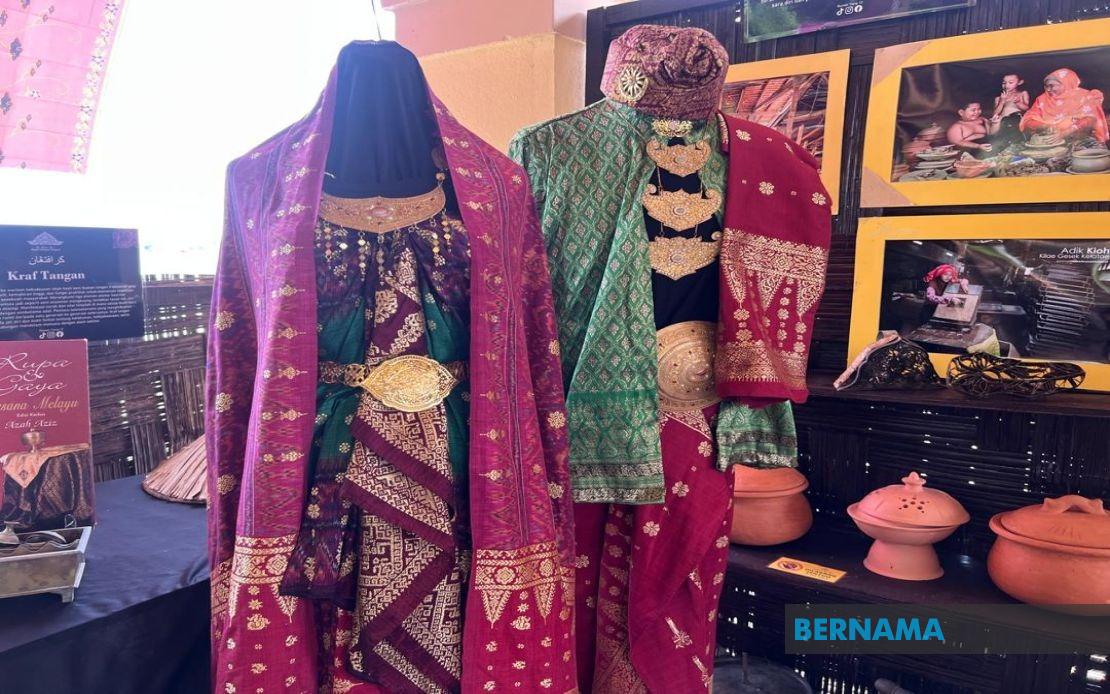
A centuries-old Malaysian textile craft stands at a critical juncture as the number of skilled practitioners dwindles to dangerous levels. Kain Lima, a sophisticated hand-woven fabric once reserved for royalty and the elite, now faces the genuine possibility of disappearing entirely from Malaysia's cultural landscape unless urgent action is taken to revive interest and train new artisans. The warning comes from heritage experts highlighting the textile's precarious position at a time when younger generations increasingly pursue other professions, leaving the intricate knowledge of Kain Lima production in the hands of a dwindling circle of elderly weavers.
The technical distinctiveness of Kain Lima sets it apart dramatically from other traditional Malaysian textiles like songket. Rather than relying primarily on gold or silver threads woven into the fabric, Kain Lima employs a labour-intensive technique involving the careful tying and dyeing of individual threads before they are woven together. This process, called tie-dye or batik-influenced threading, creates extraordinarily fine motifs and produces a distinctive colour-reflection effect that catches light in ways ordinary fabrics cannot match. According to Nik Mohd Murdani Nik Hassan, caretaker of Galeri Rumah Tiang 12 in Kelantan, the distinguishing characteristics extend beyond mere appearance. Those trained in textile heritage can recognize Kain Lima through its patterns, the underlying structure of the weave itself, and the specific materials employed throughout the production process.
The production demands placed on weavers explain why Kain Lima commands premium prices in today's market. Creating a single piece requires extraordinary precision and patience, with each decorative motif needing meticulous arrangement using multiple coloured threads before the actual weaving commences. This preparatory work alone can consume weeks, and the subsequent weaving phase demands constant concentration to ensure consistency and quality. Consequently, finished pieces sell for between RM3,000 and over RM4,000, with prices varying according to factors including the fabric's age, the complexity of its motifs, overall condition, and the fineness of the weaving work. These prices reflect what collectors and connoisseurs are willing to pay for pieces representing hundreds of hours of skilled labour.
Historically, Kain Lima occupied an exalted position within Malay society, functioning as a symbol of wealth, status, and refinement. Members of the royal courts and upper nobility favoured the textile for crafting formal sarongs, ceremonial shawls, and special occasion garments that conveyed their elevated position. The rarity of the fabric itself became part of its cultural significance; owning Kain Lima announced that one possessed not merely financial resources but also sophisticated taste and connection to the highest levels of society. This historical prestige, however, has not translated into contemporary demand sufficient to sustain the craft through market forces alone.
Recognizing the urgent need to preserve and rehabilitate Kain Lima's standing, cultural institutions have begun mounting exhibitions and educational initiatives aimed at reintroducing the textile to modern audiences. Galeri Rumah Tiang 12, where Nik Mohd Murdani has worked since 2020, now displays collections of Kain Lima sourced from private collectors throughout the region. These exhibitions serve dual purposes: they allow visitors to observe directly the differences separating Kain Lima from superficially similar textiles, and they document examples of the craft while living memory of its production remains accessible. The gallery functions as a bridge between Malaysia's textile heritage and contemporary society, attempting to foster renewed appreciation for the technical mastery and artistic vision embedded in each piece.
For visitors like Nur Anira Akmal Che Abdul Aziz, a 34-year-old handicraft maker from Pasir Mas, such exhibitions provide crucial inspiration and knowledge transfer. She explained that observing the forms, motifs, and production methodologies of traditional textiles directly influences her own creative work, pushing her toward innovation while remaining grounded in local heritage. Each exhibition visit supplies her with fresh ideas for improving her craftwork and deepens her understanding of why preserving these traditions matters. Her experience illustrates how heritage initiatives can create cascading benefits, sparking interest among younger creative practitioners who might otherwise remain disconnected from traditional techniques.
The broader context for Kain Lima's decline involves structural changes in Malaysia's economy and society. Rural communities where weaving once provided reliable income have experienced labour migration toward urban centres and manufacturing employment offering steadier wages and more predictable work schedules. The artisanal textile sector cannot compete with factory production on speed or cost, making it increasingly difficult for traditional weavers to sustain themselves economically. Young people growing up in weaving communities often receive education encouraging them toward different career paths, perceiving textile work as old-fashioned or unrewarding. Without deliberate intervention to make weaving economically viable and culturally valued, demographic trends virtually guarantee continued erosion of the practitioner base.
The implications of losing Kain Lima extend beyond economic or even cultural dimensions. The textile represents accumulated knowledge—techniques refined across generations, aesthetic principles embedded in colour and pattern choices, and problem-solving approaches developed through centuries of practice. Once this knowledge disappears with the last practitioners, recovering it becomes extraordinarily difficult, even with extensive documentation. The loss also diminishes Malaysia's distinctive cultural identity in an increasingly homogenized global marketplace, reducing the nation's ability to offer distinctive products and experiences that reflect its particular heritage.
Efforts to arrest Kain Lima's decline must address multiple interconnected challenges simultaneously. Economic sustainability requires developing viable market channels, potentially through premium positioning that emphasizes authenticity and craftsmanship. Educational initiatives must introduce young people to weaving not merely as historical curiosity but as viable creative and economic pursuit. Government support through grants, training programs, and preferential procurement policies could signal that heritage textile production remains nationally valued. Regional collaboration with other Southeast Asian nations preserving similar textile traditions might generate shared learning and larger market opportunities through cultural tourism.
The current moment represents perhaps the last realistic window for effective intervention. Another decade of inaction could reduce the practitioner community to levels from which recovery becomes impossible, as knowledge holders retire or pass away without training successors. Malaysia's decision regarding Kain Lima—whether to treat it as disposable heritage artifact or as living tradition worthy of active support—will reverberate through the nation's relationship with its cultural legacy more broadly.

