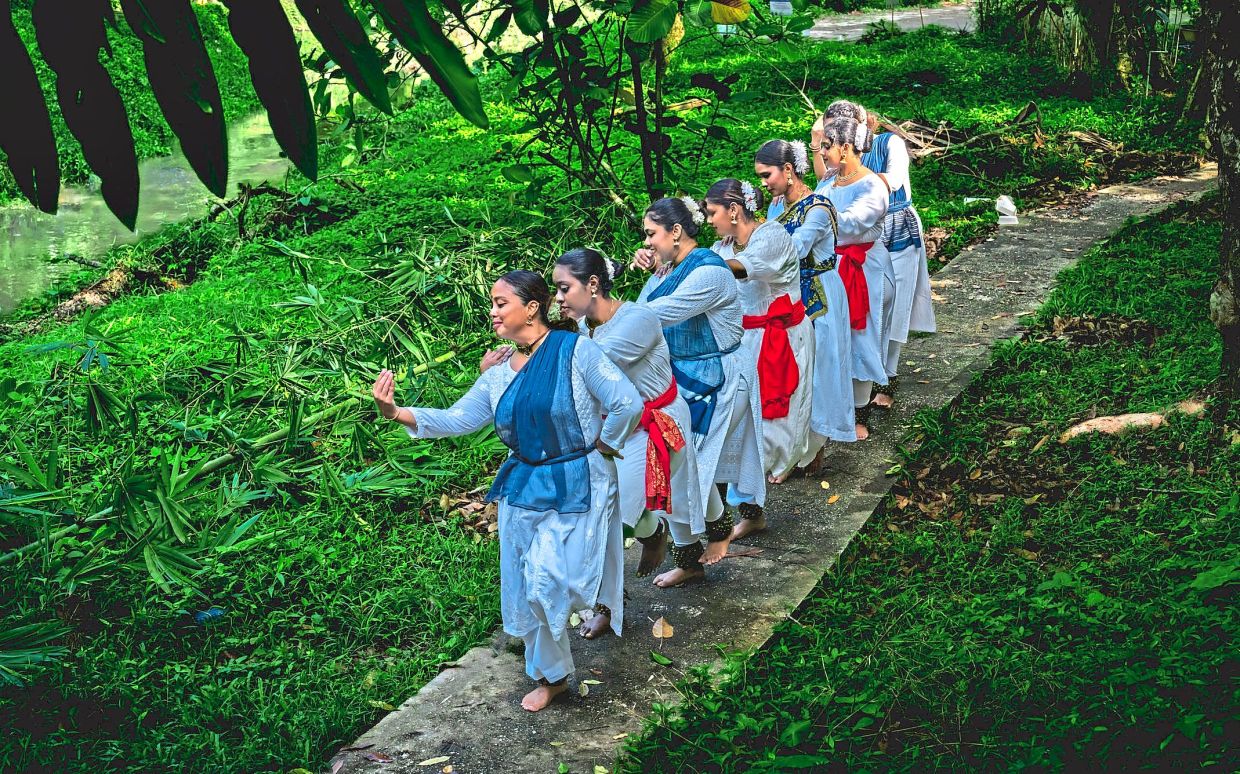
Three decades of artistic survival and constant creative transformation will be honoured when Kalpana Dance Theatre (KDT), the Kuala Lumpur-based company, stages a major bharatanatyam concert this August. Much like the rivers that inspire the production's central narrative, the company has navigated the unpredictable currents of the arts industry through sheer resilience and a willingness to reinvent itself. Founder-director Shangita Namasivayam, who has steered the organisation since its inception, believes that artistic longevity requires more than technical skill—it demands the courage to evolve while preserving the essence of one's cultural tradition.
The 30th anniversary performance, scheduled for August 8 at the Shantanand Auditorium, Temple of Fine Arts in Kuala Lumpur, takes as its conceptual anchor two sacred rivers from India: the Ganga in the north and the Kaveri in the south. These are not arbitrary choices. The Ganga holds supreme spiritual significance across Indian civilisation, washing away sins and connecting millions to their faith. The Kaveri, known as the Ganga of the South, sustains agriculture, irrigation and hydropower across southern India, earning its reputation as a river of prosperity. Both waterways have for centuries inspired classical and folk dance traditions, embedding themselves in the cultural memory of entire regions through performances that weave mythology, music and local artistic styles into elaborate tapestries of meaning.
Namasivayam's approach to marking this milestone reflects a deliberate shift toward thematic depth that engages contemporary concerns. Rather than staging a purely celebratory retrospective, she has chosen to use the river narrative as a vehicle for addressing climate consciousness and environmental stewardship. "The Ganga is the shore of compassion, the Kaveri is the mother of prosperity," Namasivayam explains, positioning both rivers as repositories of life-giving wisdom. In one, sins dissolve; in the other, life thrives. Yet this poetic framing serves a practical purpose: it allows her to communicate to her younger dancers the urgent reality that water—the most critical resource sustaining all life—faces unprecedented threats from pollution, neglect and abuse. By rooting the message in cultural tradition rather than preaching it, the choreography becomes a form of environmental education disguised as art.
To deepen this pedagogical mission, KDT has partnered with The Alliance of River Three (ART!), a Malaysian volunteer-driven environmental organisation founded in 2018 by Kennedy Michael. ART!'s focus is the restoration and rehabilitation of the Klang River through the construction of River Three Parks, community cleanups and long-term ecosystem restoration efforts. The organisation's work has already been recognised with The Star Golden Hearts Awards in 2020, underscoring its credibility and impact within Malaysia's environmental sector. Since January, KDT's dancers have been participating in on-the-ground cleanups at Taman Melawati River Three SDG Park and the Mid Valley River Three SDG Park, both projects that ART! aims to bring to completion by 2030 in alignment with the United Nations Sustainable Development Goals.
For Namasivayam, this hands-on engagement marks a significant pedagogical moment. She observes that this generation of young dancers rarely has the opportunity to engage physically with the realities of environmental degradation. The experience of walking a polluted riverbank, removing debris and witnessing ecosystem damage firsthand creates a visceral understanding that abstract lectures cannot provide. This integration of performance and activism reflects a broader trend among cultural organisations across Southeast Asia, where artists increasingly see their platforms as spaces for raising consciousness about regional environmental crises. The Klang River itself has long been emblematic of Malaysia's industrial and urban challenges, making the partnership particularly resonant for local audiences.
The creative vision crystallised through extensive collaboration with Namasivayam's long-standing artistic partners from Chennai: choreographer PT Narendran, musician OS Arun and scriptwriter Dr Va Ve Subramanian. These relationships, spanning decades and encompassing more than half of KDT's productions, provide a foundation of trust that allows for genuine artistic risk-taking. Rather than importing a finished product, Namasivayam describes a deliberate process of exchange, where ideas were tested, refined and eventually converged into a unified creative statement. This methodology contrasts sharply with the transactional approach sometimes seen in international cultural exchanges, where external artists descend with predetermined concepts. Here, the vision evolved organically from sustained dialogue between equals.
The production itself is an ambitious undertaking. Ninety minutes of thematic choreography will involve 54 dancers aged six to sixty-two, deliberately including performers with disabilities to ensure the presentation reflects inclusive values. Notably, there are no featured soloists or hierarchically privileged roles; each dancer contributes equally to the collective narrative. The script, composed in Tamil with English narration, aims for both poetic resonance and philosophical weight, creating a work that can speak across generational and linguistic boundaries. This choice reflects the production's dual purpose: serving as an artistic statement while functioning as a teaching tool for Malaysian audiences less familiar with bharatanatyam's classical conventions.
Accommodating the full musical ensemble of thirty performers from India presented logistical challenges, necessitating local partnerships. This constraint, however, opened opportunities for young Malaysian musicians and dancers to collaborate with internationally recognised artists, an exchange that Namasivayam views as invaluable. When dancers work alongside master artistes with distinctive techniques and philosophies rooted in different lineages, they absorb far more than mechanical steps. They develop nuanced understanding of how bharatanatyam continues to evolve, how tradition and innovation coexist, and how cultural forms can remain relevant by addressing urgent contemporary concerns.
The practical reality of mounting such a production remains daunting. Funding represents the persistent challenge facing performing arts organisations throughout Southeast Asia, where government support is often inadequate and private sponsorship unpredictable. For Namasivayam, this financial precarity is balanced against a conviction that cannot be compromised: her students must perform. Regular classes, while essential, cannot substitute for the transformative experience of stepping onto a stage before an audience. Performance requires a different order of commitment, a channelling of effort and intention that becomes part of a dancer's very identity. These experiences create a continuity of practice, allowing knowledge and tradition to flow from generation to generation not as historical artifact but as living art.
This 30th anniversary moment encapsulates the evolution of cultural practice within Malaysia's multicultural context. What began as a dance company has become a platform for environmental consciousness, intergenerational exchange and inclusive artistic expression. By tethering bharatanatyam to pressing regional concerns—particularly water scarcity and river restoration—Namasivayam positions classical Indian dance not as a museum piece but as a vital tool for meaning-making in contemporary life. For Malaysian audiences, the production offers an opportunity to experience how artistic traditions, when approached with creativity and purpose, can illuminate both ancient wisdom and urgent present-day challenges, suggesting pathways forward that integrate cultural identity with environmental responsibility.

