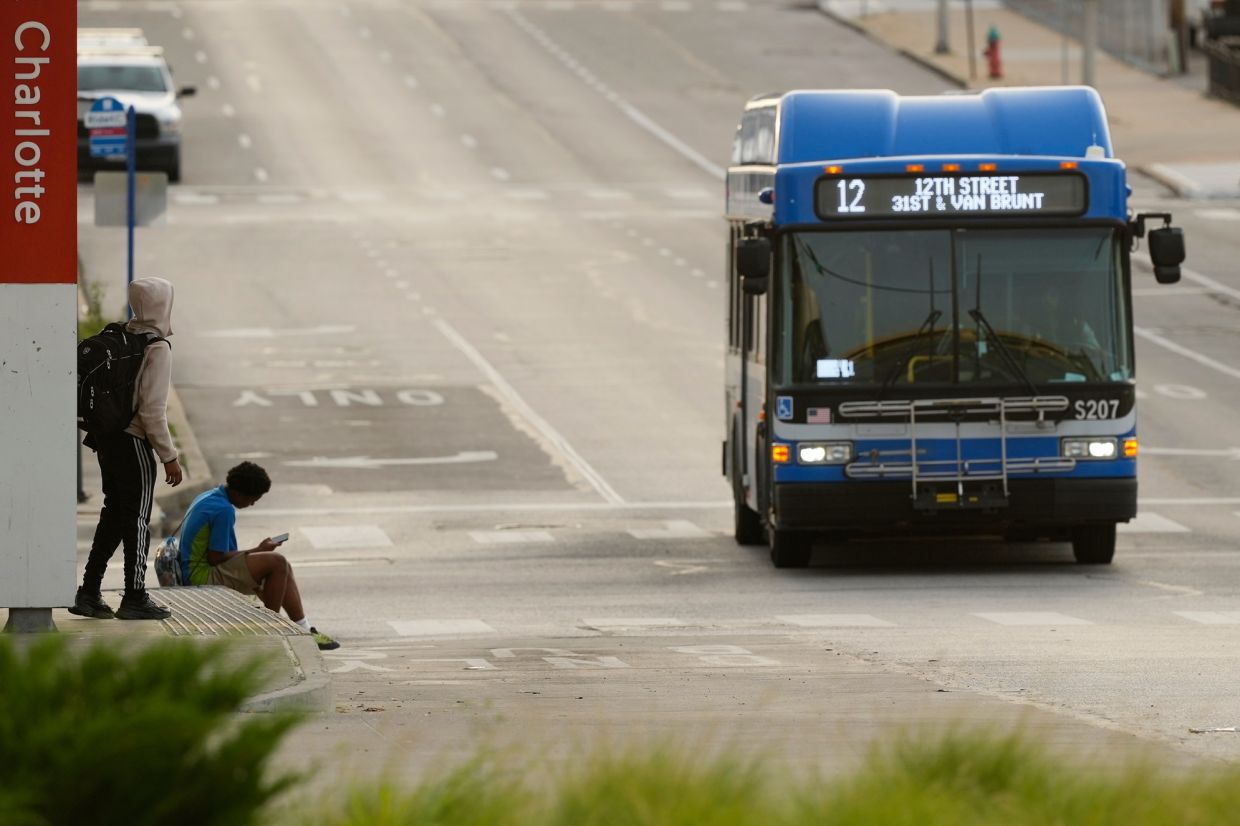
Officials in Kansas City, Missouri are moving forward with plans to install facial recognition technology on public transit buses, creating what many view as a watershed moment in the deployment of artificial intelligence for law enforcement and public safety. The system would use cameras equipped with facial recognition software to automatically identify passengers appearing on watchlists designated for banned riders, missing persons, or individuals flagged by law enforcement authorities. This initiative has positioned the Midwest city at the centre of a contentious national debate about whether the security advantages of AI-powered surveillance justify the erosion of privacy in shared public spaces.
The project underscores a fundamental tension emerging across North America's transport sector. Jay Stanley, a senior policy analyst at the American Civil Liberties Union's Project on Speech, Privacy and Technology, emphasises that the deployment of live facial recognition on cameras monitoring public spaces represents an unprecedented threshold. For more than two decades, transportation authorities have operated surveillance cameras throughout their networks, but the addition of real-time facial matching represents a qualitative leap in surveillance capability. The distinction matters significantly: passive recording differs markedly from active identification and tracking of individuals in real time, a technology that has largely remained untested in mainstream public transportation until now.
The Kansas City Transportation Authority is pressing ahead despite setbacks, including the withdrawal of expected state funding from Missouri. Tyler Means, the authority's chief mobility and strategy officer, frames the facial recognition component as merely an evolution of existing camera infrastructure rather than a revolutionary intrusion. He contends that public acceptance will grow once residents realise the technology's integration into their daily commutes produces minimal friction. This perspective downplays concerns from privacy advocates who argue that technological creep inevitably occurs once surveillance systems are normalised.
SafeSpace Global, the Knoxville, Tennessee-based technology firm powering the initiative, has progressively expanded its facial recognition applications across institutional settings. The company initially deployed its systems in nursing homes to monitor resident movements, then extended the technology to correctional facilities and schools. Kansas City's public bus system represents the company's first venture into civilian transportation infrastructure, a strategic expansion into a sector that potentially reaches hundreds of thousands of daily commuters. CEO Scott Boruff emphasises that facial data is discarded immediately when no match occurs, with only standard video footage archived locally for up to five years when matches trigger alerts.
The technical mechanics appear straightforward: cameras on buses immediately cross-reference captured faces against active watchlists generated when missing persons, banned riders, or individuals on law enforcement lists are flagged. However, critics like Stanley express deep scepticism about maintaining such narrow operational boundaries once AI surveillance becomes embedded in municipal infrastructure. Historical experience suggests that surveillance programs frequently expand well beyond their original scope and stated limitations. He points to the post-9/11 deployment of facial recognition cameras in Tampa, Florida's Ybor City neighbourhood, which faced immediate grassroots opposition and was ultimately abandoned following public backlash.
More recent examples complicate the picture further. New Orleans police operated facial recognition surveillance cameras in violation of explicit city ordinances, conducting secret operations through private contractors. Detroit's partnership with gas stations and liquor stores created a network of high-definition cameras feeding live crime footage directly to police departments. While Detroit police chief James Craig advocated for the technology's continued use, the programme triggered sufficient controversy that usage guidelines were substantially tightened. These precedents suggest that once surveillance infrastructure achieves operational status, dismantling it becomes far more difficult than preventing its initial deployment, regardless of public sentiment or policy safeguards.
Will Owen, communications director for the Surveillance Technology Oversight Project, articulates the concerns animating privacy advocates' opposition. He contends that city residents should not function as test subjects for unproven surveillance technologies developed by Silicon Valley firms. The bias inherent in many facial recognition algorithms represents a particular concern for communities of colour and other marginalised groups, whose members experience disproportionately high error rates in identification systems. This technical bias can translate into real consequences when flawed identifications trigger law enforcement interventions or transit authority actions.
The original timeline envisioned cameras operational during Kansas City's World Cup hosting, but delays derailed those plans. Partly technical—requiring Wi-Fi infrastructure upgrades to support both cameras and new fare collection systems—and partly financial following Missouri's funding withdrawal, the postponement illustrates the practical obstacles facing municipalities attempting to deploy AI surveillance systems. Means expressed continued optimism that the programme will launch within the current year, potentially scaled up from the original nine-bus pilot to approximately thirty vehicles, suggesting the authority's commitment deepened despite setbacks.
Mayor pro tem Ryana Parks-Shaw articulated a measured perspective, emphasising that deliberate implementation with transparent policies and clear operational boundaries remains essential. Her position acknowledges the technology's potential utility while refusing to rush deployment without adequate safeguards. This reflects an emerging consensus among some municipal policymakers that the question is not whether AI surveillance will be deployed—momentum appears irreversible in this direction—but rather how such deployment occurs within frameworks of accountability and transparency.
The World Cup contingency plan reveals how municipal authorities conceive of technological substitution. Rather than deploying facial recognition cameras as originally scheduled, Kansas City increased police presence by approximately forty additional officers stationed at transit stops and centres. This labour-intensive approach represents what Means self-consciously describes as going "old school," suggesting that human patrol capacity, however expensive and labour-intensive, remains the fallback when technological solutions encounter obstacles. Yet this comparison inadvertently underscores the cost efficiencies driving AI adoption: automated facial recognition promises to extend surveillance reach across entire transit systems without proportional increases in personnel expenditure, explaining its persistent appeal to financially constrained municipalities.
For Southeast Asian readers and policymakers, Kansas City's experience carries significant implications. Many rapidly urbanising regional cities are simultaneously expanding public transportation networks and acquiring sophisticated surveillance technologies. The trajectory of Kansas City's deployment—initial enthusiasm, public pushback, scaled-back timelines, but ultimate determination to proceed—likely forecasts similar patterns across the region. Malaysia, Singapore, and other Southeast Asian nations with advanced technological infrastructure and significant investment in smart city initiatives may face comparable pressures to adopt facial recognition systems. The Kansas City case demonstrates that public opposition and technical obstacles can delay but rarely prevent such deployments, particularly when municipal authorities view surveillance as integral to their security and efficiency mandates. Understanding how this American city navigates the privacy-security calculus offers valuable lessons for regional policymakers contemplating comparable decisions.

