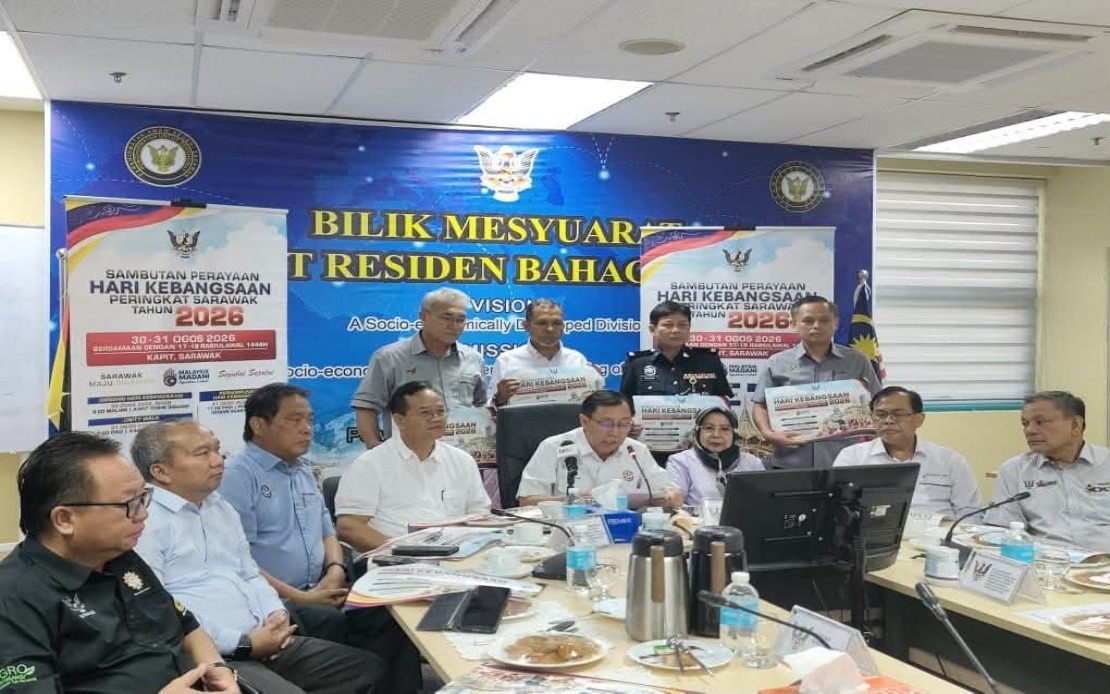
Kapit, a riverside town in central Sarawak, will serve as the venue for the state's National Day commemoration this year, with celebrations scheduled for August 30 and 31. The event represents a significant move to recognise the role of divisions beyond Sarawak's urban centres in observing the nation's founding. By directing this prestigious occasion to Kapit, the state government aims to extend patriotic observances across different communities and reinforce the importance of unity at the grassroots level.
Datak Seri Dr Stephen Rundi Utom, who holds the portfolios of Sarawak Food Industry, Commodity and Regional Development Minister and oversees the National Day arrangements, outlined the strategic purpose behind the celebrations. Beyond the conventional commemorative function, the festivities are designed to strengthen communal bonds, acknowledge the sacrifices of earlier generations of leaders, and deepen the connection between citizens and their country. This multifaceted approach reflects an understanding that National Day celebrations can serve as powerful instruments for social cohesion during a period when Malaysia continues to navigate diverse political and social landscapes.
The celebration will attract significant political representation, underscoring the state leadership's commitment to the occasion. Sarawak Governor Tun Dr Wan Junaidi Tuanku Jaafar and Sarawak Premier Tan Sri Abang Johari Tun Openg are both scheduled to participate, with specific assignments aligned to the three-day programme. Their presence signals the importance the state executive places on maintaining high-level engagement with commemorative events throughout Sarawak's regions, rather than concentrating such occasions solely in the capital.
Three distinct programmes have been organised to sustain momentum throughout the celebration period. The festivities commence on the evening of August 30 with an Eve celebration at Kapit Town Square, providing an opening ceremony that sets the patriotic tone for the following day. This evening event allows residents to gather in a central location and participate in traditional opening rituals that typically characterise National Day observances across Malaysia. The Town Square venue ensures accessibility and encourages broad community participation from the outset.
The morning of August 31 features a Unity Walk commencing at 7 am, a participatory event that embodies the spirit of collective national identity through physical gathering and movement. Such walks have become standard features of National Day celebrations throughout Malaysia and Southeast Asia, creating visual representations of national solidarity and providing opportunities for diverse demographic groups to march together in common purpose. Governor Wan Junaidi will lead this component, reinforcing the symbolic weight of the activity through high-level political participation.
The culmination arrives with the National Day Gathering at the Dewan Suarah Kapit grounds at 11 am, where formal proceedings will likely include speeches, presentations, and potentially cultural performances reflecting Sarawak's diverse communities. Both the Governor and Premier are expected to address this assembly, allowing them to articulate state and national messages regarding identity, development, and social progress. The Dewan Suarah Kapit's selection as the venue indicates that local institutional infrastructure has been considered in planning, ensuring appropriate facilities for official proceedings.
Rundi's public invitation extends beyond immediate Kapit residents to encompass surrounding divisions, acknowledging that the celebration's relevance radiates across a wider geographic zone. This inclusive approach recognises that transport infrastructure and social connectivity link multiple communities to Kapit, and that neighbouring areas maintain natural ties and shared interests with the host division. The invitation reflects a contemporary understanding that administrative celebrations now operate within networks rather than confined to single locations.
For those unable to attend physically, provisions have been made for remote participation through television broadcast and digital platforms. TVS, Sarawak's state broadcaster, will carry live coverage, ensuring that individuals in distant longhouses or urban areas unable to travel can still witness the proceedings. The Sarawak Public Communications Unit (UKAS) will simultaneously stream events across official social media channels, accommodating modern consumption patterns and reaching demographics more engaged with digital platforms than traditional broadcast television. This multi-channel approach democratises access to state-level ceremonies.
The selection of Kapit as host venue carries particular significance for Sarawak's regional development narrative. Located in the interior with historical associations to indigenous communities and riverine commerce, Kapit has long occupied a distinctive position within the state's geography and economy. Hosting the state's National Day celebration acknowledges the division's continued relevance within Sarawak's polity and signals that rural and interior regions merit recognition through major state events. This geographic rotation of celebrations across different divisions helps ensure that political visibility and government engagement are distributed equitably.
For Malaysian readers, this celebration exemplifies how the federal structure functions within the broader national framework. Sarawak's ability to organise and conduct its own state-level National Day observances demonstrates the autonomy that state governments exercise within Malaysia's constitutional arrangement. The celebration simultaneously reinforces national unity through shared commemorative practice while allowing states to express distinctive cultural and political identities. This balance between centralised national symbols and devolved state management represents a core characteristic of Malaysian federalism.
The timing during late August places these celebrations shortly before Malaysia's official National Day period, allowing Sarawak's state-level observance to build momentum toward the broader national commemoration. This sequencing maximises patriotic engagement across the month and provides continuity in national consciousness-raising activities. For communities in Sarawak's divisions, participating in both state and national celebrations throughout the season creates layered experiences of belonging to progressively larger political communities—division, state, and nation.
The emphasis on patriotism, unity, and historical acknowledgement within Rundi's framing reflects contemporary preoccupations within Malaysian political discourse. At a moment when national cohesion faces pressures from religious, ethnic, and regional divisions, official celebrations increasingly stress unifying narratives and shared national projects. By anchoring the celebration in these themes, Sarawak's leadership positions National Day not merely as a historical commemoration but as an active intervention in contemporary social integration, suggesting that regular ceremonial gatherings remain potent mechanisms for reinforcing national identity.

