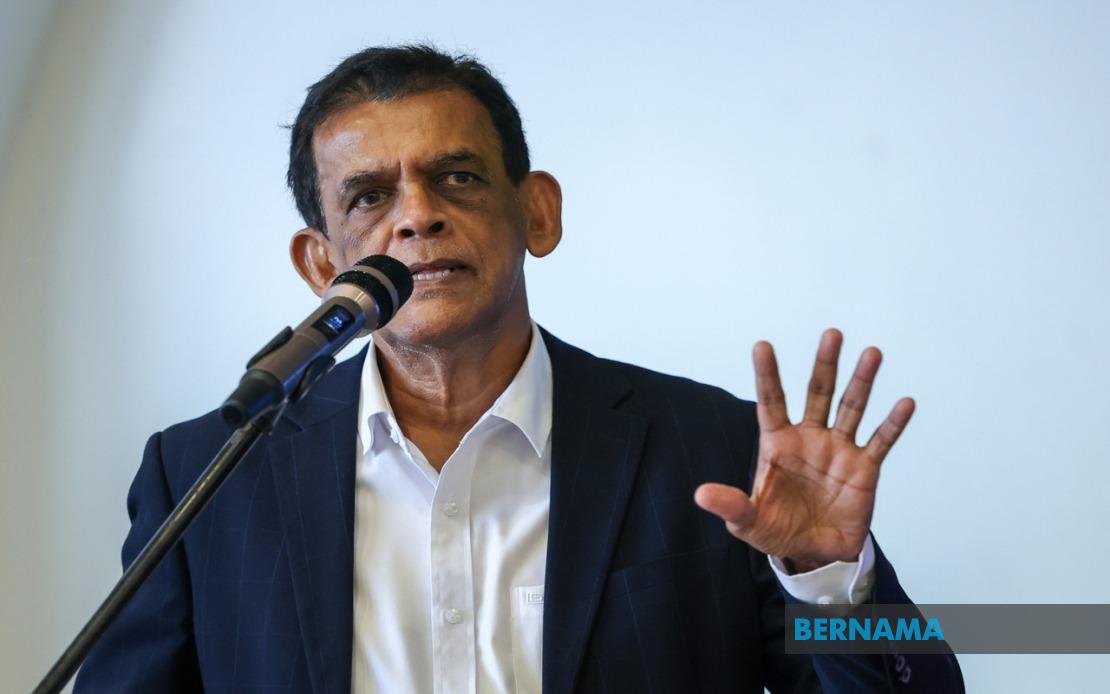
The Malaysian Artistes Association, known as Karyawan, has formally petitioned the government to take control of Malaysia's music royalty collection and distribution framework, arguing that the current system has failed musicians and rights holders for over twenty years. Datuk Freddie Fernandez, the association's president, made the call following unanimous approval of the proposal at Karyawan's latest annual general meeting, positioning it as a critical reform needed to modernise an increasingly dysfunctional sector. The initiative reflects growing frustration within Malaysia's creative community over systemic failures that have left countless musicians underpaid and uninformed about their earnings.
Karyawan's proposal draws inspiration from Indonesia's approach, where the National Collective Management Institution operates a centralised system for gathering and distributing public performance royalties across the archipelago. According to Freddie, Indonesia encountered comparable structural problems until direct government intervention resolved the coordination breakdown between competing collection agencies. This precedent offers a tested model that could be adapted to Malaysia's context, particularly given the similarities in market size and artistic communities across Southeast Asia. The Indonesian example demonstrates that government oversight, rather than fragmented private management, can deliver superior outcomes for creators while maintaining industry standards.
The case for reform becomes compelling when examining the scale of royalties at stake. Public performance royalty collections in Malaysia are approaching RM200 million annually, representing substantial income that should flow directly to songwriters, performers and other rights holders. However, this considerable sum is currently distributed through a structure plagued by opacity, excessive administrative overhead, and jurisdictional conflicts between multiple collecting organisations. Freddie emphasised that Malaysia cannot afford to continue tolerating these inefficiencies, especially as the digital transformation of music consumption accelerates and international licensing becomes increasingly complex.
Central to Karyawan's vision is the creation of a government-supervised digital platform that would function as a comprehensive national music rights registry and automated royalty distribution centre. This unified system would maintain authoritative records of every composition, sound recording, ownership claim, licence agreement, usage report, collection transaction and payment distribution. By consolidating these functions under one verified database, the platform would eliminate the duplication and contradictions that currently plague rights management. Every instance of musical use—whether broadcast, streamed, performed publicly or synchronised in video content—would be automatically matched against verified ownership data, enabling real-time royalty calculation and distribution with full audit capability for all stakeholders.
The transparency advantages of such a centralised system extend far beyond convenience. Under the current fragmented model, artists and their representatives often cannot verify whether their works have been properly identified, registered and compensated. A government-managed platform would create an immutable transaction record accessible to creators, ensuring they could monitor how their music is being used and confirm that payments match actual consumption. This addresses one of the industry's most persistent complaints: the inability of rights holders to conduct meaningful audits of collection bodies or to challenge discrepancies in their statements.
A particularly poignant illustration of the system's failure involves the late Malaysian music legend Sudirman Arshad, whose family waited years before finally receiving RM367,000 in accumulated royalties from album sales and performances. This case encapsulates the profound injustice embedded within the current arrangement—even celebrated artists struggle to collect what they have rightfully earned, while smaller creators often receive nothing. Since Sudirman's situation became public, numerous Karyawan members have disclosed similar experiences of non-payment or severely underpayment from record labels and streaming platforms. The association is now documenting these grievances systematically with the intention of pursuing coordinated legal remedies on behalf of affected musicians.
The proposed framework also incorporates mechanisms to address the emerging challenge posed by artificial intelligence-generated music. As AI tools become increasingly sophisticated and accessible, the risk of unauthorised or uncompensated algorithmic composition proliferates. A centralised, government-supervised registration and tracking system could establish clear protocols for distinguishing AI-created content from human-authored works, preventing bad-faith actors from exploiting jurisdictional gaps or regulatory ambiguity. Freddie suggested that without proactive intervention of this type, Malaysia risks becoming a haven for copyright evasion as AI music production accelerates globally.
Karyawan's proposal aligns with the recently published Copyright (Collective Management Organisation) Guidelines 2025, which emphasise strengthened governance standards, documented decision-making, transparent reporting mechanisms and enhanced accountability across the sector. Rather than contradicting regulatory frameworks, the government takeover model would operationalise these principles in practice. The guidelines themselves implicitly acknowledge that voluntary compliance by private collecting organisations has proven insufficient, necessitating more direct oversight and structural intervention to achieve the transparency and equity they mandate.
The proposal also reflects intensifying tensions between the music industry's various stakeholders. The three existing royalty collection bodies—Music Authors' Copyright Protection, Public Performance Malaysia and Recording Performers Malaysia—are currently engaged in legal disputes with Karyawan, MyIPO (Intellectual Property Corporation of Malaysia), and the Ministry of Domestic Trade and Cost of Living. These conflicts further underscore the dysfunction of the existing competitive structure, where collection agencies pursue divergent interests rather than coordinating toward musicians' benefit. A unified government system would eliminate these jurisdictional battles by consolidating all collection and distribution functions under a single authority accountable to public interest rather than organisational survival.
Beyond royalty collection from public performance, Karyawan has highlighted persistent problems in the record label supply chain. Many musicians report that labels have systematically failed to distribute rightful royalty shares from album sales and streaming platform revenues, retaining funds through opaque accounting practices. The family of Sudirman's case and numerous other member testimonies establish a pattern suggesting systemic non-compliance with royalty obligations. A government-overseen platform would enforce standardised accounting requirements and create visibility into these commercial transactions, making it vastly more difficult for labels to obscure or misallocate artist income.
From a regional perspective, Malaysia's adoption of such a system would position the country as a governance leader within Southeast Asia, demonstrating commitment to creator welfare and transparent rights management. As the region's creative industries expand and cross-border licensing becomes routine, having a model system in place could establish Malaysia as a reference point for neighbouring countries grappling with similar challenges. Singapore, Thailand and other ASEAN nations may eventually look to Malaysia's experience when designing their own reforms, multiplying the initiative's regional impact.
The government faces a decisive choice about its role in the creative economy. Freddie's proposal represents not merely administrative reorganisation but a fundamental statement about whether musicians deserve enforceable protections and transparent treatment. As public performance royalties approach RM200 million annually and streaming platforms continue reshaping consumption patterns, the current system's inadequacies will only deepen. Transferring management to government oversight, backed by legislation and digital infrastructure, would eliminate the conflicts of interest inherent in private collection agencies competing for market dominance, finally enabling Malaysia's artists to receive fair compensation for their work.

