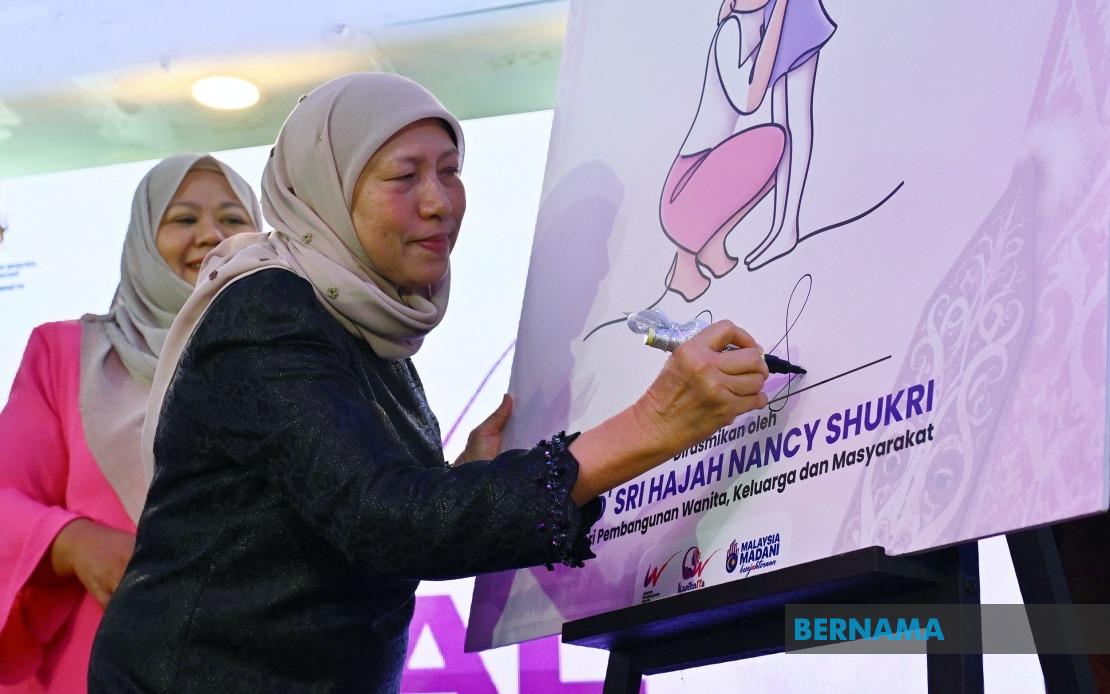
Malaysia's commitment to supporting vulnerable family structures took another step forward this week with the expansion of KasihnITa, the Single Mothers Support programme, into Sarawak. The staged national rollout, following an earlier launch in Selangor, reflects growing recognition that single mothers require coordinated, multifaceted assistance rather than isolated welfare payments. Minister Datuk Seri Nancy Shukri, heading the Ministry of Women, Family and Community Development (KPWKM), officially inaugurated the Sarawak iteration of KasihnITa 2026, drawing approximately 130 participants to a three-day engagement that brought together stakeholders from across the government sector.
The strategic architecture of KasihnITa demonstrates a shift in how Malaysian policymakers approach social vulnerability. Rather than relying solely on cash transfers, the programme convenes specialist agencies including the Credit Counselling and Debt Management Agency (AKPK), Bank Negara Malaysia, the Legal Aid Department, and the Syariah Judiciary Department. This collaborative model ensures that single mothers gain exposure to multiple dimensions of support simultaneously, from understanding their entitlements to mastering personal financial planning. By concentrating these services into a single platform, the government reduces bureaucratic friction and empowers participants to navigate systems that might otherwise remain opaque or difficult to access.
Financial capability emerges as a cornerstone of the initiative. Participants receive structured instruction in household budgeting, debt management, and long-term financial planning—skills particularly crucial for individuals managing household income alone. Nancy emphasised that equipping single mothers with financial literacy enables them to allocate resources more strategically and build resilience against economic shocks. For Malaysia's expanding single-parent demographic, such knowledge transfer carries profound implications, potentially breaking cycles of financial precarity that affect children's educational and health outcomes.
The legal dimension of KasihnITa addresses a persistent challenge within Malaysia's family support ecosystem: enforcement of child maintenance obligations. When former partners neglect court-ordered maintenance payments, single mothers often lack affordable pathways to legal recourse. By embedding the Legal Aid Department and Syariah Judiciary representatives directly into KasihnITa sessions, the programme removes barriers to consultation and demystifies legal procedures. Nancy underscored that assistance transcends financial grants, extending to active legal support that helps mothers pursue their children's rights through formal channels.
Datak Seri Nancy also highlighted an often-overlooked dimension of policy effectiveness: participatory feedback. By gathering direct input from programme beneficiaries, KPWKM aims to ground future policy revisions in lived experience rather than bureaucratic assumption. This approach acknowledges that single mothers themselves possess invaluable insight into systemic gaps and practical constraints. The feedback mechanism signals an intention to build policies dynamically, adjusting provisions as evidence emerges about what truly serves this demographic.
The psychological and social dimensions of the programme warrant equal emphasis. Nancy noted that gatherings like KasihnITa combat isolation, a significant challenge for single mothers who may experience social stigma or limited peer networks. By creating spaces where participants share experiences and exchange practical strategies, the initiative fosters peer support and collective problem-solving. This communal aspect complements the transactional delivery of services, recognising that emotional and psychological resilience matter alongside material assistance.
Sarawak's inclusion in the phased rollout reflects broader geographic considerations within Malaysia's social policy. As a state with distinctive demographic patterns and economic structures, Sarawak's single-mother population faces contextual challenges distinct from peninsular counterparts. Tailoring KasihnITa delivery to regional conditions—rather than imposing a one-size-fits-all approach—increases programme relevance and uptake. The three-day format allows for immersive engagement, accommodating participants from dispersed communities across the state's vast geography.
The initiative's emphasis on inclusivity carries significance within Malaysia's multicultural and multi-religious context. By involving the Syariah Judiciary Department alongside secular legal institutions, KasihnITa acknowledges that single mothers navigate overlapping legal frameworks, particularly regarding child maintenance and family law. This integration respects religious pluralism while ensuring comprehensive coverage of relevant legal pathways available to beneficiaries.
From a regional perspective, KasihnITa exemplifies how Southeast Asian governments are experimenting with integrated social support models. Rather than compartmentalising welfare, health, education, and legal services into separate bureaucratic silos, the programme demonstrates potential for horizontal coordination. Other nations in the region grappling with increasing single-parent family structures might observe this approach as a template for more cohesive service delivery.
The timing of expansion into Sarawak occurs amid evolving conversations about family structure and economic participation across Malaysia. As women's workforce participation increases and marriage patterns shift, the proportion of families headed by single mothers continues growing. Programmes like KasihnITa thus address not merely humanitarian concerns but also economic considerations—enabling mothers to participate more fully in employment and entrepreneurship benefits the broader economy while reducing dependency on government assistance.
Minister Nancy's emphasis on leaving no woman behind suggests awareness that single motherhood spans diverse socioeconomic strata. Some participants may be professionals facing childcare challenges; others may struggle with basic subsistence. KasihnITa's multi-level approach, offering financial literacy ranging from foundational budgeting to investment concepts, theoretically serves this heterogeneous population. However, programme designers must ensure that sessions genuinely accommodate varied baseline knowledge and circumstances rather than defaulting to one difficulty level.
Looking forward, the programme's success will depend on sustained resourcing, quality of facilitator training, and genuine integration of participant feedback into policy refinement. Early signals from Sarawak's rollout appear positive, but longitudinal assessment of outcomes—whether single mothers subsequently access legal aid, improve financial stability, or experience enhanced wellbeing—will ultimately determine KasihnITa's effectiveness. As Malaysia continues expanding social protection systems, programmes that combine material assistance, skill development, and psychological support represent an increasingly sophisticated approach to addressing vulnerability.

