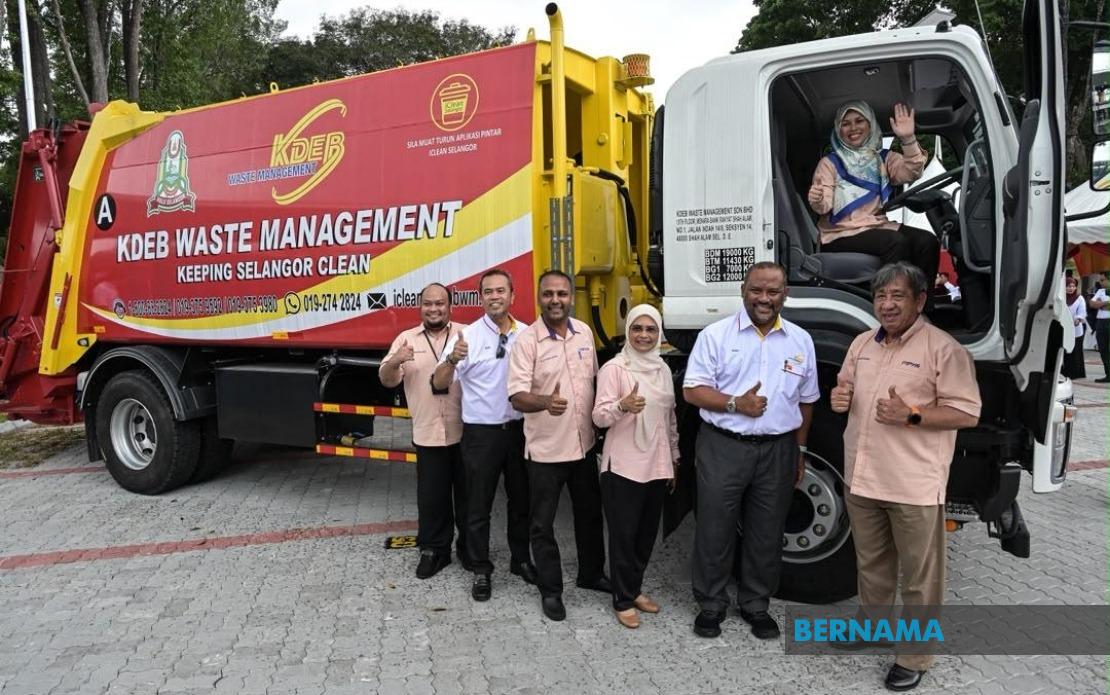
KDEB Waste Management (KDEBWM) has officially commenced operations under a new seven-year waste management contract with Hulu Selangor Municipal Council (MPHS) by deploying a fleet of 33 newly acquired compactor lorries. The vehicles were handed over at a ceremony in Hulu Selangor on July 6, marking the beginning of service delivery that commenced on July 1 and will extend through June 30, 2033. This development represents a significant infrastructural investment aimed at modernising domestic waste collection across the district and addressing the region's growing sanitation challenges.
The fleet comprises vehicles from three major manufacturers: 18 Isuzu compactor lorries, five Mitsubishi Fuso units, and ten UD Trucks, all equipped with advanced technical specifications designed to optimise collection efficiency. According to KDEBWM managing director Datuk Ramli Mohd Tahir, these vehicles have been specifically configured to ensure waste gathering operations adhere to systematic protocols while maintaining safety standards and environmental compliance. The standardised specifications across the fleet facilitate maintenance coordination, reduce operational downtime, and enable consistent service delivery throughout Hulu Selangor's residential and commercial zones.
This contractual arrangement represents continuity in service provision, as KDEBWM has previously managed waste collection for MPHS since 2018. The outgoing contract, which concluded on June 30, established foundational operational frameworks that the current seven-year agreement builds upon. The progression from the initial contract period to the renewed arrangement demonstrates MPHS's confidence in KDEBWM's capability to manage increasing waste volumes and implement evolving municipal sanitation requirements.
The scale of waste collection has expanded substantially during KDEBWM's operational tenure in the district. During the initial contract period spanning the past seven years, daily waste collection averaged between 100 and 150 tonnes. Current operations have elevated this figure to approximately 150 to 250 tonnes daily, with projections indicating potential daily volumes reaching 300 tonnes. This escalation reflects both population growth within Hulu Selangor and increased commercial activity, necessitating enhanced fleet capacity and operational efficiency to prevent service degradation.
Financially, the partnership represents a substantial municipal commitment to waste management infrastructure. The seven-year contract is valued at RM117.2 million, translating to approximately RM16.7 million in annual expenditure. This investment reflects MPHS's recognition that effective waste management requires continuous capital deployment and operational funding to maintain service standards, particularly as urban densification and economic development intensify demand pressures on municipal sanitation systems.
Beyond domestic waste collection, KDEBWM and MPHS are collaborating on broader waste management initiatives extending to industrial sectors. The council is working with the contractor to establish collection systems for industrial waste generated by small and medium enterprises throughout Hulu Selangor. This integrated approach acknowledges that comprehensive waste management encompasses both residential and commercial waste streams, requiring coordinated systems that prevent improper disposal and environmental degradation.
A notable operational innovation accompanying the contract renewal is the implementation of a door-to-door collection system commencing July 1. Under this arrangement, KDEBWM personnel collect waste directly from residential premises on scheduled collection days, eliminating the previous reliance on centralised collection points. This system represents a modernisation of sanitation practices aligned with contemporary municipal management standards observed in developed urban centres, though implementation success depends significantly on public compliance and adaptation to new routines.
The door-to-door system requires substantial changes to household waste management practices. Residents must discontinue use of leach bins and instead provide covered waste receptacles with minimum 120-litre capacity, clearly labelled with their house or lot numbers. All waste must be placed in plastic garbage bags that are securely tied before placement in bins, with bin lids kept closed throughout the collection interval. These requirements, articulated by MPHS president Julaiahah Jamaludin, are designed to prevent pest infestation, rainwater contamination, and litter dispersal while facilitating efficient lorry loading operations.
The transition to this collection methodology carries implications for household practices and environmental cleanliness standards. Closed bin systems reduce visual litter, mitigate stray animal access to waste, and prevent rainwater from creating decomposition byproducts that contribute to environmental degradation and public health concerns. However, successful implementation requires sustained public education and enforcement mechanisms to ensure residents understand requirements and maintain compliance over the seven-year contract period.
For Malaysian municipalities facing similar waste management challenges, the Hulu Selangor model demonstrates integrated approaches combining infrastructure investment, technological deployment, operational restructuring, and regulatory implementation. The expansion from 100-150 tonnes to 300 tonnes daily collection capacity reflects strategic planning that anticipates growth rather than merely responding to crises. The involvement of both council leadership and contractor management in public communication regarding new collection protocols indicates recognition that sustainable service delivery requires community understanding and participation.
The contract's extension through 2033 provides operational stability essential for long-term service planning, allowing KDEBWM to justify capital investments in fleet modernisation and facility development while enabling MPHS to implement consistent waste management policies. This seven-year horizon aligns with Malaysia's broader sustainability objectives and municipal development strategies, positioning Hulu Selangor's waste management framework as increasingly sophisticated and professionally administered.
Implementation challenges will likely emerge as the new system commences across Hulu Selangor's diverse residential and commercial landscape. Public adaptation to door-to-door collection protocols, contractor efficiency in executing complex logistics, and maintenance of the expanded fleet will require continuous monitoring and adjustment. Success metrics extending beyond mere collection tonnages should encompass service reliability, environmental compliance, and public satisfaction—indicators that ultimately determine whether this investment achieves its intended objectives of enhancing municipal sanitation across the district.

