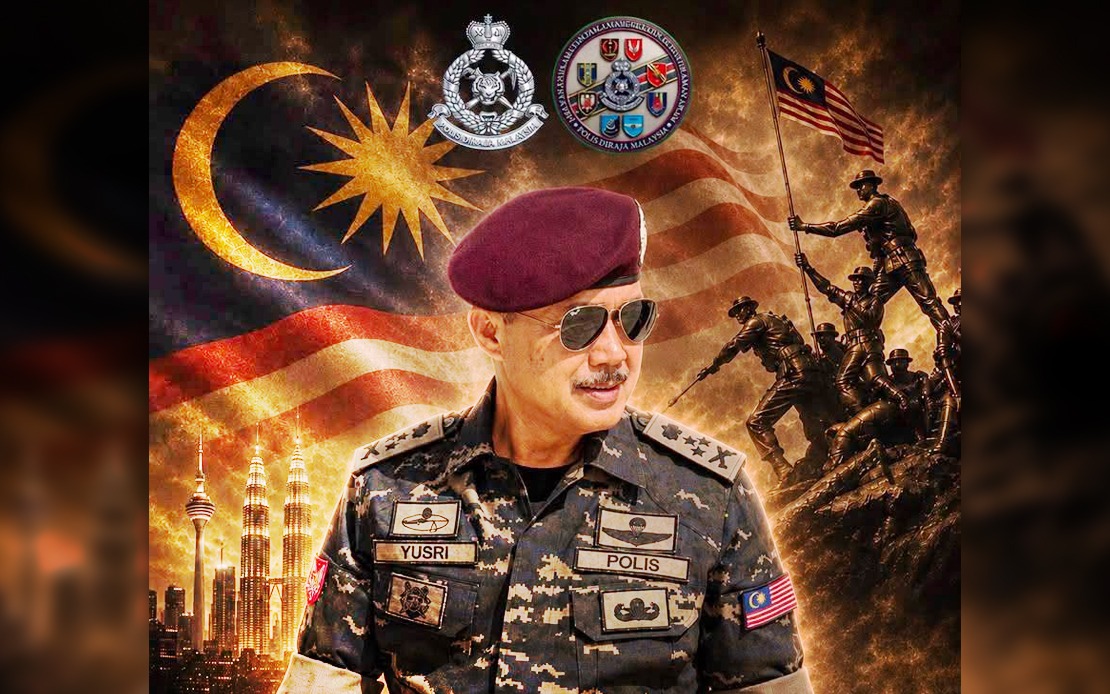
Datuk Seri Mohd Yusri Hassan Basri is swapping horsepower for hoofbeats this August 31st. The director of the Department of Internal Security and Public Order (KDNKA) will ride a white horse named Al-Sakb to lead a 595-strong Royal Malaysia Police contingent at the 69th National Day Parade at Dataran Putrajaya, a significant departure from last year's high-octane entrance on a BMW R 1250 RT motorcycle. The shift represents not merely a change in ceremonial aesthetics but reflects evolving priorities within Malaysia's security apparatus, emphasising the integration of traditional heritage with modern policing.
The PDRM's presentation at the parade will be anchored by the Federal Reserve Unit's Mounted Unit, comprising 20 uniformed officers and personnel accompanied by 20 horses. These mounted personnel will open the contingent's formation, establishing a symbolic connection to Malaysia's colonial-era policing traditions while simultaneously showcasing the force's operational versatility. Mohd Yusri's decision to personally lead the contingent on horseback carries particular significance given his portfolio responsibilities for maintaining internal security and public order across the nation.
The transition from motorcycle to mounted leadership poses genuine operational challenges that extend beyond ceremonial theatrics. Mohd Yusri has undergone more than a month of intensive training to master horsemanship and ensure seamless coordination between himself, the Mounted Unit personnel, and the broader contingent marching behind. This preparation underscores how seriously the KDNKA director approaches his role in representing the force's discipline and capability. The training regimen focused specifically on synchronising movements and maintaining formation coherence throughout the parade route, factors critical to projecting an image of institutional competence and organisational cohesion.
Beyond the ceremonial horse-led formation, the KDNKA contingent will demonstrate the full spectrum of modern policing capabilities. The General Operations Force and Air Operations Force will feature prominently, illustrating to Malaysian citizens the diversity of tactical options available to law enforcement. This multi-dimensional approach transforms the parade segment from simple pageantry into a public-facing exhibition of the police force's institutional breadth and technical sophistication. For ordinary Malaysians observing the procession, witnessing assets ranging from mounted units to aerial platforms reinforces the perception that national security institutions remain well-equipped and professionally managed.
Among the most striking technological additions will be ten newly acquired All Terrain Tactical Assault E-Bikes (ATEB)—high-performance electric motorcycles supplied to the General Operations Force for security operations, border patrol missions, and high-risk tactical interventions. These vehicles represent Malaysia's push toward adopting sustainable technology within law enforcement frameworks, addressing both environmental concerns and operational efficiency. The ATEB units signal to regional counterparts that Malaysian policing is modernising in tandem with global trends, potentially influencing procurement decisions and operational doctrines across Southeast Asian forces.
Aerial capabilities will be showcased through a flypast executed by an AW139 helicopter operated by PDRM, demonstrating the force's reach and surveillance capacity. This overhead element provides visual drama while substantively illustrating the vertical dimension of Malaysia's security apparatus. For citizens in Putrajaya and observers watching broadcast coverage, the helicopter presence reinforces the scale of institutional resources dedicated to maintaining order and national security. The combination of ground-based mounted units, tactical electric motorcycles, and aerial platforms creates a narrative of layered, comprehensive security coverage.
The K9 Unit will contribute sixteen handler-dog teams to the contingent, showcasing canine capabilities in detection, pursuit, and suspect apprehension. These animals represent years of training investment and symbolise the professional standards maintained within PDRM's specialist divisions. For Malaysian spectators, the sight of these highly trained dogs marching in formation alongside elite police personnel reinforces public confidence in the force's commitment to maintaining operational excellence and investing in specialised capabilities.
Mohd Yusri's previous postings—heading the Traffic Investigation and Enforcement Department (JSPT) and the Bukit Aman Crime Prevention and Community Safety Department (JPJKK)—reflect a career trajectory emphasising operational command experience. His progression to directing KDNKA represents advancement within the police hierarchy, with National Day Parade leadership roles traditionally serving as visible platforms for senior commanders to demonstrate institutional stewardship. The shift from leading a motorised detachment to commanding a mounted contingent symbolises his evolution within increasingly senior administrative responsibilities.
The 2026 National Day celebration marks the 69th anniversary of Malaysian independence, a milestone warranting heightened ceremonial attention. Parade planning and execution fall under purview of multiple government agencies coordinating to ensure both spectacle and security. The PDRM contingent functions as both entertainment and institutional representation, allowing citizens to observe and appreciate the security forces maintaining daily national operations. For policymakers, National Day parades serve diagnostic purposes, revealing public reception to current governance narratives and security force positioning.
Weather considerations loom large in Putrajaya's tropical climate, where August rainfall patterns remain unpredictable. Mohd Yusri explicitly acknowledged meteorological variables, requesting public attendance while expressing hope that atmospheric conditions permit optimal parade execution. Such considerations carry practical implications for mounted unit operations, where unexpected downpours could affect horse behaviour and formation stability. The contingent's preparation accounts for potential weather-related challenges, reflecting professional standards within PDRM's ceremonial planning.
Mohd Yusri's public appeals for family attendance emphasise the inclusive, celebratory dimensions of National Day observances, distinguishing such events from security-focused operations dominating routine police work. By framing the parade as community gathering rather than enforcement demonstration, leadership encourages broad civic participation and cultural connection to independence narratives. For Malaysian families, attending National Day parades provides accessible opportunities to engage with institutional symbols and security force presentations without confrontational contexts.
The integration of traditional mounted units with cutting-edge electric tactical motorcycles and aerial surveillance platforms encapsulates Malaysia's contemporary security modernisation trajectory. Rather than abandoning heritage elements, the KDNKA contingent weaves them into broader technological frameworks, suggesting institutional confidence in balancing continuity with innovation. This approach resonates particularly within Southeast Asian contexts where colonial legacies intersect with rapid technological adoption, offering models for regional forces contemplating similar modernisation pathways.

