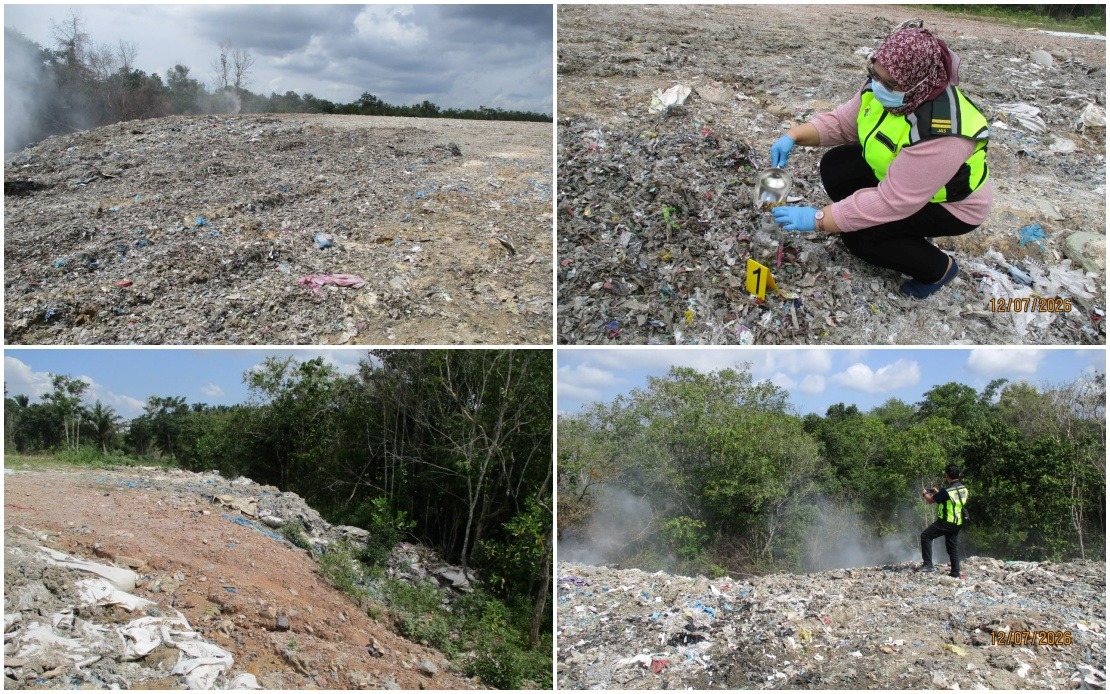
Environmental inspectors in Kedah have uncovered what appears to be a deliberate operation to dispose of domestic waste illegally and extract metal from household refuse through open burning in Bukit Banyan, a neighbourhood near Sungai Petani. The discovery emerged after residents filed formal complaints about acrid smoke drifting across the area, prompting the state Department of Environment to visit the location and document the problem.
The site itself occupies approximately 250 square metres of cleared land that had been filled with domestic and solid waste. Investigators found evidence that fires had been deliberately set to burn the accumulated rubbish, a practice that releases toxic fumes and poses serious health risks to surrounding communities. The Kedah DOE director, Sharifah Zakiah Syed Sahab, stated in her official account that the charred remains and smouldering debris at the location indicated a concerted effort by unnamed individuals to recover valuable materials—particularly metals—from the waste stream through thermal decomposition.
The operation lacked any formal sanction from the office of the Environment director-general, making it entirely unauthorised under Malaysian environmental law. Sharifah Zakiah explained that preliminary investigation suggested a contractor responsible for collecting waste from industrial zones across the district had been operating this disposal point without proper registration or oversight. Such arrangements fall squarely outside the regulatory framework designed to protect public health and environmental integrity across Kedah.
The environmental breach triggers serious legal consequences. Authorities are pursuing charges under Section 29A(1) of the Environmental Quality Act 1974, which prohibits open burning on any parcel of land. Additionally, the operation faces investigation under Section 34A(6) of the same legislation, which criminalises the operation of sanitary solid waste landfills without formal approval from responsible authorities. These statutory provisions exist precisely to prevent precisely the kind of unauthorised waste management occurring in Bukit Banyan.
To gather scientific evidence of the environmental damage, the Kedah DOE collected multiple samples of solid waste directly from the site and submitted them for laboratory analysis at the Department of Chemistry. This forensic approach will establish the composition of the material being burned, identify any hazardous substances released into the atmosphere, and potentially trace the waste's industrial origins. Such documentation strengthens any future enforcement action and demonstrates the systematic nature of the violation.
The discovery reflects a broader challenge affecting waste management across Malaysia's northern states. As industrial activity expands in districts like Kedah, unscrupulous contractors sometimes view remote or partially developed land as convenient dumping grounds rather than following regulated disposal procedures. The practice of burning waste to extract metals—sometimes called informal recycling—causes severe air pollution and soil contamination while completely bypassing proper waste-to-energy or material recovery infrastructure that operates legally throughout the country.
The referral to the Solid Waste and Public Cleansing Management Corporation (SWCorp) signals that enforcement will now escalate beyond investigation to active monitoring and compliance measures. SWCorp possesses statutory authority to compel site remediation, issue substantial fines, and pursue criminal prosecution against responsible parties. The corporation can also bar offending contractors from holding future waste management contracts, creating a powerful deterrent against repeat violations.
For residents in Bukit Banyan and neighbouring areas, the detection and closure of this site represents partial relief from ongoing air quality degradation. Smoke from open waste burning contains particulate matter, carbon monoxide, volatile organic compounds, and depending on the waste composition, potentially carcinogenic substances. Prolonged exposure disproportionately affects children, elderly persons, and those with respiratory conditions. The enforcement action therefore carries direct health implications for the local population.
The incident underscores the importance of public vigilance in environmental protection. The original complaints from residents provided the crucial trigger for official intervention—demonstrating that citizens remain the frontline defence against unlicensed pollution. However, it also reveals gaps in preventive oversight. The fact that a 250-square-metre dumping operation could function without detection until residents reported smoke suggests that existing monitoring mechanisms may require strengthening, particularly in semi-developed areas where land use remains fluid and regulatory presence lighter.
For the waste management sector more broadly, this case illustrates the continuing tension between cost minimisation and regulatory compliance. Proper disposal of industrial waste through licensed facilities naturally costs more than illicit dumping followed by metal extraction. Unethical operators will always seek shortcuts unless enforcement becomes sufficiently certain and penalties sufficiently severe. The Kedah DOE's swift response and comprehensive investigation approach sends a message that violations will not be overlooked, though sustained vigilance across the state will determine whether such cases become rarer.
The broader regulatory framework governing waste management in Malaysia has matured considerably, yet implementation varies significantly across states and municipalities. Kedah's environmental authorities appear committed to enforcing established rules, but capacity constraints, limited inspection resources, and the dispersed nature of illegal dumping sites present ongoing operational challenges. Coordination between federal agencies like SWCorp, state environmental departments, local authorities, and police remains essential for comprehensive coverage.
As investigations proceed and samples undergo chemical analysis, authorities will likely identify the specific contractor involved and trace the waste's origins. This information could uncover additional illegal disposal sites or widespread contractual non-compliance requiring systematic remediation. The case will probably culminate in substantial penalties that serve both as punishment and as precedent—signalling to other potential violators that Kedah takes environmental compliance seriously and will pursue legal accountability regardless of operational costs to contractors.

