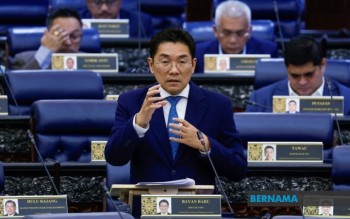
The northern state of Kedah has emerged as a significant investment magnet, drawing RM1.4 billion in approved projects during the opening three months of 2026, according to Deputy Investment, Trade and Industry Minister Sim Tze Tzin. Speaking at the Dewan Rakyat's question-and-answer session on June 29, Sim detailed how 50 separate projects have landed in the state, reflecting broader national efforts to develop industrial hubs beyond traditional economic centres.
The investment inflow demonstrates the strategic value of Kedah's three primary industrial corridors: Kulim Hi-Tech Park, Kedah Rubber City, and the Kerian Integrated Green Industrial Park. These anchors have been deliberately positioned as engines for broader economic transformation, with planners expecting them to catalyse development across surrounding communities and neighbouring states in the northern region. The concentration of projects in these identified zones underscores a deliberate policy approach to cluster development, allowing for efficient infrastructure deployment and competitive advantage accumulation.
Central to the government's strategy is ensuring that prosperity reaches beyond the industrial parks themselves into less-developed rural areas such as Sik, Baling, and Padang Terap. Sim acknowledged this specific concern during parliament, responding to questions from Ahmad Tarmizi Sulaiman, the Member of Parliament for Sik, about how communities in peripheral districts would gain tangible economic benefits. The deputy minister framed the initiative as part of a comprehensive commitment to inclusive growth, stressing that high-technology industrial development must translate into genuine employment opportunities and vendor business prospects for rural residents rather than remaining geographically and economically isolated.
The government's inclusive development approach recognises the distinctive economic characteristics of inland districts, where agriculture and resource-based industries constitute the traditional economic backbone. Baling, Sik, and Padang Terap possess established capabilities in food processing and agro-industries, sectors the ministry has prioritised for growth. Rather than attempting to replicate semiconductor manufacturing or advanced electronics assembly in rural zones, planners are positioning value-added agricultural processing as complementary to high-technology development, creating a more resilient and geographically distributed industrial base across Kedah.
Physical infrastructure remains the critical enabler for realising these geographical spillover benefits. The government is undertaking substantial road improvements, notably the widening of Federal Route FT004 running from the Kulim Hi-Tech Park interchange to Bukit Karangan. This project, scheduled for completion by April 2028, will fundamentally improve transport connectivity between the advanced manufacturing zones and inland agricultural regions, reducing logistics costs and travel time for workers commuting from rural areas to industrial employment. Faster, more efficient road networks facilitate the movement of raw materials and intermediate products, essential for agro-processing enterprises seeking to scale up operations and connect with larger supply chains anchored by multinational manufacturers.
Beyond physical infrastructure, the government has introduced regulatory and incentive mechanisms designed to deepen local economic integration. The New Incentive Framework, implemented from March 2026, fundamentally reshapes how authorities encourage foreign investors to participate in domestic supply chains. Rather than offering blanket tax holidays or capital allowances, the framework explicitly rewards companies that increase their reliance on local vendors, locally manufactured components, and domestically sourced services. This mechanism directly incentivises multinational enterprises operating in the high-technology parks to procure from suppliers in Kedah and surrounding states, generating secondary employment and business development opportunities throughout the region.
The localisation emphasis within the NIF reflects lessons learned across Southeast Asia regarding the long-term sustainability of foreign direct investment. Without deliberate policies encouraging supplier relationships and local service provision, international manufacturing facilities can operate as economic enclaves with limited benefit to surrounding communities. Workers may import foreign technicians, procurement may occur through global networks, and capital repatriation may exceed domestic reinvestment. By tying incentive eligibility to localisation metrics, Malaysia's approach aims to transform foreign investment into genuine economic development with multiplier effects throughout regional supply chains.
Technology transfer represents another dimension of inclusive development woven into the NIF framework. Multinational manufacturers frequently operate with proprietary processes and restricted knowledge sharing, limiting opportunities for local companies to upgrade capabilities. The incentive structure encourages foreign investors to establish training programmes, knowledge-sharing arrangements, and partnership frameworks with local enterprises, facilitating gradual capability building among domestic suppliers. Over time, this approach can enable local firms to graduate from basic sub-contracting toward more sophisticated, higher-value production roles.
For Malaysian policymakers, the Kedah experience illustrates broader challenges in regional development. Investment clusters naturally concentrate in areas with existing infrastructure, investor confidence, and established supply chains—typically urban and industrialised zones. Rural areas, despite possessing labour resources and cultural assets, require deliberate intervention to capture spillover benefits. The coordinated approach combining infrastructure investment, incentive design, and sector specialisation reflects sophisticated understanding of development dynamics but faces execution risks including timeline slippage and inadequate coordination between federal and state agencies.
The successful implementation of these strategies carries implications extending beyond Kedah. Other Malaysian states pursuing industrial development, particularly in the north and east coast, could adopt similar frameworks emphasising inclusive growth and localisation. In the competitive Southeast Asian context, where regional governments across Thailand, Vietnam, and Indonesia aggressively pursue foreign investment, Malaysia's ability to deliver both advanced manufacturing and distributed economic benefits becomes a potential comparative advantage, potentially attracting investors seeking responsible growth partnerships rather than purely exploitative arrangements.
Looking forward, the metrics for success extend beyond aggregate investment figures. Monitoring employment growth in Sik, Baling, and Padang Terap, tracking local vendor participation rates in supply chains, and measuring wage growth among rural workers will determine whether the current investments genuinely constitute inclusive development. Infrastructure completion timelines, particularly the FT004 widening project, will prove critical. Delays could undermine rural accessibility and disproportionately benefit urban workers already positioned near industrial parks.

