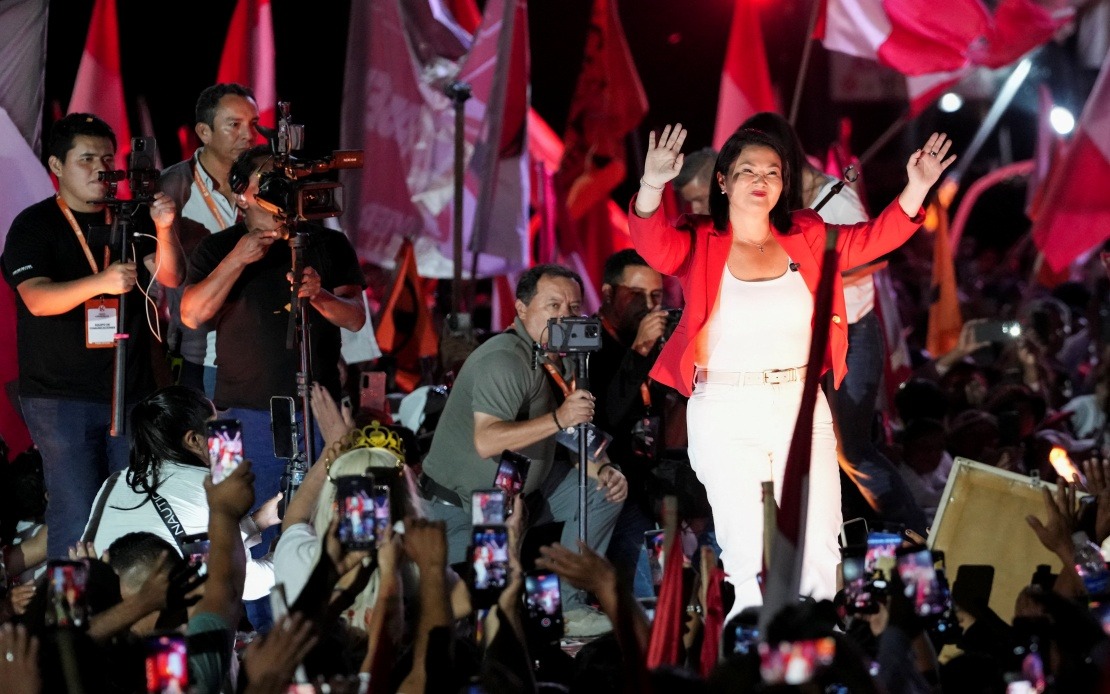
Peru's Popular Force candidate Keiko Fujimori has secured her first presidential victory after three previous unsuccessful bids, winning the closely contested runoff election with just over half of the valid votes cast. According to the 100-per cent official count released by Peru's National Office of Electoral Processes (ONPE) on Monday, Fujimori captured 50.135 per cent of valid votes, translating to 9,223,396 ballots cast in her favour. Her rival Roberto Sanchez of the Together for Peru coalition garnered 49.865 per cent, representing 9,173,755 votes. The razor-thin margin—just 49,641 votes separating the two candidates—underscores the deep political divisions within Peru and the polarised nature of the nation's electoral landscape.
The complete official count encompassed all 92,766 tally sheets from the June 7 election, with the ONPE's real-time vote-counting platform providing transparency throughout the tallying process. Roberto Burneo, president of the National Jury of Elections, indicated that the electoral authority would formally proclaim the official results on Friday, bringing closure to what has been one of Peru's most competitive presidential races in recent memory. The procedural timeline reflects the careful verification processes implemented following previous electoral disputes that have tested public confidence in Peru's democratic institutions.
Fujimori's background as the daughter of former President Alberto Fujimori, who administered Peru from 1990 to 2000, has been a defining element of her political narrative. Her father's legacy remains controversial within Peruvian society—while some credit him with economic stabilisation and security improvements during a period marked by internal conflict, others criticise his authoritarian governance and alleged involvement in human rights violations. This complex inheritance has shaped Fujimori's political positioning as a right-wing candidate emphasizing order and economic policy, even as she has attempted to distance herself from the more contentious aspects of her father's tenure. Her persistent campaign across three previous electoral contests demonstrates considerable political resilience and the sustained backing of Peru's conservative and business-oriented constituencies.
Roberto Sanchez, who served as a minister under then-President Pedro Castillo between 2021 and 2022, represented a continuation of left-leaning governance in Peru. Castillo's presidency was marked by significant political turbulence, including his attempted coup in December 2022 that ultimately led to his arrest and imprisonment. Sanchez's association with this administration, despite his relatively moderate profile compared to Castillo, appears to have posed challenges in an electorate increasingly fatigued by political instability and economic difficulties. The narrow defeat suggests that Peruvian voters were closely divided between those seeking continuity with recent centre-left policies and those demanding a return to more orthodox economic management.
The election result carries substantial implications for Peru's political direction over the coming years. Fujimori's right-wing Popular Force platform emphasises fiscal discipline, investment attraction, and stronger law-and-order approaches to address Peru's significant crime and violence challenges. These policy positions resonate particularly among urban professionals and business communities, who have become increasingly concerned about institutional degradation and economic performance. The administration she forms will inherit significant macroeconomic challenges, including persistent inflation, currency pressures, and the need to sustain investor confidence in a nation whose political stability has been questioned repeatedly in recent years.
Regionally, Peru's election outcome may influence broader Latin American political trends. The victory of a right-wing candidate focused on orthodox economic policies contrasts with leftward electoral movements observed in other major economies across the continent. For Southeast Asian observers, Peru's experience demonstrates how economic management and public security concerns can outweigh ideological considerations when voters are confronted with tangible challenges to their daily lives. The closeness of the result—a margin of less than 0.3 per cent—also illustrates how narrowly distributed political preferences have become in societies experiencing rapid social change and economic stress.
Fujimori's triumph represents a personal political achievement after nearly two decades of electoral competition. Her determination to pursue the presidency despite three previous defeats reveals either considerable confidence in her policy platform or a deep commitment to implementing her political vision for Peru. The relatively modest victory margin suggests that any mandate she possesses is conditional rather than comprehensive. She will need to build coalitions with other political forces in Congress to advance her legislative agenda, a requirement that will require negotiation and compromise even as she implements her administration's core priorities.
The electoral process itself, characterised by transparent vote-counting procedures and verification mechanisms, has maintained institutional credibility despite Peru's well-documented electoral challenges in recent years. The ONPE's real-time platform allowed observers and interested parties to monitor results as they accumulated, reducing opportunities for post-election disputes based on claims of irregularity. This procedural robustness stands in contrast to electoral episodes in other parts of the world where transparency concerns have fuelled political conflict and undermined public confidence in democratic processes.
As Fujimori prepares for her formal proclamation and subsequent inauguration, she faces the immediate challenge of assembling a governing team capable of addressing Peru's multifaceted difficulties. Security concerns, including gang violence and drug trafficking activity, demand urgent attention alongside economic policy implementation. The new administration's ability to deliver visible improvements in these areas will largely determine whether her narrow electoral victory can be converted into sustained political support among a population that has experienced considerable disillusionment with political leadership.

