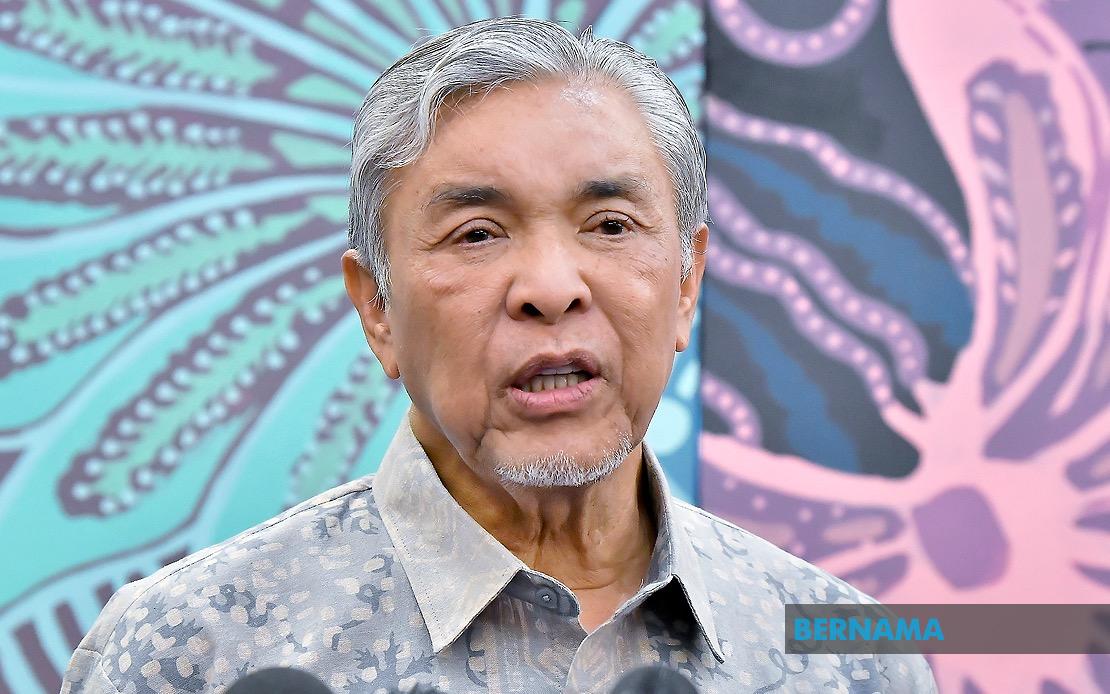
Deputy Prime Minister Datuk Seri Dr Ahmad Zahid Hamidi moved to quell public concerns about the South East Johor Development Authority's (KEJORA) planned territorial expansion, emphasizing that the initiative centres on orchestrating development activity across the region rather than acquiring property from residents. Speaking at an event in Kota Tinggi on July 2, Ahmad Zahid, who oversees the Rural and Regional Development portfolio, sought to dispel widespread misgivings that KEJORA intended to assume ownership of land parcels within the proposed expansion zone.
The clarification underscores persistent confusion among communities about the nature and scope of KEJORA's intentions. Such anxieties reflect broader concerns in Malaysia about state-led development initiatives and their potential impact on landowner rights. Ahmad Zahid's remarks signal the government's recognition that public perception of the expansion proposal requires active management if the project is to proceed without significant resistance.
At the heart of the expansion case lies KEJORA's demonstrated operational competence. The authority has achieved a 98.3 per cent success rate across its implemented projects, a metric the government views as justification for extending its mandate. This performance record, officials argue, positions KEJORA as the appropriate instrument for channelling development resources into south-eastern Johor, a region experiencing transformative growth driven by major industrial and tourism ventures.
Pengerang district exemplifies the acceleration taking place across south-eastern Johor. The area is undergoing rapid economic transformation fuelled by substantial projects and expanding tourism infrastructure. Ahmad Zahid highlighted these developments as evidence that the region's development trajectory demands expanded coordination capacity, which KEJORA's enlargement would ostensibly provide. The implicit argument is that existing administrative structures lack the sophistication or scope to manage growth of this intensity.
Public backing for the proposal appears substantial, according to KEJORA's own research. The authority conducted a feedback study revealing that 96 per cent of respondents supported the expansion initiative. While such figures suggest genuine community endorsement, they also raise questions about survey methodology and the representativeness of respondents, given the apparent contradiction between official claims of support and public anxieties sufficient to warrant the deputy prime minister's clarification.
Despite government confidence in the proposal, Ahmad Zahid acknowledged that its advancement depends ultimately on constitutional approval from His Majesty Sultan Ibrahim and the Regent of Johor, Tunku Mahkota Ismail. This invocation of royal consent reflects the constitutional framework governing Johor's governance and signals that the expansion, however technically sound, remains subject to higher authority. The requirement for formal royal blessing carries symbolic weight in Malaysian federalism, anchoring state-level development projects within the monarchy's oversight.
Concrete investment in the region demonstrates the government's commitment to the south-eastern Johor development agenda. The Rural and Regional Development Ministry has allocated approximately RM138 million to KEJORA for implementation of development initiatives. This substantial funding commitment encompasses 107 programmes already in execution, with an additional 350 smaller-scale projects planned under the current budgetary envelope. The investment scale suggests this is not a marginal initiative but a centerpiece of regional economic policy.
Augmenting these broader efforts is a parallel proposal to elevate Pengerang to full district status. Minister in the Prime Minister's Department Datuk Seri Azalina Othman Said, the Member of Parliament for Pengerang, has advocated for this administrative restructuring. Coupled with plans to establish a new hospital facility, the elevation to district status would reflect Pengerang's demographic and economic growth trajectory. Ahmad Zahid expressed endorsement for Azalina's proposal, indicating cross-ministerial alignment on the need for administrative reorganisation to match economic reality.
For Malaysian policymakers and regional observers, the KEJORA expansion represents a broader trend toward consolidated regional development authorities as vehicles for managing rapid economic transformation. The approach centralises coordination capacity and leverages demonstrated institutional competence, but it simultaneously concentrates power and raises governance questions about accountability and community participation in development decisions. The success of this model in south-eastern Johor could influence how other high-growth regions in Malaysia approach development administration.
The emphasis on coordination rather than acquisition also reflects a political pragmatism. Framing the expansion as a management tool rather than a land-appropriation mechanism allows the government to advance its development objectives while minimising potential legal and social friction. This rhetorical strategy acknowledges that property rights concerns remain sensitive in Malaysia, and that development initiatives perceived as threatening landowner interests face legitimacy challenges regardless of their technical merit.
As Pengerang and surrounding districts continue their economic acceleration, questions about governance adequacy will intensify. Whether KEJORA's proposed expansion, paired with administrative reforms and substantial investment, proves sufficient to manage regional transformation without creating new coordination bottlenecks will become clear over the coming years. The region's experience will likely inform how Malaysia approaches development governance in other emerging growth corridors.

