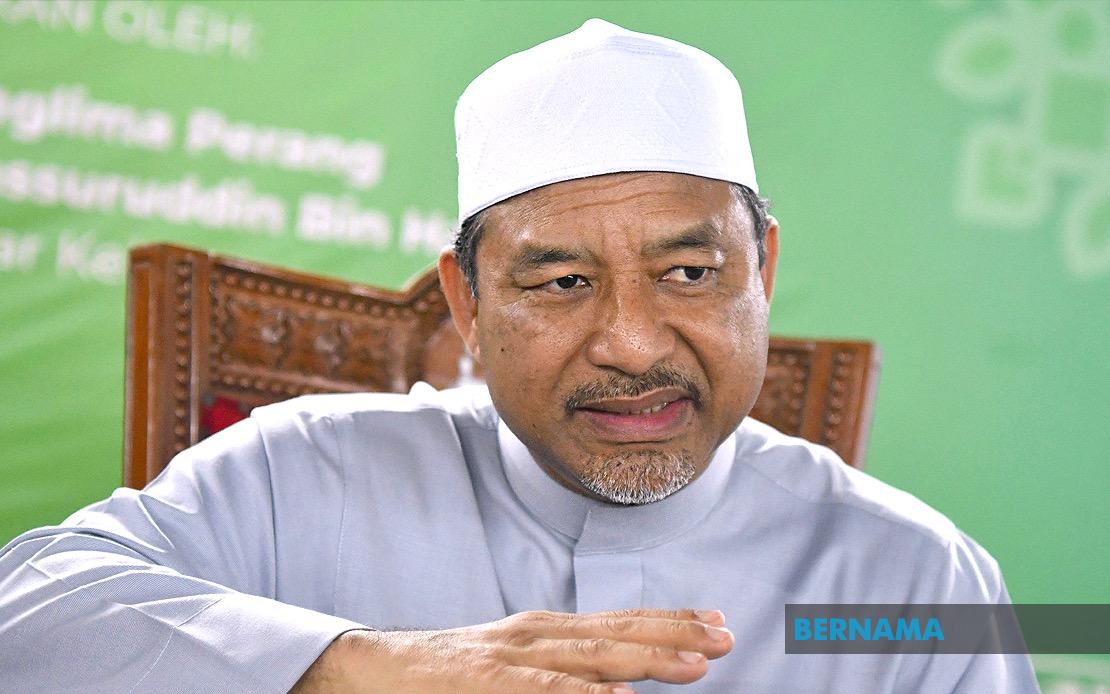
Kelantan's leadership has reaffirmed its commitment to safeguarding the state's rich artistic and cultural legacy, provided these traditions continue to operate within a framework grounded in Islamic teachings. Speaking at the conclusion of the Kelantan Arts Festival (FKRK) 2026 in Pasir Puteh, Menteri Besar Datuk Mohd Nassuruddin Daud outlined how the state government views culture not as something to be abandoned, but rather as a living inheritance requiring thoughtful curation to remain relevant and morally aligned with contemporary Islamic principles.
The Menteri Besar's position reflects a nuanced approach that has long characterized Kelantan's cultural management strategy. Rather than wholesale rejection of traditional practices, the state government has instead pursued a path of refinement—examining which elements of inherited arts and customs can be preserved in their essence while removing components deemed incompatible with Islamic values. This philosophy differs markedly from positions that treat tradition and religious adherence as mutually exclusive. Mohd Nassuruddin emphasized that Islam itself has never been antagonistic to culture and knowledge, noting that the state's development under Islamic governance has historically nurtured scholarship, artistic expression, language development and cultural practices rooted in Islamic traditions.
The distinction the Menteri Besar drew is particularly instructive for understanding Kelantan's cultural policy. Some traditional performances have indeed been restricted in the past due to elements contradicting Islamic principles, yet the government has signaled openness to reviving these performances once objectionable aspects are removed or refined. This suggests flexibility within principle—a recognition that cultural forms are not static but can evolve to serve contemporary values while maintaining their essential character. For practitioners and traditionalists concerned about cultural erosion, this represents a middle path that preserves heritage without requiring abandonment of moral frameworks.
The festival itself, which concluded after four days of programming, transcended its function as mere entertainment or tourism attraction. According to Kelantan's leadership, FKRK 2026 served as a crucial convergence point for heritage custodians and contemporary artists, enabling knowledge transfer across generations and communities. By creating dedicated space for these interactions, the state facilitates not just the performance of traditional arts but the transmission of underlying philosophies and techniques that make these cultural forms meaningful. This structural approach addresses a critical challenge facing heritage preservation globally: ensuring that cultural knowledge doesn't merely survive as museum pieces but continues to be actively practiced and transmitted within living communities.
Kelantan's cultural portfolio encompasses remarkable diversity—performing arts traditions, customary games, handicrafts spanning textiles and ceramics, and culinary heritage each representing distinct repositories of Malay community wisdom and historical experience. The Menteri Besar characterized these treasures as embodying the philosophical insights of generations, deserving preservation specifically because they carry meaning beyond aesthetic or commercial value. For Southeast Asia more broadly, where multiple regional governments grapple with balancing modernization against cultural continuity, Kelantan's explicit commitment to intergenerational transmission offers a model worth examining.
Particularly noteworthy is the government's emphasis on revitalizing traditional games—gasing uri, congkak, dam aji and tating—as counterweights to technology's influence on youth lifestyle patterns. This reflects sophisticated understanding of cultural preservation as a holistic endeavor rather than mere archival exercise. By positioning traditional games as active, engaging alternatives to digital entertainment, the state creates functional reasons for young Malaysians to engage with heritage rather than presenting culture as historical obligation. Such reframing has proven effective in other contexts where heritage adoption increases when traditional practices address contemporary needs or gaps.
The FKRK 2026, organized annually by the Ministry of Tourism, Arts and Culture in collaboration with the National Culture and Arts Department (JKKN) Kelantan, has become institutionalized as the state's primary platform for this cultural work. This organizational embedding ensures continuity and resources, moving heritage preservation beyond the realm of voluntary effort into sustained government priority. For Malaysian policymakers elsewhere, such institutional formalization signals seriousness and provides structural stability that voluntary initiatives cannot guarantee.
Kelantan's approach also acknowledges culture's economic dimensions without reducing culture to economic utility. The Menteri Besar noted that FKRK stimulates the economy and introduces Kelantan's distinctiveness to visitors, recognizing that tourism revenue can support heritage practitioners and justify cultural investment in budgetary terms. Yet the framing suggests economic benefits follow from authentic cultural preservation rather than driving it—a crucial distinction that protects heritage from becoming hollowed-out spectacle designed primarily for visitor consumption.
For the broader Southeast Asian region, Kelantan's model demonstrates that Islamic governance and cultural vitality need not be antagonistic. The explicit linking of Islamic principles with cultural development, rather than positioning them as competing frameworks, offers a template that may resonate across Muslim-majority societies wrestling with similar tensions. By demonstrating that heritage preservation and religious adherence can reinforce rather than contradict each other, Kelantan contributes to regional conversations about how modernizing societies can maintain cultural roots while advancing spiritually and economically.
The emphasis on values, decorum and morality as organizing principles for cultural development suggests that Kelantan sees culture as fundamentally about transmitting ethical frameworks alongside artistic forms. This philosophical grounding distinguishes heritage preservation as moral education, not merely aesthetic conservation. For younger Malaysians potentially disconnected from traditional culture through urbanization and globalization, this positioning of heritage as carrier of tested wisdom may prove more compelling than arguments based on historical authenticity alone.
Looking forward, Kelantan's continued commitment to this balanced approach will likely influence how other Malaysian states address their own cultural preservation challenges. The state's willingness to adapt traditional practices while maintaining their essence suggests maturity in heritage management—neither fundamentalist resistance to any modification nor wholesale abandonment of tradition for perceived modernity. As Malaysia continues navigating rapid social change, how successfully Kelantan executes this nuanced cultural strategy will offer valuable lessons for regional cultural policy.

