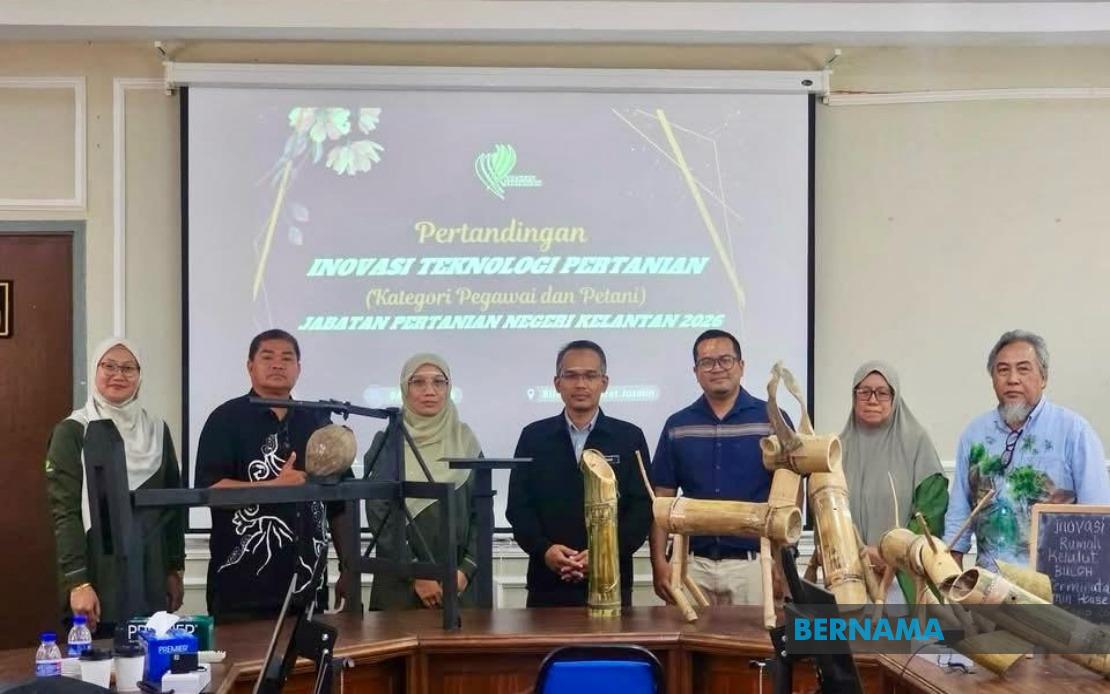
Plantation entrepreneur Che Adnan Che Kadir has earned state-level recognition for an ingenious coconut processing machine that judges believe could revolutionise durian handling across Malaysia's agricultural sector. The 56-year-old from Kampung Chetok in Pasir Mas developed the four-star rated device to address longstanding challenges on his own six-hectare operation, but its potential applications now extend far beyond his original conception. The Kelantan Department of Agriculture's 2026 Agricultural Technology Innovation Competition panel has formally suggested that Che Adnan pursue adaptation of the technology for durians and areca nuts, with durian processing emerging as the priority target for commercialisation efforts.
The recognition represents a significant milestone for agricultural innovation in the state. Che Adnan recently received the farmer category award at the competition, an achievement that qualifies him for representation at the national level during National Innovation Week scheduled for late September in Putrajaya. The judging process itself drew expertise from multiple sectors—assessors came from the Kelantan Department of Agriculture, the Malaysian Agricultural Research and Development Institute (MARDI), and regional polytechnics. This multi-institutional evaluation validates the device's technical soundness and suggests serious institutional backing for further development. The competition itself reflects growing governmental focus on addressing labour-intensive and safety-critical processes in Malaysia's primary sector.
Durian processing presents a compelling use case for adaptation because the fruit's notorious difficulty in handling combines both technical and human factors that current methods fail to address adequately. Opening and cutting durians demands considerable skill, physical strength, and careful technique—characteristics that create bottlenecks in commercial operations and heighten injury risks for workers. Traditional manual dehusking remains the dominant approach, leaving the industry vulnerable to labour shortages and repetitive strain injuries. A mechanised solution could simultaneously improve worker safety, increase processing speed, and reduce operational costs for Malaysian durian producers who increasingly export to Asian markets where consistency and food safety standards are rising.
Che Adnan's original device emerged from practical necessity rather than abstract innovation. Developed in 2024, the machine was engineered to overcome the inefficiencies and hazards of traditional coconut dehusking on his own plantation. The portable unit, weighing just 3.5 kilograms, dramatically compresses processing time—reducing the standard two to three minute manual dehusking period to approximately one minute, with experienced operators achieving completion in forty to forty-five seconds. This efficiency gain carries profound implications for farm economics: faster processing translates to higher throughput, reduced labour requirements per unit of production, and improved profit margins in a sector where operational costs are perpetually squeezed by commodity price fluctuations.
The entrepreneur's humble response to the judges' suggestion reveals how Malaysian innovations often emerge from ground-level problem-solving rather than laboratory research. Che Adnan expressed genuine surprise that his farm-level invention should attract broader commercial attention. Yet this trajectory reflects a broader opportunity within Southeast Asia's agricultural development: practical machines designed by experienced farmers frequently possess advantages over academic prototypes because they incorporate intimate knowledge of actual working conditions, material constraints, and user preferences. The willingness of formal innovation competitions to recognise and amplify such farmer-led solutions could catalyse a culture shift in how Malaysian agriculture embraces technological advancement.
Advancing the durian adaptation will require institutional support beyond Che Adnan's own resources. He has explicitly identified the need for an innovation grant to refine the device's design and scale production capacity to match industry requirements. The national innovation grant, carrying a RM10,000 prize, would provide crucial funding for prototype refinement, durability testing, and commercial-readiness modifications. Such financial support addresses a common barrier for Malaysian inventors: the gap between a functional proof-of-concept and a market-ready product requires investment in design optimisation, material sourcing, manufacturing setup, and regulatory compliance that individual entrepreneurs frequently cannot absorb alone.
The durian processing sector represents an increasingly strategic focus for Malaysia's agricultural economy. The fruit commands premium prices in international markets, particularly across Asia where demand for fresh and processed durians continues accelerating. Export revenue from durians now constitutes a meaningful component of Malaysia's agricultural earnings, competing alongside rubber, palm oil, and cocoa. Yet production efficiency remains constrained by labour availability and safety considerations that mechanisation could substantially mitigate. A Malaysian-origin durian processing device could establish intellectual property advantage in a market where equipment currently relies on imported solutions, while positioning local manufacturers for export opportunities to other durian-producing nations across Southeast Asia.
The judges' recommendation to pursue areca nut processing alongside durians indicates broader industry recognition of multiple adaptation pathways. Areca nuts present similar challenges to durians—they require skilled labour for processing, carry injury risks, and face labour market constraints that mechanisation could address. This multi-fruit adaptability enhances the device's commercial potential because it allows Che Adnan to pursue modular development strategies, adapting core mechanisms for different fruit types without redesigning the entire system. For Malaysian farmers managing diversified operations, such flexibility would offer economic advantages by allowing single-equipment investment to serve multiple crops.
The competition structure itself demonstrates how institutional frameworks can effectively identify and nurture grassroots innovation. By creating formal evaluation processes that engage farmers at state level, with pathways to national recognition, Malaysia's agricultural department has constructed a system responsive to real-world problems identified by producers themselves. This contrasts with top-down innovation models where research institutions define priorities based on academic interests rather than farmer needs. Che Adnan's experience suggests that expanding such competitions and ensuring adequate funding for promising innovations could unlock considerable latent entrepreneurial potential within Malaysia's agricultural workforce.
Looking ahead, successful adaptation of the coconut device for durian processing could establish a template for addressing similar mechanisation challenges throughout Southeast Asia's agricultural sector. Thailand, Indonesia, and other regional durian producers face identical labour and safety constraints that such innovations might resolve. A Malaysian-developed solution gaining market traction domestically could subsequently expand regionally, creating export markets for the technology itself alongside any agricultural products it helps process. This trajectory would embody the kind of value-addition and technology transfer that development economists identify as crucial for transitioning agricultural economies toward higher-income status.
Che Adnan's journey from farm-level innovator to state competition winner to potential national representative illustrates the possibilities for farmer-entrepreneurs within Malaysia's evolving agricultural landscape. His willingness to invest in solving practical problems, combined with institutional recognition of that innovation, creates momentum for further advancement. The path toward commercialising a durian-adapted version remains demanding—refinement, testing, regulatory approval, and market development all require sustained effort and resources. Yet the groundwork is now firmly established, supported by formal recognition, expert assessment, and the promise of innovation funding that could transform a farm innovation into an industry solution.

