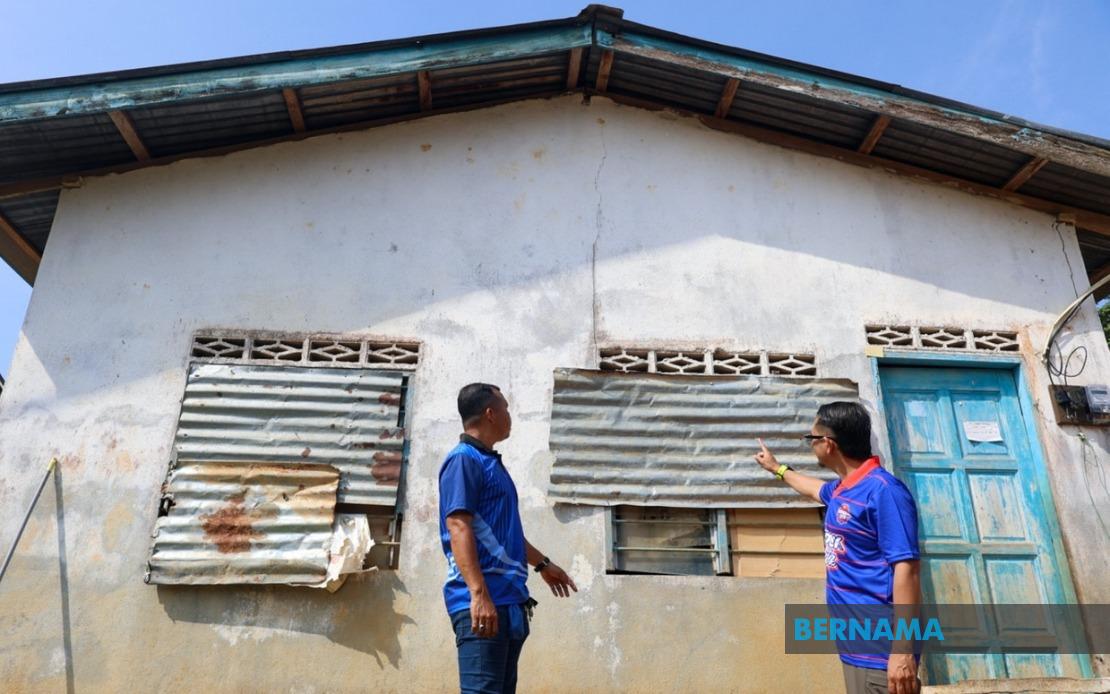
The Kelantan state government has mapped out a comprehensive action plan targeting five critical areas of concern for approximately 1,524 Orang Asli inhabitants across two geographically isolated communities: the Pasik Resettlement Scheme (RPS) and Kampung Kuala Wok. These remote enclaves, situated in the Nenggiri constituency near Gua Musang, face compounding development challenges that state authorities now view as requiring coordinated intervention across housing, wildlife management, infrastructure, and economic support.
Nenggiri Assemblyman Mohd Azmawi Fikri Abdul Ghani unveiled the priority framework following fact-finding missions conducted on August 3 and 4, during which representatives engaged directly with residents about their most pressing difficulties. The assemblyman stressed that the identification of these five pillars—structural housing rehabilitation, wild elephant conflict resolution, reliable electricity supply, participation in the Essential Goods Distribution Programme, and integration into the Jualan Rahmah subsidised retail initiative—represents the foundation for forthcoming development efforts across both settlements.
The housing situation emerged as perhaps the most visible concern during the ground visits. Assessments documented that numerous dwellings exist in states of significant disrepair, with deteriorating roofs, compromised structural integrity, and outdated or hazardous electrical wiring posing immediate safety risks to families. Beyond remedial work on existing structures, residents have articulated demand for new residential units to accommodate demographic pressures, particularly young couples establishing independent households. The assemblyman acknowledged these construction requests will necessitate formal consultation with the Department of Orang Asli Development (JAKOA), suggesting that housing expansion may depend on inter-agency coordination and resource allocation at state and federal levels.
Wild elephant incursions represent a relatively recent but severe threat to settlement stability. Since 2022, escalating encounters with roaming herds have disrupted routine agricultural and domestic activities while generating persistent anxiety about personal safety. The frequency and proximity of these encounters have elevated wildlife management from a peripheral concern to a frontline security issue directly affecting residents' quality of life and economic productivity. Residents cannot venture safely to farms, water sources, or neighbouring areas without confronting the unpredictable presence of large animals—a constraint that limits livelihood options and educational access for children.
Electricity supply deficiencies compound residents' isolation. Reliable power remains inconsistent across both settlements, hampering everything from domestic comfort to telecommunications connectivity and small-scale economic activities. The infrastructure gap underscores a broader pattern whereby remote Orang Asli communities remain structurally disconnected from grid-based services taken for granted in urban Malaysia.
Logistical constraints dominate daily existence in these settlements. The nearest functional petrol station lies approximately 50 kilometres away, forcing residents and authorities to contemplate including RON95 petrol within the Essential Goods Distribution Programme—a significant policy consideration reflecting the transportation bottleneck. Access routes to RPS Pasik and Kampung Kuala Wok demand four-wheel-drive capability and consume roughly 200 kilometres of round-trip travel time from Gua Musang town. This geographic isolation not only complicates commodity procurement and government service delivery but also limits economic opportunities, as residents cannot easily transport agricultural produce or handcrafted goods to external markets. The difficulty of travel reinforces a structural disadvantage whereby communities cannot fully participate in regional commerce or access competitive pricing for essential goods.
The Jualan Rahmah programme, designed to provide subsidised necessities, could provide meaningful relief if properly adapted to the settlements' specific contexts and access constraints. Similarly, expanding the Essential Goods Distribution Programme to encompass fuel would address a critical gap that currently prevents regular supply runs. These initiatives, however, require logistical restructuring to function effectively across such challenging terrain.
The Nenggiri Assemblyman's acknowledgment of these five priority areas signals growing state-level attention to Orang Asli welfare beyond traditional paternalistic frameworks. Whether framed as development intervention or rights-based support, the approach indicates recognition that peripheral indigenous communities require targeted, multi-sectoral responses rather than generic poverty alleviation schemes. The emphasis on direct consultation—conducting visits, soliciting resident input—suggests some departure from top-down policy-making, though the subsequent requirement for JAKOA coordination indicates that genuine implementation authority may reside elsewhere.
For Malaysia's broader indigenous policy landscape, the Kelantan case illustrates persistent structural challenges: geographic remoteness continues to undermine access to basic services, wildlife pressure increasingly threatens settlement viability in forest-adjacent areas, and informal housing markets among marginalised communities remain largely invisible to formal construction and safety standards. The government's identification of needs, while positive, marks only a preliminary phase; translating identified priorities into sustained resource allocation and inter-agency execution remains the critical test.
Regionally, such settlements mirror challenges faced by indigenous communities across Southeast Asia where geographic isolation, limited state infrastructure investment, and human-wildlife conflict converge to create compounding disadvantage. The specific combination of housing decay, elephant threat, energy poverty, and supply-chain dysfunction visible in Pasik Resettlement Scheme and Kampung Kuala Wok reflects systemic vulnerabilities affecting Orang Asli populations across Peninsular Malaysia's interior zones. The Kelantan government's framework could potentially inform broader Orang Asli development strategy if the priorities translate into concrete programmes with adequate budgeting and inter-agency accountability mechanisms.

