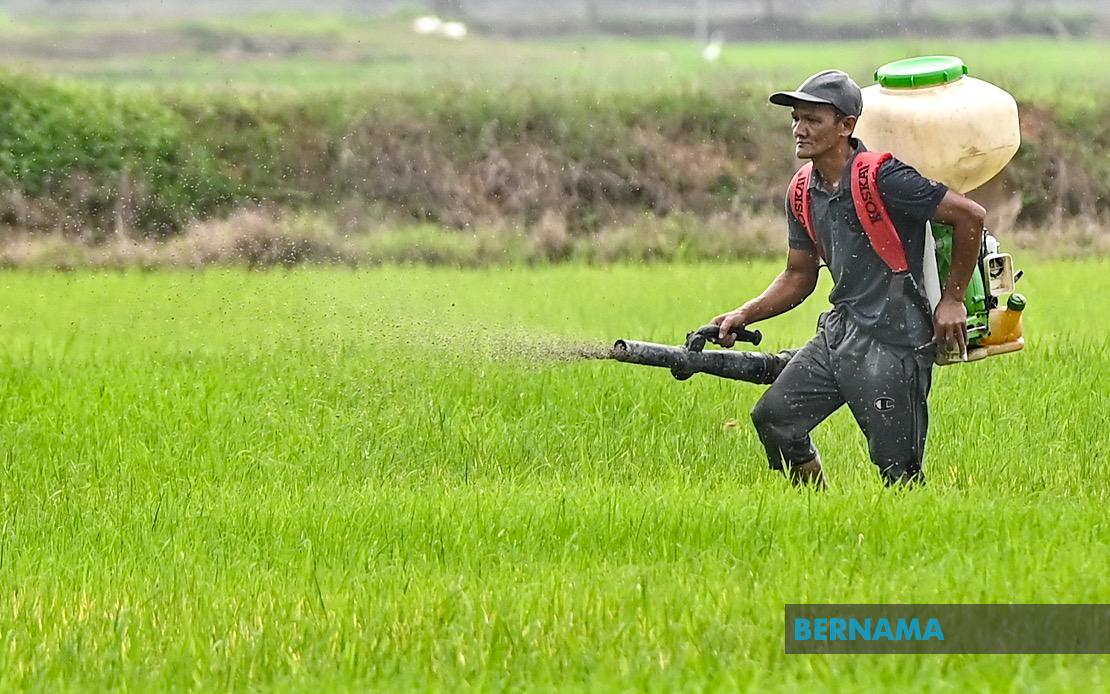
Kelantan's state government is directing RM3.64 million towards a comprehensive agricultural modernisation programme encompassing ten interconnected development initiatives this year, according to remarks delivered in the State Legislative Assembly at Kota Darulnaim Complex. The funding deployment represents a deliberate strategy to activate underutilised farmland, expand paddy cultivation, diversify commodity production, and establish robust support structures for rural entrepreneurs seeking to participate in commercial food systems.
The portfolio of initiatives stretches across three primary agricultural domains: crops, livestock, and aquaculture. Within the crop sector, the state is actively promoting commercial production through the Kelantan State Agriculture Development Corporation (PKPNK), which operates specialised facilities including the Rong Chenok Agro Valley. This agglomeration currently focuses on high-value ventures such as chilli fertigation systems, honeydew melon production, and controlled-environment hydroponic vegetable cultivation. These intensive agricultural techniques represent a departure from traditional smallholder farming and signal Kelantan's pivot towards technology-driven food production capable of competing in regional markets.
Livestock development has emerged as a significant employment generator within the state's agricultural ecosystem. Over 380 breeders are participating in government-supported programmes spanning conventional livestock such as cattle, goats, sheep, and buffalo, alongside emerging enterprises including deer and quail farming. This diversification reflects recognition that single-commodity dependence leaves rural communities vulnerable to market volatility and climatic disruption. The provision of specialised equipment alongside technical guidance indicates the state's commitment to upgrading production quality and operational efficiency across the sector.
The aquaculture dimension has achieved measurable momentum, with 122 breeders receiving RM382,094 in direct support during the current period. Production figures demonstrate substantial output, with 7,901.74 tonnes valued at RM76.2 million recorded in 2025, and state authorities targeting an increase to 8,000 tonnes in the current year. This expansion strategy necessarily depends on upgraded breeding infrastructure, prompting significant investment in artificial hatchery construction. Kelantan has now established over 130 such facilities and released 1.26 million fingerlings into public water systems, efforts aimed at sustaining wild fishery populations while supporting commercial aquaculture expansion.
The PKPNK facility itself functions as a production powerhouse within this framework. The corporation maintains capacity to generate up to one million catfish fingerlings and 500,000 tilapia fingerlings annually, establishing it as a major regional breeding centre. Beyond hatchery operations, the corporation operates a white prawn cultivation project in Pantai Geting, Tumpat, which annually produces approximately 400,000 kilogrammes. These volumes position Kelantan as a meaningful contributor to Malaysia's broader food production architecture, particularly within protein-based foodstuffs critical to regional food security.
Beyond production infrastructure, Kelantan has constructed a comprehensive entrepreneurial support ecosystem designed to connect farmers and producers with consumer markets. As of June, 1,560 entrepreneurs were utilising 74 marketing infrastructure facilities and 99 marketing outlets established by the state government. This network addresses a perennial challenge within Malaysian agricultural sectors: the gap between production capacity and reliable market access that frequently leaves rural producers at disadvantage relative to urban-based distributors and retailers.
The Kota Bharu Rural Transformation Centre (RTC) exemplifies this integrated approach, operating as a centralised agro-food marketing and distribution platform that has accommodated approximately 800 entrepreneurs. Since its establishment in 2012, the facility has generated RM4.16 billion in cumulative sales, demonstrating the commercial viability of structured agricultural entrepreneurship when coupled with quality marketing infrastructure. This scale of activity indicates that rural Kelantan possesses untapped productive capacity when institutional barriers are systematically addressed.
From a strategic perspective, Kelantan's agricultural investment programme reflects broader Southeast Asian recognition that food security increasingly depends on domestic production capacity rather than import reliance. Malaysia's agricultural import bill has historically been substantial, creating foreign exchange vulnerabilities during global supply chain disruptions. Kelantan's initiatives, though modest in absolute budgetary terms relative to national agricultural spending, contribute incrementally to reducing this structural dependency and generating rural employment alternatives in areas where economic diversification options remain limited.
The emphasis on entrepreneurship development signals acknowledgment that purely production-focused policies have historically underperformed. By coupling investment in breeding facilities, farmland rehabilitation, and production equipment with market access infrastructure and business support services, Kelantan's approach treats agricultural development as a complete value chain challenge rather than a supply-side issue alone. This holistic perspective offers potential lessons for other Malaysian states pursuing agricultural rejuvenation.
The stated focus on innovation—including hydroponic systems, scientific aquaculture, and technological livestock management—indicates Kelantan's recognition that traditional farming methods alone cannot generate sufficient incomes to retain rural populations or attract younger demographics into agricultural careers. Whether these technological investments reach smallholder farmers beyond state-controlled operations remains a pertinent question for future programme evaluation. Similarly, the sustainability of 8,000-tonne aquaculture targets depends on environmental carrying capacity of Kelantan's waterways and potential conflicts with alternative water uses.
For Malaysian policymakers observing agricultural development patterns across states, Kelantan's integrated approach combining infrastructure development, entrepreneur support, and market linkages offers a replicable framework. The Kota Bharu RTC's demonstrated commercial performance suggests that properly structured marketing hubs can convert production capacity into sustainable rural incomes. However, scaling such models across Malaysia's diverse agricultural regions would require substantially larger capital commitments and technical capacity than Kelantan's current resource allocation permits.

