Kelantan's position as the state with the most extensive Malay reserve land holdings in Peninsular Malaysia remains firmly established, according to data presented during a recent state legislative assembly session. As of June 2026, the northeastern state encompasses 526,083 hectares designated as Malay reserve land, accounting for 91.5 per cent of the state's entire landmass and distributed across 816,020 separate ownership titles. These figures underscore the distinctive demographic and land tenure characteristics that have long defined Kelantan's economic and social landscape.
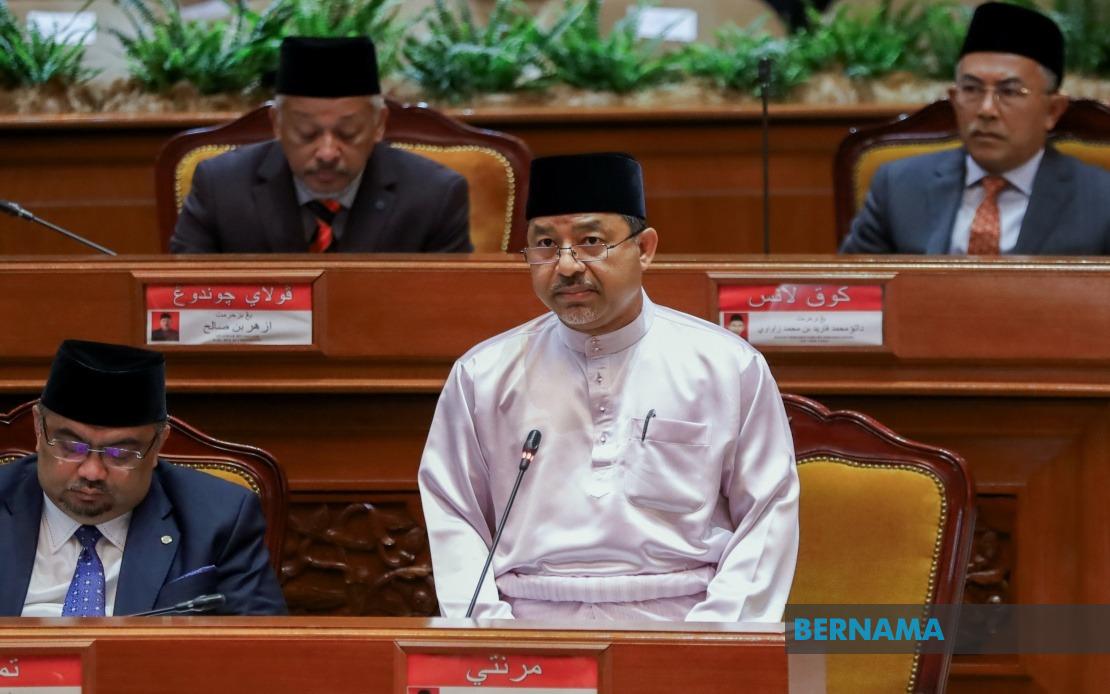
Menteri Besar Datuk Mohd Nassuruddin Daud disclosed the comprehensive land administration figures whilst responding to a query posed during the State Legislative Assembly sitting at the Kota Darulnaim Complex. The remaining 8.4 per cent of Kelantan's land—approximately 48,344 hectares—comprises non-Malay reserve areas encompassing 43,255 individual titles. When combined, these holdings account for 574,427 hectares of documented land ownership involving 859,275 registered titles across the state's entire landmass. The stark disproportion between Malay and non-Malay reserve categories reveals the foundational principles underpinning Kelantan's land administration policies.
The distribution of Malay reserve land across Kelantan's eleven districts demonstrates considerable geographic variation in both absolute area and proportional concentration. Gua Musang emerges as the district commanding the largest total acreage of Malay reserve land at 122,735 hectares, substantially exceeding other administrative subdivisions. Pasir Mas follows with 56,656 hectares, whilst Tanah Merah and Kuala Krai record 56,246 and 53,473 hectares respectively. These four districts together account for a considerable portion of the state's Malay reserve landholdings, reflecting historical settlement patterns and the varying topography and development trajectories across Kelantan.
When examined through the lens of proportional concentration rather than absolute area, the landscape shifts markedly. Tanah Merah achieves the highest percentage of Malay reserve coverage at 99.9 per cent, representing near-complete designation of its territory within this classification. Tumpat, Pasir Puteh, Bachok, Pasir Mas, Kota Bharu, and Jeli follow in descending order of proportional concentration. This variation suggests that whilst some districts have undergone minimal diversification of land tenure arrangements, others have witnessed somewhat greater integration of non-Malay reserve land acquisitions, whether through historical exceptions or more recent administrative adjustments.
Kelantan's legal framework governing Malay reserve land operates under the Kelantan Malay Reservations Enactment, which establishes both protective mechanisms and regulatory provisions. Section 13A of this enactment permits acquisition of land within designated Malay reserve areas by non-Malay individuals and entities under specified circumstances, thereby introducing controlled flexibility into what might otherwise function as a completely closed tenure system. This provision acknowledges practical realities of contemporary land transactions whilst maintaining state capacity to preserve the fundamental character and protective intent of Malay reserve designations.
Governmental authority to regulate and restrict transactions within Malay reserve zones constitutes a central feature of this regulatory architecture. The state government retains discretionary power to prohibit or condition any land transaction that might jeopardise the integrity, purpose, or collective interests served by maintaining Malay reserve status. This administrative discretion functions as a safeguard mechanism, enabling state officials to prevent transfers that could undermine the protective objectives embedded in Malaysia's constitutional and statutory provisions governing Malay reserve land. Such regulatory capacity reflects long-standing constitutional principles established at national independence.
Notably, Menteri Besar Mohd Nassuruddin emphasised that Kelantan has experienced no diminution in its total Malay reserve land area during the period encompassed by recent administrative records. This maintenance of land area despite the existence of legal pathways permitting non-Malay acquisitions suggests either cautious exercise of governmental discretionary authority or relatively limited demand for such acquisitions. The stability of the total acreage contrasts with potential scenarios in other jurisdictions where reserve land designations have eroded gradually through incremental transfers and exemptions. Kelantan's achievement in preserving its land base intact assumes significance within broader Southeast Asian contexts where indigenous or communal land protections frequently face intensifying pressure from commercial development demands.
The concentration of Malay reserve land in Kelantan carries implications extending beyond land administration technicalities into questions of economic development, agricultural production, and demographic sustainability. The state's substantial landholdings within this protected category influence possibilities for large-scale industrial projects, infrastructure development, and foreign investment, requiring careful calibration between modernisation impulses and protective legislative intent. Agricultural activities conducted on Malay reserve land remain a significant component of Kelantan's rural economy, particularly paddy cultivation in low-lying areas and smallholder farming across diverse terrain.
The data presented reflects administrative records accurate to June 2026, representing the most current comprehensive assessment available to state authorities. The precision of these figures—calculated across all eleven districts with detailed breakdowns by individual administrative units—indicates systematic record-keeping and ongoing monitoring of land tenure patterns. Such meticulous documentation enables state policymakers to track any evolving trends in reserve land composition and to identify districts or regions where proportional concentrations might shift materially. Regular updating of these baseline figures supports evidence-based governance and permits informed consideration of adjustments to reserve land administration policies.
Kelantan's distinction as the state maintaining the largest Malay reserve land area in Peninsular Malaysia reflects cumulative historical decisions, constitutional protections, and sustained administrative commitment to preserving designated communal holdings. The 526,083 hectares and 816,020 ownership titles represent not merely statistical aggregations but represent the foundation for thousands of Kelantanese families' agricultural livelihoods, property values, and economic prospects. The state government's documented preservation of this land base without contraction suggests institutional capacity to balance protective objectives with contemporary development considerations. As Malaysia continues navigating tensions between economic modernisation and constitutional safeguards for bumiputera interests, Kelantan's experience offers instructive lessons regarding mechanisms through which reserve land designations can remain substantively meaningful whilst accommodating measured flexibility in governance.
The broader significance of maintaining robust Malay reserve land concentrations extends to questions of regional equity and constitutional implementation across Malaysia's federal system. Kelantan's position demonstrates that states possess both legal authority and practical administrative capacity to implement reserve land policies consistently over extended periods. The northeast coast region, of which Kelantan forms a major component, has historically occupied a distinctive position within Malaysian development patterns, combining agricultural heritage with emerging modern economic sectors. The preservation of extensive Malay reserve landholdings supports continuity of this regional character whilst enabling gradual economic transition.

