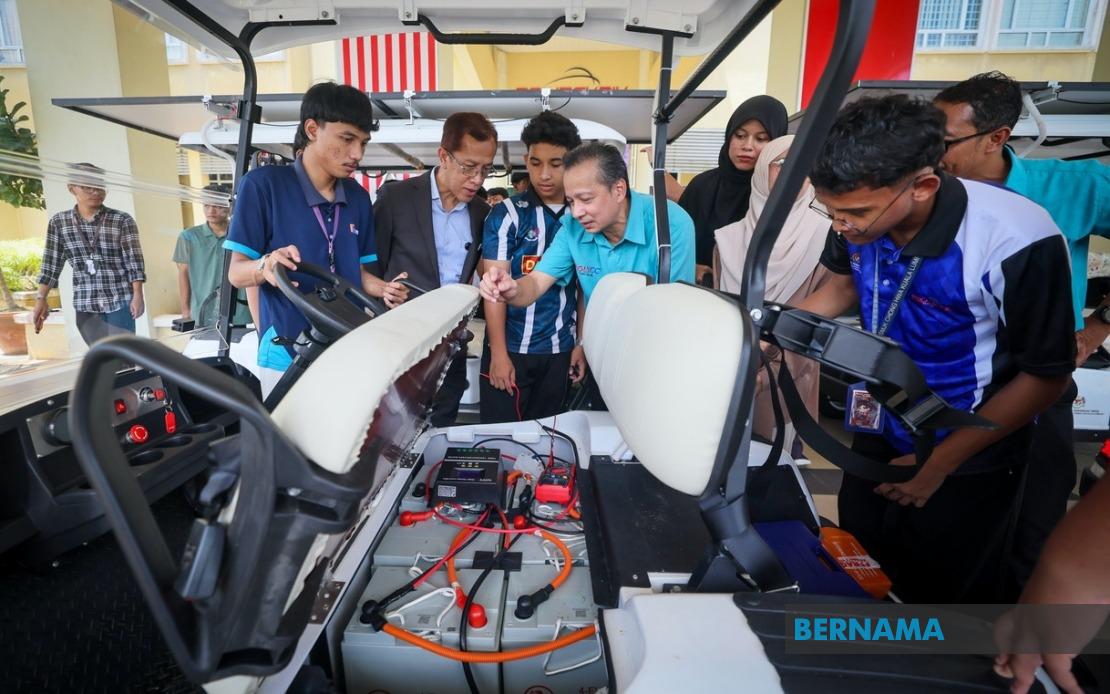
Jeli Kelantan Polytechnic has achieved a notable milestone in renewable energy innovation by developing a solar panel system for buggy cars, marking the first deployment of such technology in Kelantan. The Solar Buggy Car Technology Innovation Project represents a tangible application of green energy principles within the polytechnic's curriculum, bringing classroom learning into practical field demonstrations that benefit both students and the broader community.
The institution, under the direction of Mohd Zamre Ab Rahman, invested nearly RM300,000 in the initiative, which was executed over approximately one month by a cohort of 20 third-semester students enrolled in the Diploma in Electrical Engineering (Green Energy) programme. The project, overseen by lecturer Chung Boon Chuan, capitalised on foundational knowledge and technical competencies that students had accumulated since beginning their studies. This compressed timeline demonstrates the effectiveness of the polytechnic's curriculum design in equipping students with practical problem-solving capabilities.
The core innovation centres on integrating solar photovoltaic panels directly onto buggy vehicles, enabling battery charging through renewable solar energy rather than reliance on conventional electricity supply. This approach aligns with global trends towards transportation electrification and distributed renewable generation. Jeli Kelantan Polytechnic currently operates six fully equipped units comprising four four-seater vehicles and two two-seater variants, each constructed at a cost of approximately RM40,000. The fleet serves dual purposes: functioning as educational tools for students studying green technology applications whilst simultaneously demonstrating viable commercial solutions to potential customers.
The polytechnic's strategic positioning as a green campus extends beyond individual projects. The institution has deliberately structured its infrastructure investments and academic programmes to champion renewable energy adoption. This institutional commitment reflects broader recognition that Malaysia's transition towards sustainable energy sources requires not only policy support but also a skilled workforce capable of designing, installing, and maintaining renewable systems across various applications. The solar buggy initiative exemplifies this comprehensive approach to green education.
Enrolment patterns in the green energy diploma programme underscore growing market demand. Since launching in July of the previous year, the programme attracted initial intake of 40 students; this year's cohort has doubled to 80 enrollees, signalling strong student interest and employer recognition of career prospects. This expansion trajectory mirrors economic realities across Kelantan and the broader Malaysian context, where renewable energy infrastructure development generates employment opportunities spanning engineering, installation, maintenance, and project management roles.
Kelantan's emerging role in Malaysia's renewable energy sector provides particularly relevant context for the polytechnic's initiatives. The state has witnessed significant solar farm development, including operations at Tok Uban and Pasir Mas, establishing Kelantan as an active participant in national renewable capacity expansion. These utility-scale projects create demand for technicians and engineers trained in solar technology, directly supporting curriculum relevance and graduate employment prospects. The polytechnic's proximity to these developments positions it advantageously for both student recruitment and collaborative industry partnerships.
Investment from Malaysia's Ministry of Higher Education has substantially supported the polytechnic's infrastructure development. A RM2 million allocation directed towards laboratory upgrades and equipment procurement has strengthened teaching and learning capacity within green energy disciplines. Modern laboratory facilities enable students to work with contemporary solar panel systems, inverters, battery storage technologies, and monitoring equipment they will encounter in professional practice. This alignment between institutional equipment and industry-standard technology accelerates student competency development.
Beyond educational value, the polytechnic has strategically positioned itself as a service provider within the renewable energy market. Jeli Kelantan Polytechnic now actively solicits commercial commissions from public agencies and private entities seeking to install solar systems on vehicles and other assets. This commercialisation dimension creates revenue streams supporting programme sustainability whilst simultaneously offering students exposure to customer relations, project management, and business processes inherent to renewable energy enterprises. The approach bridges education and entrepreneurship, preparing graduates for diverse career pathways.
The practical relevance of this model extends across Malaysia's broader green energy development needs. As the nation pursues renewable capacity targets and seeks to reduce fossil fuel dependence, technical education institutions must evolve beyond theoretical instruction towards hands-on capability development. The solar buggy project demonstrates that polytechnics can simultaneously serve as learning laboratories, technology demonstration centres, and service providers. This multifunctional role maximises institutional resource utilisation whilst generating tangible outcomes supporting national sustainability objectives.
For Malaysian policymakers and education planners, the Jeli Kelantan Polytechnic model offers a replicable framework for technical institutions nationwide. Developing similar programmes aligned with state-level renewable energy priorities—whether solar, wind, hydroelectric, or biomass technologies—would strengthen national human capital in critical green sectors. The demonstrated capacity to design, construct, and commercially deploy renewable technology prototypes positions polytechnics as strategic partners in Malaysia's energy transition.
Looking forward, this initiative signals how Southeast Asian technical education can respond to regional renewable energy expansion. As ASEAN nations collectively pursue climate commitments and energy security objectives, workforce development through applied learning becomes increasingly critical. The solar buggy project's success—combining student learning outcomes, institutional green campus aspirations, commercial viability, and direct support for emerging renewable industries—provides a compelling model for replication across Malaysia's polytechnic network and potentially throughout the region.

