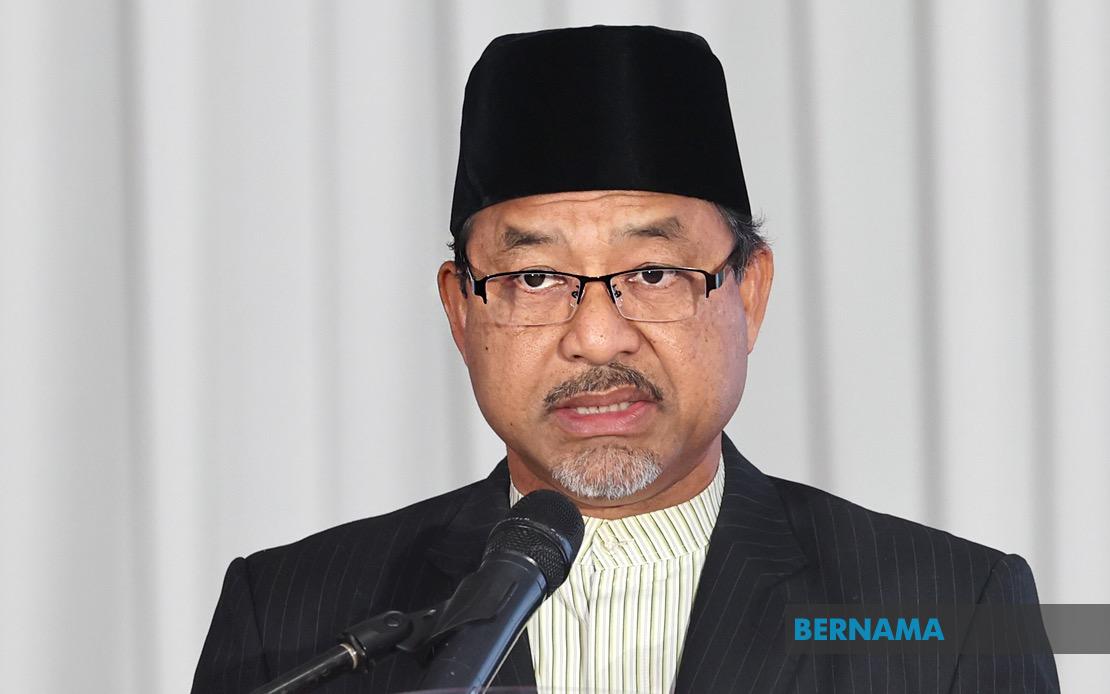
Kelantan has successfully maintained forest coverage at 51.79 per cent of its total land area, equivalent to 778,708.34 hectares, according to information presented to the state legislative assembly. The achievement demonstrates the northeastern state's alignment with broader peninsular objectives to preserve natural woodland resources amid competing pressures from economic development and urbanisation. Menteri Besar Datuk Mohd Nassuruddin Daud presented the figures when responding to a query raised by assembly member Zuraidin Abdullah from Chetok, highlighting the state's active engagement with forest preservation mandates.
The figure reflects fulfilment of targets established under the Peninsular Malaysia Forestry Policy, which establishes a minimum threshold of 50 per cent forest and tree coverage across the country's land mass. Achieving and maintaining this benchmark carries significance beyond Kelantan's borders, as it contributes to broader national environmental objectives and demonstrates how individual states approach the balance between ecological stewardship and resource utilisation. The state's performance also provides a regional reference point, particularly for other East Coast states managing similar biodiversity-rich landscapes alongside agricultural and commercial interests.
Kelantan's approach to forest management involves multiple coordinated mechanisms working through the state Forestry Department. The administration has identified government-owned parcels suitable for formal designation as Permanent Reserved Forests, a classification that provides legal protection and structured management frameworks. These designated areas undergo formal gazetting procedures that establish their conservation status and define permissible uses, creating a legally binding foundation for long-term protection. This systematic identification process ensures that suitable lands transition into protected status according to established protocols rather than relying on ad-hoc measures.
The state's protective regime extends beyond Permanent Reserved Forests to encompass Protected Forests classified under functional categories specified in the National Forestry Enactment. These designations operate under Section 10(1) of the National Forestry Enactment (Adoption) (Amendment) (No. 3) 2025, establishing a regulatory framework that distinguishes between different forest types based on their primary purposes, whether conservation, watershed protection, or sustainable resource extraction. This graduated approach allows Kelantan to maintain diverse forest functions while ensuring that development pressures do not eliminate forests serving critical ecological roles.
Active reforestation represents another cornerstone of Kelantan's forest strategy. The state government participates in the Greening Malaysia campaign, which combines tree-planting initiatives with broader forest restoration programmes. These efforts address areas where forest cover has been reduced or degraded through previous activities, gradually expanding the state's green footprint. Participation in national campaigns also facilitates resource sharing, technical expertise exchange, and alignment with federal forestry priorities, creating synergies between state-level implementation and national targets.
A fundamental principle guiding Kelantan's forest policy involves reconciling conservation objectives with economic development aspirations. Rather than adopting a purely preservationist stance that might restrict legitimate development, the state pursues what officials characterise as a balanced approach. This framework acknowledges that communities require economic opportunities and that some land use changes may be necessary, while simultaneously establishing guardrails to ensure that development does not systematically erode forest resources. The philosophy reflects a sustainability principle ensuring that present economic activities do not compromise future generations' capacity to meet their own needs, a concept central to contemporary environmental governance.
Technology enhancement initiatives strengthen the practical implementation of forest protection policies. Kelantan has integrated technological systems to monitor forest conditions and detect potential threats at early stages. These tools enable authorities to identify unauthorised land clearing, encroachment attempts, and changes in forest composition rapidly, allowing swift response before small infractions expand into substantial losses. Remote sensing, satellite imagery, and ground-based monitoring systems combine to create a comprehensive surveillance capability that compensates for the challenges of monitoring extensive forested territories with limited personnel.
When potential threats to forest cover are identified through technological systems, verification procedures ensure that responses are proportionate and accurate. Suspected encroachment or unauthorised activities trigger field patrols and on-site inspections that confirm the nature and extent of the issue. This verification step prevents misidentification of natural processes as threats and ensures that enforcement actions target genuine violations rather than false positives. Only after ground truthing confirms that violations have occurred do authorities proceed to formal enforcement measures, creating a safeguard against overzealous or misdirected intervention.
Kelantan's forest maintenance success carries implications extending beyond the state's administrative boundaries. The East Coast region, encompassing Kelantan, Terengganu, and Pahang, contains significant portions of Peninsular Malaysia's remaining primary and secondary forests. These forests support biodiversity of regional and international significance and provide watershed functions affecting communities across a wide catchment area. Kelantan's commitment to forest preservation therefore contributes to broader environmental stability across a larger geographical zone, influencing water availability, climate regulation, and wildlife conservation across multiple state boundaries.
The state's achievement also positions Kelantan as a participant in Malaysia's international environmental commitments. Maintaining forest cover supports the country's obligations under regional and global biodiversity conventions and climate change agreements that place premium value on tropical forest preservation. As nations increasingly scrutinise each other's environmental performance and consumers demand products from responsibly-managed sources, states like Kelantan that demonstrate tangible forest conservation results enhance Malaysia's standing in international environmental discourse and create commercial advantages for forest-dependent industries operating under verified sustainable practices.
Looking forward, Kelantan's forest preservation strategy will likely face ongoing pressures as economic development accelerates across the region. Population growth, agricultural expansion, infrastructure development, and resource extraction activities will continue generating demands for land conversion. The state's demonstrated commitment to maintaining the 50 per cent forest cover threshold suggests that future policy decisions will need to become increasingly sophisticated, perhaps requiring stricter controls on forest conversion in some areas, more efficient land use in development zones, and potentially expansion of tree planting on non-forest land to offset any unavoidable forest loss. Sustaining current achievements will demand sustained political will and continued investment in monitoring and enforcement capacity.

