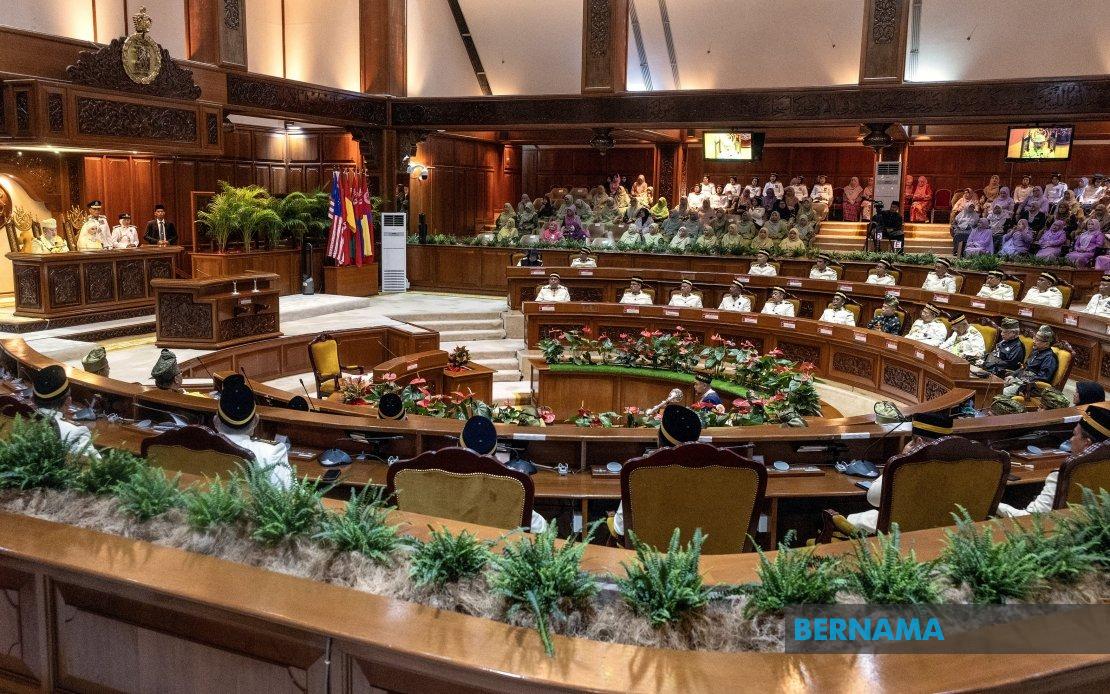
The Kelantan state government is moving forward with legislative reform following a significant constitutional setback, preparing to present the Syariah Offences (Kelantan) Bill 2026 to the State Legislative Assembly next Tuesday. The tabling comes more than 18 months after the Federal Court's landmark decision to invalidate a substantial portion of the state's previous religious criminal legislation, creating an urgent need for revised laws that respect the constitutional division of powers between Kuala Lumpur and the states.
Deputy Menteri Besar Datuk Dr Mohamed Fadzli Hassan announced the impending legislative move after the State Executive Council convened in Kota Bharu. The new bill represents Kelantan's attempt to navigate the complex constitutional terrain laid out by the Federal Court's ruling in the case of Nik Elin Zurina Nik Abdul Rashid and another, which fundamentally reshaped the state's capacity to legislate on Syariah criminal matters. The 2024 judgment declared 16 of 18 challenged provisions null and void, effectively dismantling most of the Kelantan Syariah Criminal Code (I) Enactment 2019.
That Federal Court decision, delivered with an 8-1 majority, established that Kelantan's legislature had overreached its constitutional authority by enacting laws addressing offences already within Parliament's exclusive jurisdiction. The ruling sparked considerable national debate about federalism and the proper boundaries of state power in an area that carries significant religious and political resonance across Malaysia. The constitutional question raised—whether states can legislate independently on Syariah criminal matters or whether such authority is exclusively federal—remains contentious in Malaysia's ongoing dialogue about Islamic governance and constitutional federalism.
The drafting process for the replacement bill has consumed considerable resources and time since mid-2024. Kelantan established a dedicated Committee for the Amendment of the Kelantan Syariah Criminal Code (I) Enactment 2019, drawing together a cross-disciplinary team of civil law practitioners, Syariah legal experts, academic specialists in constitutional matters, and serving Syariah judicial officers. This collaborative approach reflects the complexity of the task: crafting legislation that adequately addresses Islamic law and religious offences while staying within the constitutional boundaries established by the Federal Court.
Before advancing to the assembly floor, the draft bill underwent scrutiny from the Kelantan Council of Ulama, operating under the Kelantan Islamic Religious and Malay Customs Council (MAIK). This consultation with religious scholars represents an important procedural step in legitimating the legislative proposal within the Islamic community and ensuring that the bill's substance aligns with religious principles and scholarly consensus. Such consultation processes are integral to how Islamic governance functions at the state level across Malaysia.
The new bill encompasses a substantial legislative framework comprising nine distinct parts, 62 individual clauses, and accompanying schedules. Its construction rests explicitly on the constitutional doctrine of "pith and substance," a legal principle requiring legislators to focus on the core character and true intent of a law rather than its superficial form. By anchoring the bill to this doctrine, Kelantan's drafters have attempted to ensure that each provision genuinely relates to matters within state jurisdiction, thereby withstanding potential constitutional challenge.
The legislation incorporates reformative and innovative provisions alongside traditional Syariah criminal law elements, suggesting that Kelantan has used this legislative revision as an opportunity to modernise its approach. Rather than simply retreating from the Federal Court's constraints, the state appears to be reimagining how Syariah offences can be effectively prosecuted and addressed within the constitutional framework that now governs their jurisdiction. This reformative approach could signal a broader shift in how Malaysian states approach Syariah legislation following federal court interventions.
Deputy Menteri Besar Mohamed Fadzli's emphasis on obtaining assemblymen's support underscores the political dimension of this legislative exercise. In Kelantan, where Islam and Islamic governance occupy central positions in state identity and policy-making, ensuring consensus around the bill among elected representatives carries both symbolic and practical weight. The appeal for universal backing suggests that the state government views this legislation as requiring broad political legitimacy rather than narrow partisan support.
The Federal Court's 2024 decision originated from a constitutional challenge mounted by Kelantan lawyer Nik Elin Zurina Nik Abdul Rashid, whose legal action exposed fundamental questions about how Malaysia's federal system allocates legislative authority over religious matters. The case rippled through Malaysian constitutional discourse, raising questions relevant beyond Kelantan about whether other states might face similar vulnerabilities in their Syariah legislation. The subsequent national debate reflected deeper tensions about how Islamic governance operates within a federal constitutional framework designed decades earlier, before contemporary interpretations of federal-state boundaries.
For Malaysia more broadly, Kelantan's legislative response carries implications extending beyond state boundaries. The revision represents a test case in how states respond to federal court constraints on Syariah legislation. If Kelantan successfully crafts legislation that satisfies both religious requirements and constitutional scrutiny, it may provide a template that other states could adapt. Conversely, if the new bill encounters legal challenges or proves inadequate in addressing substantive religious offences, it could trigger further constitutional litigation and ongoing uncertainty in Malaysian Syariah law.
The coming week's assembly sitting will reveal whether Kelantan's assemblymen embrace the revised bill without significant amendment or whether substantial debate and modification occur before passage. The legislative process ahead will demonstrate whether the broad stakeholder consultation conducted over recent months has generated genuine consensus, or whether underlying tensions about the scope of state Syariah jurisdiction persist beneath formal political support.

