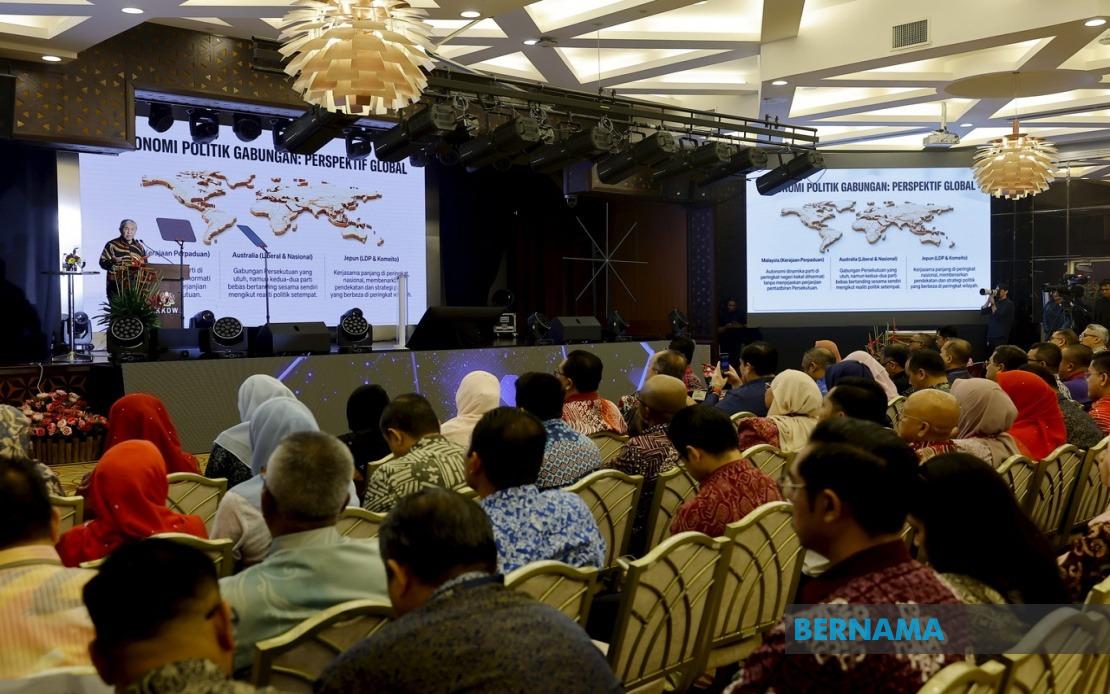
The Community Development Department (KEMAS) has unveiled an ambitious expansion strategy for its Tabika Tunas Istimewa Programme, committing to establish at least one dedicated special needs kindergarten in every district across Malaysia by 2027. Deputy Prime Minister Datuk Seri Dr Ahmad Zahid Hamidi, who also oversees the Rural and Regional Development Ministry, announced the initiative during the department's monthly gathering in Putrajaya on August 6, describing it as a cornerstone effort to democratise access to specialised early childhood education for families regardless of their geographic location or economic circumstances.
Currently, KEMAS operates 19 classes providing special needs education services. The expansion programme represents a substantial scaling effort, with plans to add up to 132 additional classes through a combination of opening new dedicated facilities and upgrading existing infrastructure. This growth trajectory reflects the government's recognition that early intervention and quality education for children with special needs requires strategic investment and nationwide coverage. The phased approach underscores the logistical complexity of establishing appropriate facilities, training qualified personnel, and ensuring sustainable operations across diverse communities.
Maintaining affordability remains central to the initiative's philosophy. Monthly fees will remain capped at RM100, a critical consideration for families in rural Malaysia where incomes often lag urban centres. This pricing structure acknowledges that special needs education frequently demands additional expenditure for therapy, assessment, and specialised materials, placing substantial financial burdens on parents. By controlling costs, KEMAS aims to prevent families from rationing educational access based on ability to pay, thereby ensuring that disability does not compound existing socioeconomic disadvantages in rural districts.
Ahmad Zahid framed the expansion within a broader philosophical approach to rural development, emphasising that government performance should ultimately be measured not by institutional metrics but by tangible improvements in citizens' living standards and quality of life. His emphasis on "game changers" reflects a strategic orientation toward interventions that fundamentally alter economic trajectories and social outcomes rather than delivering temporary relief. For rural communities, this implies moving beyond conventional assistance programmes toward sustainable capability-building that creates lasting opportunities for income generation and social mobility.
The initiative carries particular significance for Southeast Asian context, where special needs education remains underfunded and geographically concentrated in urban centres across the region. Malaysia's commitment to district-level coverage positions it as a potential regional model for equitable educational provision. The programme's success could demonstrate feasible approaches for other nations grappling with similar challenges of providing specialised services in resource-constrained rural environments while managing fiscal constraints.
Beyond kindergarten services, Ahmad Zahid outlined complementary strategies for enhancing rural economic performance. Regional Development Authorities (LKWs) have been assigned targets for achieving returns on assets between four and six per cent, reflecting efforts to improve productivity and efficiency of government-held resources. These authorities have been directed to develop comprehensive Asset Activation Plans within a 100-day timeframe, effectively auditing the utilisation rate of existing government assets and identifying mechanisms to generate returns that benefit local communities directly.
This asset-focused approach addresses a persistent challenge in Malaysian rural development: underutilised government infrastructure and resources that fail to generate economic benefits despite significant public investment. By mandating structured assessment and activation plans, the ministry seeks to reverse this pattern through disciplined financial management and strategic deployment. The targeted returns rate signals serious intent to transition from asset-holding to asset-leveraging, creating revenue streams that can sustain development initiatives without perpetual budget allocations.
Simultaneously, the Rural Economic Council Executive Committee (MEXCLUB) has prioritised strengthening the Sustainable Village Programme through establishment of a specialist task force. This intervention targets cooperatives, recognising their importance as vehicles for collective economic action in rural areas. The task force will concentrate on governance enhancement, brand development, market access expansion, and facilitation of strategic networks. These interconnected areas address fundamental constraints limiting cooperative effectiveness: weak internal management, inability to differentiate products, limited buyer relationships, and isolation from supply chains and information networks.
The cooperative focus reflects evidence that rural economic stagnation often stems not from insufficient resources but from inadequate coordination, information asymmetries, and disconnection from commercial networks. By providing targeted support in governance and market linkage, the task force effectively removes barriers preventing smallholder cooperatives from scaling operations and capturing greater value. This approach recognises that rural development increasingly depends on integration into regional and national economic systems rather than pursuit of self-sufficiency models.
Taken collectively, these initiatives—special needs education expansion, asset activation, and cooperative strengthening—represent a multifaceted vision for rural Malaysia that addresses education, infrastructure utilisation, and economic opportunity simultaneously. The 2027 timeline for Tabika Tunas Istimewa establishes concrete accountability markers while allowing realistic implementation timelines. Success will require sustained coordination across KEMAS, state governments, and local authorities, alongside adequate budget allocation and capacity development for special needs educators.
For Malaysian policymakers and development practitioners, this announcement signals renewed prioritisation of rural and underserved populations during a period when urbanisation pressures concentrate resources in major metropolitan areas. The commitment to maintaining RM100 monthly fees and achieving nationwide coverage suggests serious engagement with equity concerns rather than nominal commitment. Whether implementation matches ambition will ultimately determine the programme's impact on thousands of families currently lacking access to appropriate early education services for children with special needs.
The broader implications extend to regional development discourse in Southeast Asia, where balancing urban dynamism with rural welfare remains contested. Malaysia's explicit targeting of every district signals that equity is not merely aspirational but measurable and enforceable through administrative mechanisms. This institutional commitment, combined with complementary economic initiatives, potentially offers lessons for neighbouring economies pursuing similar objectives of inclusive development in geographically diverse nations.

