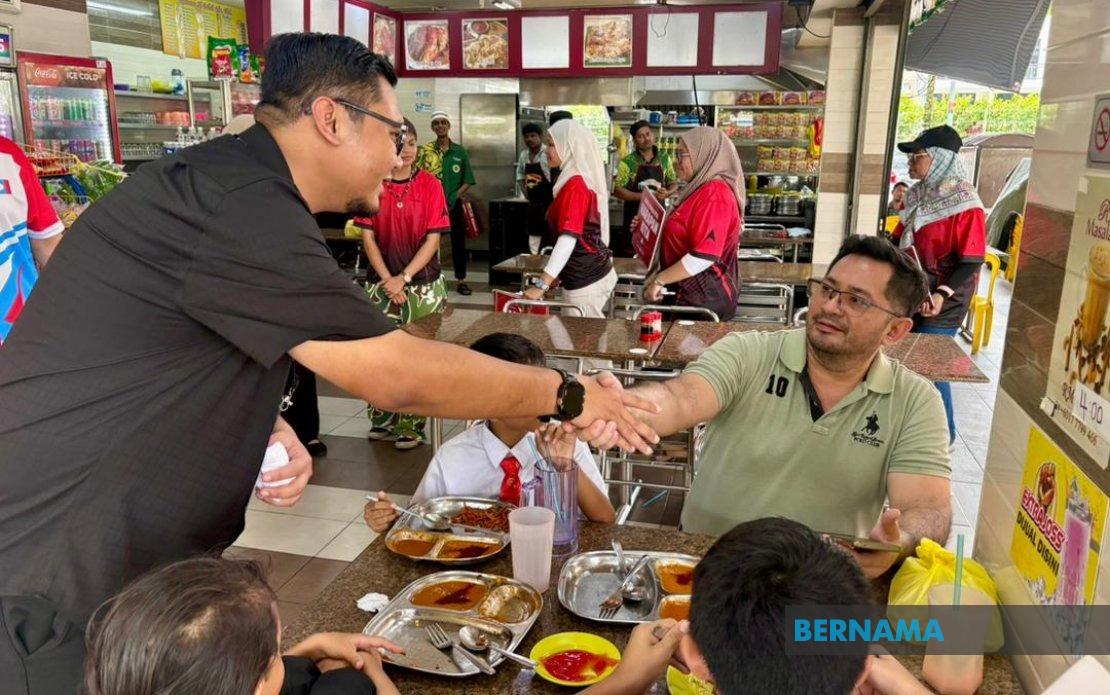
Muhammad Faezuddin Mohd Puad, the Pakatan Harapan nominee for Kempas in the forthcoming 16th Johor State Election, is banking on a platform centred on skills development and healthcare infrastructure to court voters ahead of the July 11 polling day. The 35-year-old, who also leads the Johor chapter of Angkatan Muda Keadilan, articulated his priorities during grassroots engagement in Taman Damansara Aliff, signalling a focus on constituency-level service delivery rather than grand policy pronouncements.
At the heart of his campaign strategy lies a commitment to vocational pathways for secondary school graduates who have not secured top academic credentials. Muhammad Faezuddin identified a critical demographic—SPM holders from economically disadvantaged backgrounds—whose potential remains underutilised in Malaysia's labour market. Rather than allowing such cohorts to face prolonged unemployment or underemployment, he proposes channelling resources into Technical and Vocational Education and Training (TVET) programmes designed to equip them with market-ready competencies. This positioning reflects a pragmatic understanding that Malaysia's economy increasingly requires skilled workers across multiple sectors, yet cultural biases towards academic achievement often marginalise technical qualifications.
The TVET initiative gains particular resonance in Johor, where manufacturing, logistics, and construction industries generate substantial employment opportunities requiring trained personnel. By framing vocational training as a pathway to entrepreneurship and stable employment, rather than a second-tier option, Muhammad Faezuddin addresses anxieties among lower-income families navigating their children's futures. His explicit mention of supporting participants to launch their own ventures signals recognition that job creation through self-employment remains vital for rural and suburban constituencies where wage employment opportunities may be limited.
Parallel to his skills development agenda, healthcare accessibility emerges as a second pillar of his campaign. Muhammad Faezuddin identified long patient queues and inadequate facilities at Kempas Health Clinic as impediments to effective healthcare delivery, particularly affecting elderly residents. His proposal to submit formal requests for clinic upgrades or a new facility reflects awareness that ageing demographics across Malaysian constituencies demand responsive healthcare infrastructure. Senior citizens represent a politically engaged voter segment, and responsive attention to their healthcare grievances can translate into electoral support.
The candidate's commitment to addressing healthcare facility overcrowding speaks to a broader Malaysian concern. Public health clinics nationwide face mounting pressure as populations grow and chronic disease prevalence increases among older demographics. By spotlighting this issue in Kempas, Muhammad Faezuddin demonstrates attentiveness to constituency-specific challenges whilst tapping into a nationally resonant concern. His framing of improved healthcare as enhancing dignity and comfort—not merely medical outcomes—resonates with voters who have experienced frustration navigating crowded public health settings.
Crucially, Muhammad Faezuddin emphasised accessibility and approachability as distinguishing characteristics of his candidacy. Campaign feedback, as he reported it, highlighted voter frustration with representatives perceived as distant and protocol-bound. This messaging strategy—positioning oneself as an available, responsive public servant—targets a fundamental governance complaint often raised across Malaysian constituencies. In an era of digital communication and mobile governance, the promise to remain accessible to constituents without bureaucratic intermediaries appeals to voters fatigued by perceived institutional remoteness.
His undertaking to implement best practices in constituent engagement, conditional on electoral victory, suggests intention to establish formal mechanisms for citizen feedback and grievance redressal. This could encompass regular townhalls, dedicated mobile clinics, or digital platforms enabling direct communication. Such commitments, while not unprecedented, resonate with voters increasingly conscious that elected representatives must justify continued mandates through demonstrable service quality.
The Kempas contest unfolds as a three-way battle among Muhammad Faezuddin, incumbent Datuk Ramlee Bohani representing Barisan Nasional, and Salamahafifi Mohd Yusnaieny contesting for Bersama. The fragmentation across three candidates creates unpredictable dynamics, potentially rewarding whichever camp mobilises its support most effectively. Early voting scheduled for July 7 precedes the main poll on July 11, offering an early indication of which campaign momentum dominates.
For Pakatan Harapan, the Kempas contest represents one component of its broader effort to expand influence in Johor, a state traditionally dominated by Barisan Nasional. Muhammad Faezuddin's focus on tangible, localised deliverables—rather than macro-political narratives—reflects PH's strategic calculus that suburban and semi-rural Johor constituencies respond to service-oriented messaging. Should his campaign gain traction, it may signal that voters in such areas prioritise concrete constituency improvements over national-level political positioning.
The healthcare and skills development agenda also positions Pakatan Harapan as responsive to economic anxieties facing middle and lower-income households. By addressing both youth unemployment through TVET and elder care through healthcare investment, Muhammad Faezuddin constructs a platform appealing across generational lines. This multi-generational approach may prove strategically advantageous in constituencies with demographically diverse populations.

