A Kenyan High Court has found the nation's Health Minister Aden Duale in contempt for persistently advancing construction of a divisive American-backed Ebola quarantine facility despite explicit judicial suspension orders. Judge Patricia Nyaundi delivered the ruling on Monday, determining that Duale had knowingly disregarded court directives issued in late May and early June, continuing to oversee activities at the contested installation even after being instructed to cease all work immediately.
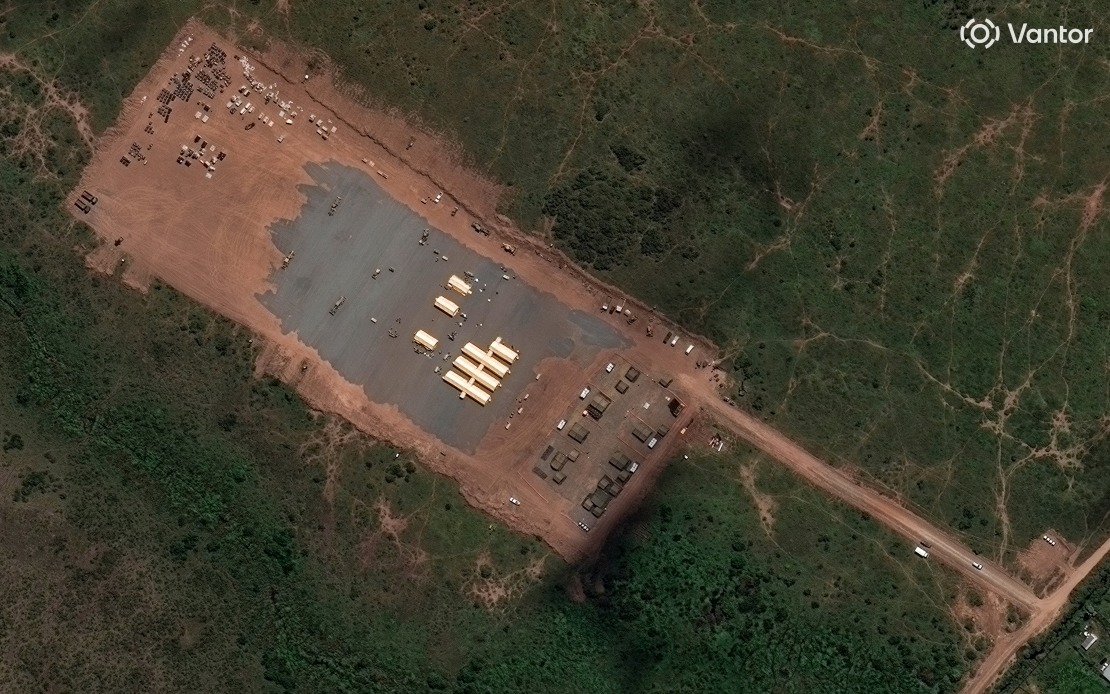
The 50-bed isolation and quarantine complex under construction at Laikipia Air Base, positioned approximately eight kilometres west-northwest of Nanyuki and roughly 200 kilometres north of Nairobi, has become a lightning rod for political controversy, constitutional questions and public anger in Kenya. The government positioned the facility as essential infrastructure designed to isolate Americans potentially exposed to Ebola virus during disease-response operations connected to outbreaks in the Democratic Republic of the Congo and neighbouring countries. However, this explanation has failed to appease critics or halt mounting resistance.
Judge Nyaundi's decision represents a serious rebuke to the executive branch and reveals deepening institutional tensions over the project's legitimacy. The magistrate specifically noted that by continuing to commission construction work at the Laikipia installation, Duale was in "continuing contempt" of the earlier court orders and signalled that sanctions against the minister would follow. Duale has been summoned to appear personally in court on Tuesday for mitigation arguments and sentencing, setting the stage for potential penalties ranging from fines to imprisonment.
The legal confrontation traces back to a petition lodged by the Katiba Institute, a constitutional rights advocacy organisation that challenged the project on multiple grounds including alleged violations of constitutional protections, inadequate transparency in decision-making, failure to involve affected communities in planning, and circumvention of standard public health protocol requirements. The High Court accepted these arguments and imposed a suspension pending resolution of the underlying constitutional questions. That suspension has now been openly defied, creating a direct clash between judicial and executive authority.
The controversy intensified dramatically when President William Ruto publicly revealed that he had personally authorised the facility after receiving a direct request from US President Donald Trump, characterising the arrangement as an extension of Kenya-US health cooperation ties. This disclosure inadvertently validated critics' suspicions that the project reflected foreign pressure rather than Kenyan public health needs, and it suggested that national decision-making processes had been bypassed in favour of personalised diplomatic negotiations between the two presidents. The revelation transformed local opposition into a question of national sovereignty and democratic accountability.
Government defenders have maintained that the facility represents a prudent defensive measure, arguing that Kenya's significance as East Africa's premier transport hub, diplomatic centre and commercial crossroads exposes it to elevated epidemic risk from neighbouring outbreak zones. Officials contend that investing in isolation capacity strengthens the nation's disease control infrastructure and positions it as a responsible regional actor in infectious disease management. The US Embassy similarly insisted the facility poses negligible health or safety risks to surrounding populations and contributes to broader regional capacity-building.
These assurances have encountered sustained resistance on the ground, particularly in Laikipia County where the facility is situated. Residents and local leaders have rejected government and diplomatic assurances, staging repeated demonstrations that have generated confrontations with security forces. According to police, human rights monitors and eyewitness accounts, at least three people have been killed during protest-related incidents, transforming the abstract constitutional dispute into a matter of life and death for ordinary Kenyans.
The contempt finding creates significant complications for the Kenyan government at precisely the moment when it appears committed to proceeding with the project regardless of legal obstacles. The court's explicit identification of ministerial defiance establishes grounds for escalating judicial intervention, potentially including direct orders to halt construction, personal financial penalties against Duale, or even custodial sentences. It also signals judicial willingness to enforce its own authority against executive overreach, a message of potential broader significance in Kenya's ongoing struggles over separation of powers.
For Southeast Asian readers, the Kenyan case offers instructive parallels regarding the intersection of international health cooperation, national sovereignty and democratic accountability. Regional governments frequently confront pressure to host facilities or undertake initiatives backed by powerful external partners, whether the United States, China or others, often encountering domestic resistance from citizens who question whether such projects genuinely serve national interests or primarily serve external agendas. Kenya's experience demonstrates that courts can provide meaningful constraint on executive discretion, though enforcing such constraints against determined executive action remains challenging.
The unresolved fundamental question concerns whether Kenya will ultimately honour the court's suspension or whether it will continue advancing the project through alternative administrative pathways, accept the legal consequences, or negotiate a political settlement. The coming week's sentencing proceedings will indicate how far Kenyan courts are prepared to go in enforcing their orders against cabinet-level defiance, establishing precedents that could influence how other African nations navigate comparable disputes between domestic judicial authority and international pressure.