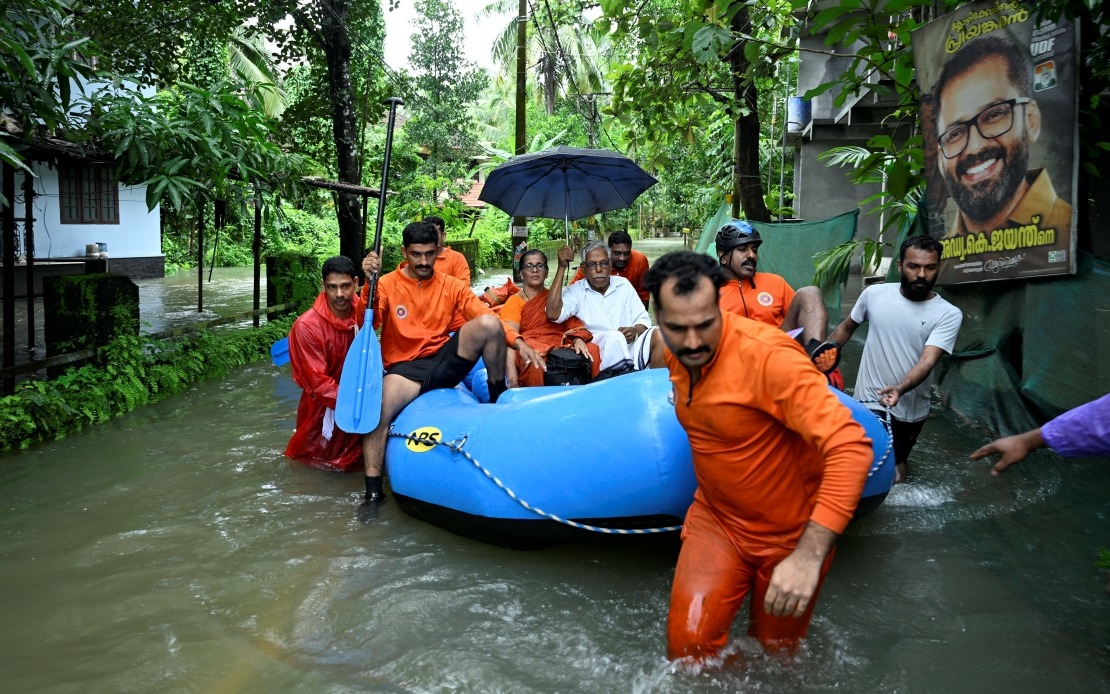
India's southern state of Kerala is grappling with a mounting humanitarian crisis as monsoon-related disasters have claimed 26 lives, with dozens more injured and missing, according to state officials. The mounting casualties underscore the devastating impact of the annual monsoon season across India's coastal regions, a phenomenon that carries particular significance for the broader South Asian monsoon system that affects Malaysia and much of Southeast Asia. Chief Minister V D Satheesan disclosed the alarming figures at a press conference held Wednesday after reviewing the emergency response, revealing that the situation continues to deteriorate as rescue and relief operations intensify across the state.
The human toll represents only one dimension of the catastrophe unfolding across Kerala. Alongside the 26 confirmed deaths, authorities have documented 11 injured individuals requiring medical attention, while search efforts persist for four people reported missing in rain-affected areas. These figures, while sobering, likely reflect only those incidents formally recorded through official channels, suggesting the actual scale of personal tragedy may exceed what has been officially documented. The Chief Minister's acknowledgment of ongoing casualties indicates that the disaster remains in its active phase, with recovery operations still underway in multiple districts throughout the state.
The displacement of 27,048 people from their homes constitutes an extraordinary logistical and humanitarian challenge for state authorities. To accommodate these displaced residents, Kerala has established 462 relief camps across its territory, providing shelter and basic services to those who have lost access to their homes. This massive displacement figure reflects the indiscriminate nature of flooding, which does not distinguish between wealthy and impoverished communities but rather affects all those unfortunate enough to live in vulnerable low-lying areas where floodwaters accumulate and persist. The scale of displacement operations represents a significant strain on state resources, requiring coordination among multiple agencies to ensure adequate food, water, sanitation, and medical facilities across such a vast network of temporary shelters.
Chief Minister Satheesan has announced a comprehensive relief package aimed at mitigating the financial devastation experienced by affected families. The enhanced compensation scheme targets those who have suffered loss of life, destruction of homes, and damage to personal property. This intervention reflects recognition that disaster recovery extends far beyond the immediate emergency phase, requiring sustained financial support to enable families to rebuild their lives and restore their livelihoods. Such measures, while essential, also highlight the long-term economic burden that natural disasters impose on state budgets, particularly in regions like Kerala that face recurring monsoon challenges.
The agricultural sector has emerged as particularly hard hit by the relentless rainfall. Crop damage has been documented across 1,882 hectares of farmland, directly affecting the economic survival of 23,537 farming families. For agricultural communities across Kerala, whose livelihoods depend critically on predictable growing seasons and manageable rainfall patterns, such widespread crop destruction represents a catastrophic setback that can unravel years of accumulated savings and investments. The loss extends beyond immediate income, as damage to soil quality, irrigation infrastructure, and agricultural inputs creates cascading economic consequences that ripple through rural economies for months or years after the initial disaster.
The India Meteorological Department has issued an ominous orange alert for Wednesday, signalling the continuation of hazardous weather conditions. According to meteorological bulletins released Wednesday morning, the forecast models predict widespread rainfall extending across Kerala, coastal Karnataka, and Telangana from August 5 through August 11. This extended forecast window suggests that residents and authorities should prepare for a prolonged emergency situation rather than viewing the current crisis as a discrete event approaching resolution. For Malaysian observers, the intensity and scale of India's monsoon system serve as a sobering reminder of the region's climate vulnerabilities, particularly given Malaysia's own exposure to seasonal rainfall patterns and the potential for similar extreme events.
The geographic concentration of the most severe impacts in northern Kerala, particularly in the high-range areas of Kozhikode and Kannur districts, reveals how topography amplifies monsoon hazards. These elevated regions, while generally blessed with fertile soils and lush vegetation, become particularly dangerous during intense rainfall when water accumulates rapidly and flows downslope with tremendous force. Since August 1, these areas have endured unrelenting precipitation, triggering cascading floods and landslides that have fundamentally altered the landscape. The terrain of Kerala's Western Ghats makes it inherently vulnerable to such cascading disasters, where a single intense rainfall episode can trigger multiple hazards simultaneously, compounding the challenges faced by residents and emergency responders.
Floodwaters recede far more slowly than rainfall, creating a prolonged state of emergency even as precipitation subsides. Across most low-lying areas of Kerala, floodwaters remain substantially elevated, preventing residents from returning home or resuming normal economic activities. The inundation of countless homes represents not merely property damage but also poses significant public health risks, as stagnant floodwaters breed disease vectors and contaminate freshwater supplies. This extended period of submersion damages structural integrity, destroys stored food and medicines, and forces extended displacement that exacerbates psychological stress among affected populations.
The unfolding crisis in Kerala carries implications extending far beyond its borders, as the demonstrated intensity of monsoon phenomena underscores climate vulnerabilities that characterise the entire South Asian region. Malaysia, with its equatorial and tropical climate and annual northeast and southwest monsoon seasons, maintains a keen interest in understanding how neighbouring countries manage extreme weather events and implement early warning systems. The Kerala experience illustrates both the capacity of modern meteorological science to provide advance warning of hazardous conditions and the substantial challenges that remain in translating such warnings into effective protective actions that prevent loss of life and property. For Malaysian policymakers and disaster management authorities, the unfolding situation in Kerala offers valuable lessons regarding the importance of robust pre-disaster preparation, community awareness, and adequate resource allocation to emergency response infrastructure.
The coordination challenges evident in Kerala's response, where multiple agencies must simultaneously manage rescue operations, relief distribution, agricultural support, and reconstruction planning, highlight the complexity of disaster management in densely populated regions. As monsoon rains continue through mid-August, authorities must balance the immediate humanitarian imperative of caring for displaced populations with longer-term recovery priorities that will determine how quickly and completely affected communities can restore economic activity and rebuild damaged infrastructure. The financial costs of such disasters, encompassing both direct damage and the opportunity costs of disrupted economic activity, represent a substantial burden on state finances at a moment when India faces competing resource demands across multiple sectors.

