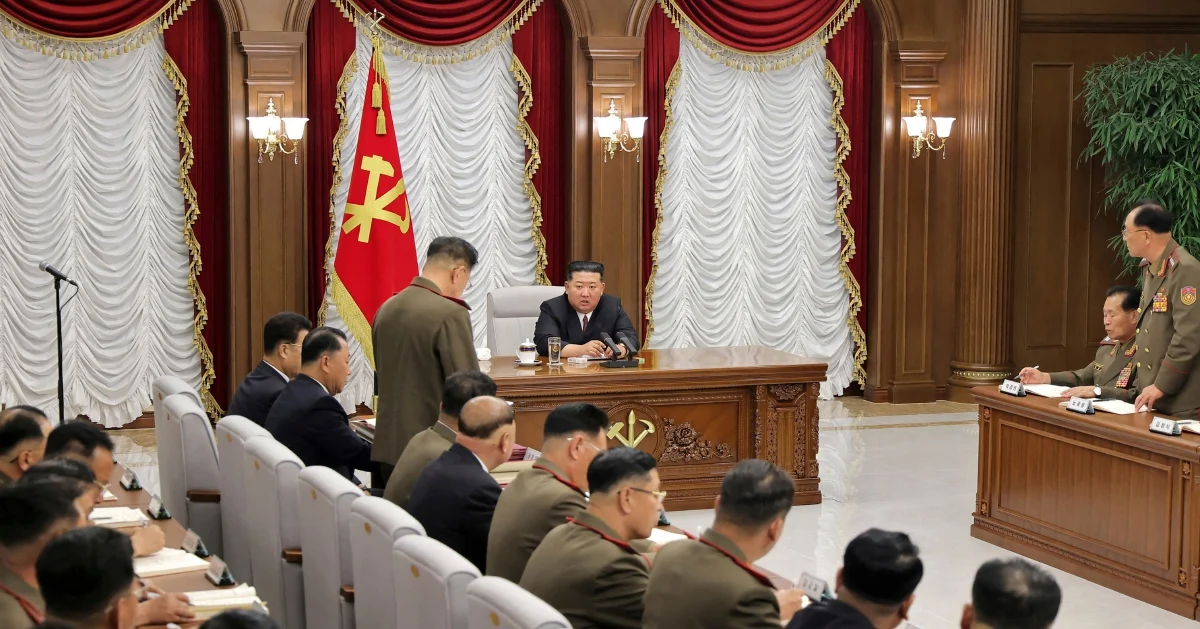
North Korean leader Kim Jong Un has moved decisively against a senior military official accused of corruption, removing him from the ruling party and branding his conduct a grave political transgression. The dismissal, reported by state media over the weekend, underscores the regime's periodic purges of officials deemed to have strayed from party orthodoxy or engaged in illicit financial practices.
The expulsion represents one of North Korea's periodic anti-corruption campaigns, though such efforts often carry deeper political significance beyond mere graft prevention. The official's removal from the ruling party apparatus signals Kim Jong Un's continued willingness to discipline high-ranking figures, including those within the military establishment, a constituency that historically wields considerable influence over succession and regime stability. By characterising the official's alleged misconduct as a political crime rather than a routine administrative matter, Kim Jong Un's government amplifies the severity of the transgression and justifies the harsh response.
Corruption within North Korea's military and party bureaucracy has long been an open secret, though public acknowledgement remains rare. Officers and officials routinely engage in black-market dealings, smuggling, and extortion to supplement meagre state salaries and accumulate personal wealth. The regime's formal economy produces insufficient resources for adequate military compensation, creating conditions where illicit income becomes endemic among the officer corps. That Pyongyang has chosen to publicly condemn this particular official suggests either exceptionally brazen misconduct or that the purge serves broader factional interests within the ruling elite.
The timing and publicity of the dismissal merit scrutiny within the context of North Korean power dynamics. Kim Jong Un inherited a military establishment dominated by generals who had served his father, Kim Jong Il, and occasionally reshapes the command structure to consolidate personal authority. By publicly castigating a senior officer for bribery, the regime reinforces its anti-corruption narrative while simultaneously sending an unmistakable signal to other officials that disloyalty or excessive personal enrichment invites severe consequences. Such periodic purges function as tools of political control as much as measures against actual malfeasance.
The characterisation of the official's conduct as a political crime carries weight within North Korea's legal and ideological framework. The regime distinguishes between ordinary criminality and offences deemed to undermine party authority or socialist principles. By framing graft as a political crime, authorities elevate the transgression beyond mere theft or breach of regulation, justifying not merely dismissal but broader punishment and public denunciation. This rhetorical stance reflects how North Korea's totalitarian system conflates personal conduct with loyalty to the regime and the party.
Regional observers and analysts monitoring North Korean internal dynamics view such purges as windows into the regime's health and stability. Military purges, in particular, carry heightened significance given the Korean People's Army's central role in sustaining Kim Jong Un's rule. When senior commanders face expulsion, it signals either consolidation of power by the leader or vulnerability requiring reassertion of authority. The frequency and intensity of such actions sometimes correlate with periods of heightened international tension or resource scarcity.
For Malaysia and Southeast Asia, developments within North Korea's military and political apparatus hold indirect but meaningful consequences. The region has experienced periodic tensions related to North Korean illicit activities, including financial crimes, sanctions evasion, and weapons trafficking. Southeast Asian states, including Malaysia, have encountered North Korean officials engaged in money laundering and sanctions circumvention schemes. Understanding internal North Korean dynamics, including how seriously the regime polices its own officials, provides context for assessing how aggressively Pyongyang might pursue covert economic activities in the region.
The expulsion also reflects broader governance challenges facing authoritarian regimes dependent on a narrow elite to maintain control. When corruption within that elite becomes intolerable or threatens regime cohesion, leaders face pressure to demonstrate they retain authority to punish even prominent figures. However, such purges can prove destabilising if they alienate military constituencies or create factions within the ruling establishment. Kim Jong Un's willingness to publicly condemn a senior military official suggests confidence in his grip on power, though purges can sometimes precipitate instability as threatened elites seek to protect themselves.
The case underscores how North Korea's isolation and economic dysfunction create environments where corruption flourishes despite ideological opposition. The regime maintains formal commitment to communist principles emphasising collective welfare and party discipline, yet systemic poverty and lack of legitimate economic opportunity drive officials toward illicit enrichment. This contradiction between ideology and reality characterises North Korea's governance, where many officials engage in the very practices the regime periodically denounces when politically expedient.
Moving forward, observers should monitor whether this purge triggers broader changes within North Korea's military command structure or represents an isolated incident. If additional high-ranking dismissals follow, it could indicate a consolidation campaign by Kim Jong Un or preparation for significant policy shifts. Alternatively, if the expulsion remains singular, it may simply reflect response to exceptional misconduct. Either way, the public airing of military corruption and the decisive punishment of a senior figure demonstrates the regime's continued ability to enforce discipline within its upper echelons, regardless of underlying economic and social dysfunction.

