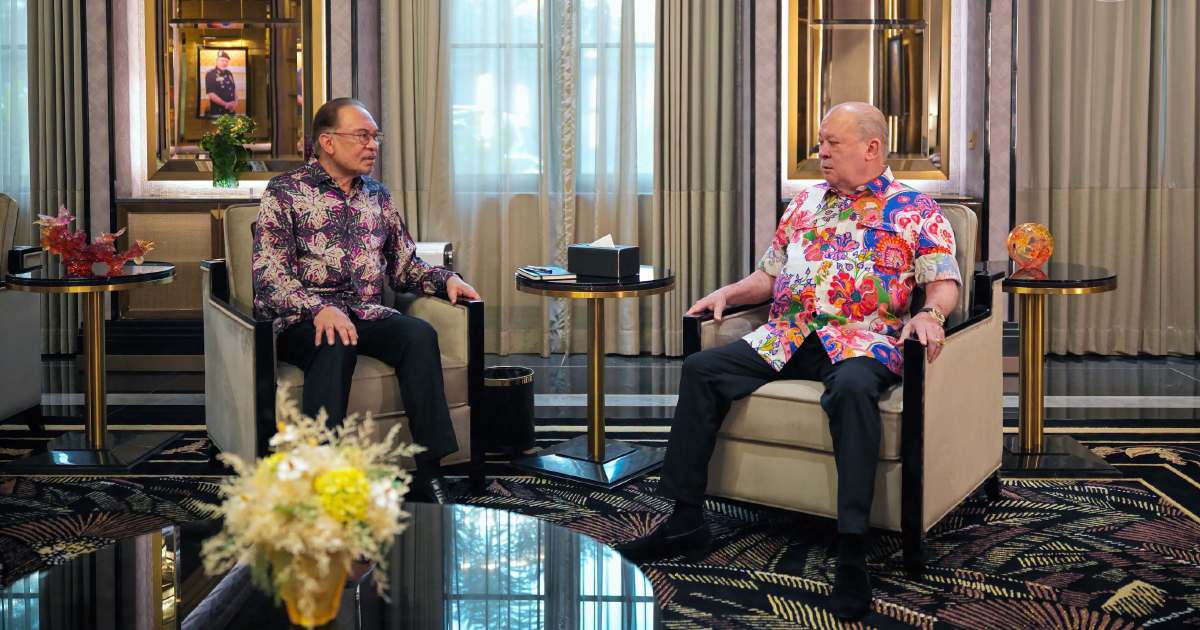
His Majesty Sultan Ibrahim, King of Malaysia, held a formal audience with Prime Minister Datuk Seri Anwar Ibrahim at Istana Bukit Tunku in Kuala Lumpur, with the encounter occurring on the eve of the nation's 69th National Day observance. The royal reception, a customary diplomatic engagement, underscores the ceremonial protocols that accompany major national celebrations in Malaysia's constitutional monarchy system of governance.
National Day represents one of the most significant occasions in Malaysia's annual calendar, marking the country's independence and nationhood. The 69th iteration of this milestone reflects nearly seven decades of sovereign development since Malaysia achieved independence. In the Malaysian system, such high-level meetings between the Agong and the Prime Minister typically serve as moments for formal briefings on national affairs and ceremonial preparations for the day's official proceedings.
The timing of this audience is particularly meaningful, as it occurs immediately before public commemorations commence. This sequence allows the Head of State to receive direct updates on arrangements and to reaffirm the constitutional relationship between the monarchy and the executive government. Such engagements reinforce the institutional framework underpinning Malaysian governance, where the Agong holds significant ceremonial authority alongside the administrative functions vested in the Prime Minister.
Istana Bukit Tunku, the official residence of Malaysia's reigning monarch, serves as the principal venue for such state functions and formal meetings. The location itself carries symbolic weight within Malaysia's constitutional structure, representing the centre of royal authority and the seat from which formal state business is conducted. Meetings held within its confines typically involve detailed discussions on matters of national importance and protocol matters relating to state ceremonies.
Prime Minister Anwar Ibrahim's administration has placed considerable emphasis on national unity and development agendas since assuming office. National Day celebrations provide an opportunity to reinforce these themes and to project a unified vision of Malaysian progress to both domestic and international audiences. The formal audience with His Majesty represents an essential component of these broader celebrations, establishing governmental continuity and institutional stability.
Malaysia's constitutional framework designates the Agong as the supreme symbol of national unity, and this symbolic role becomes particularly pronounced during National Day observances. By receiving the Prime Minister in formal audience, His Majesty Sultan Ibrahim participates directly in the ceremonial dimensions of national commemoration, thereby affirming the monarchy's central place within Malaysian civic life and political culture.
The 69th National Day marks a significant juncture in Malaysia's post-independence trajectory, offering opportunity for national reflection on achievements, challenges, and future aspirations. The audience between His Majesty and the Prime Minister serves as a prelude to public ceremonies that will involve parliament, state governments, and the broader Malaysian populace. These cascading engagements, beginning with the royal audience, establish the tone and framework for how the nation collectively observes its foundational date.
Beyond ceremonial considerations, such meetings between the Agong and Prime Minister often touch upon substantive matters of governance. Security arrangements for National Day events, participation by foreign dignitaries, and messaging regarding national development priorities typically feature in such pre-celebration discussions. The formality of the Istana Bukit Tunku audience lends authority to these administrative preparations and ensures that both constitutional offices remain aligned on the modalities of national commemoration.
For regional observers and the international community, these meetings between Malaysia's constitutional heads of state and government demonstrate the stability of the nation's institutional structures. Regular, formal engagement between the monarchy and the executive branch signals constitutional normalcy and the functioning of established protocols. This institutional regularity constitutes an important indicator of Malaysia's political health and the respect accorded to constitutional procedures across governmental levels.
The 69th National Day observance will unfold against the backdrop of this formal audience, with His Majesty's participation in public ceremonies building upon the preparatory meeting with the Prime Minister. As Malaysia continues to navigate contemporary challenges—from economic positioning within regional trade frameworks to managing internal social cohesion—National Day celebrations serve as occasions to reaffirm shared national identity and governmental purpose. The audience at Istana Bukit Tunku represents the institutional scaffolding upon which these public commemorations rest, grounding ceremonial proceedings in the formal structures of Malaysian constitutionalism and royal prerogative.

