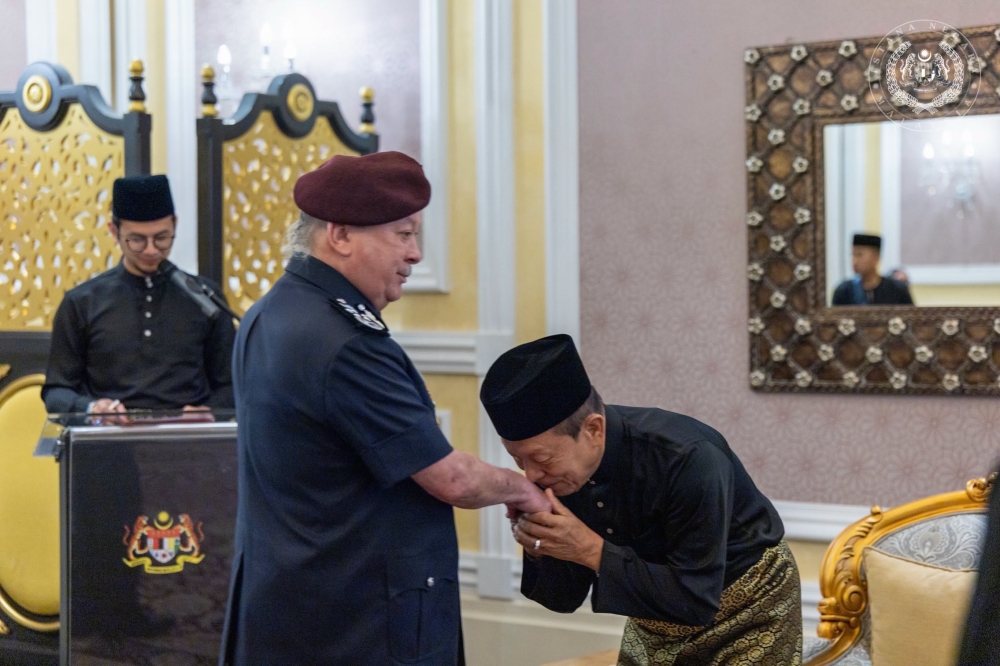
King Sultan Ibrahim, in his capacity as the constitutional head of state, received a comprehensive briefing from Malaysian Anti-Corruption Commission Chief Abdul Halim on July 14 at an official audience in Kuala Lumpur. The session provided an opportunity for the nation's highest office to be appraised directly on the anti-corruption agency's ongoing work and recent developments in its fight against graft and misconduct in both public and private sectors.
The MACC chief's presentation to the King underscores the formal channels through which Malaysia's anti-corruption enforcement apparatus maintains accountability and transparency with the monarchy. Such audiences represent a critical juncture where the commission's leadership can report on strategic initiatives, enforcement priorities, and operational challenges directly to the sovereign. This institutional relationship reflects Malaysia's constitutional framework, where the King plays a pivotal role in national governance and receives regular briefings on matters of significant public interest.
Anti-corruption efforts have gained renewed momentum in Malaysia following years of high-profile investigations and prosecutions stemming from large-scale financial scandals. The MACC has emerged as a central pillar in rebuilding public confidence in institutional integrity, tackling cases spanning multiple sectors from government procurement to corporate malfeasance. The agency's work remains particularly relevant given Malaysia's position in Southeast Asia, where governance standards and financial transparency increasingly influence investor confidence and regional standing.
Briefings of this nature typically cover the commission's case load, conviction rates, and resource allocation across its various departments. They also provide occasion for discussion of structural challenges the agency faces, including staffing levels, training requirements, and coordination with other enforcement bodies. The audience with the King allows senior leadership to highlight successes whilst addressing impediments to effective anti-corruption work at the highest levels of government.
The timing of this briefing coincides with ongoing public discourse around governance reforms and institutional strengthening in Malaysia. Citizens and civil society organisations have long advocated for robust anti-corruption mechanisms, viewing the MACC's independence and operational effectiveness as essential to national development. The direct engagement between the commission's leadership and the monarchy signals official acknowledgement of these concerns and commitment to sustained action.
Southeast Asian observers have noted how anti-corruption initiatives in individual nations influence broader regional reputation and competitiveness. Malaysia's efforts through the MACC contribute to perceptions of institutional credibility that affect everything from foreign direct investment to participation in international trade agreements. Demonstrable progress against corruption—reflected partly through such high-level briefings and subsequent public accountability—matters for the nation's economic trajectory and soft power.
The MACC operates under a legislative framework designed to grant it investigative autonomy whilst maintaining constitutional oversight. Regular briefings with the King ensure that anti-corruption activities remain aligned with national values and constitutional principles. This balance between operational independence and formal accountability helps legitimise the commission's work both domestically and internationally, presenting Malaysia as a nation serious about tackling financial crime and misconduct.
Recent years have witnessed expanded focus on asset recovery and transnational corruption cases, areas where the MACC has collaborated with foreign law enforcement agencies and international bodies. Such developments feature prominently in briefings to senior state officials, as they reflect Malaysia's participation in global anti-corruption networks and demonstrate the nation's commitment to international standards. These dimensions typically inform discussion during palace audiences, where broader strategic implications of the commission's work are assessed.
The MACC's education and prevention initiatives represent another likely topic in briefings of this nature. Beyond investigation and prosecution, the commission has invested in anti-corruption awareness campaigns targeting schools, universities, and government departments. These preventive measures aim to cultivate a culture of integrity across Malaysian society, representing a long-term approach complementing short-term enforcement activities. Their sustainability and effectiveness are matters of interest to the highest levels of governance.
Challenges facing the anti-corruption landscape continue to evolve as corrupt actors develop sophisticated methods to conceal misconduct. Cybercrime, money laundering through complex corporate structures, and cross-border asset shifting present emerging threats that require adaptive responses. Briefings to the King likely address how the MACC is positioning itself technologically and structurally to counter these sophisticated schemes whilst maintaining investigative momentum on traditional corruption cases.
Public perception of the MACC's fairness and impartiality remains crucial for its legitimacy and effectiveness. These palace audiences, whilst confidential in their specific substance, signal to the public that anti-corruption efforts proceed under proper constitutional oversight. This transparency about the existence and regularity of such briefings—without compromising operational confidentiality—helps maintain public confidence that the commission operates within proper governance structures rather than as a rogue enforcement body.
Looking ahead, the MACC faces the dual challenge of maintaining current enforcement levels whilst expanding capacity to address emerging corruption risks. Audience sessions with the King provide occasion for discussing resource needs, legislative amendments, and institutional reforms necessary to strengthen anti-corruption architecture. How effectively the commission addresses these questions will significantly influence Malaysia's ability to sustain its anti-graft momentum and maintain the institutional credibility essential for national development in an increasingly competitive regional environment.

