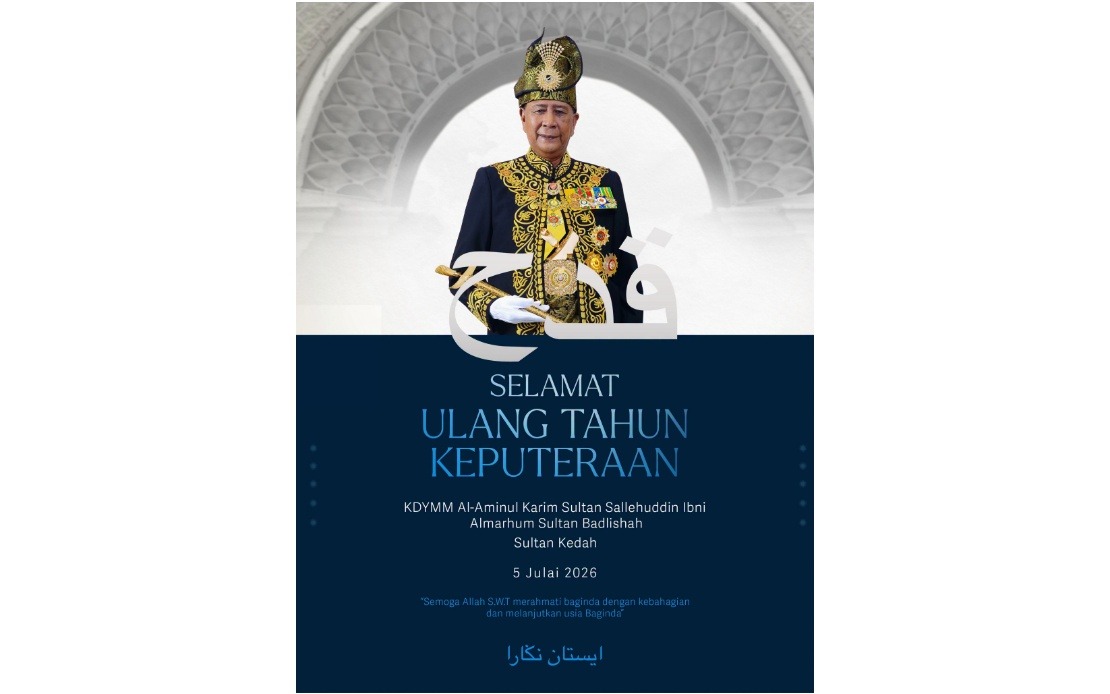
His Majesty Sultan Ibrahim, King of Malaysia, has extended warm birthday greetings to Al-Aminul Karim Sultan Sallehuddin Sultan Badlishah, the Sultan of Kedah, marking his 84th birthday. The gesture reflects the close bonds within Malaysia's royal institution, where monarchs regularly acknowledge significant milestones in the lives of fellow rulers and their families across the federation's various sultanates.
Through the official Facebook platform of Sultan Ibrahim Sultan Iskandar, the King conveyed his prayers for the Kedah Sultan's continued wellbeing and longevity. His Majesty invoked blessings upon Sultan Sallehuddin, expressing hope that the royal dignitary would be granted happiness, robust health, and a long life as ordained by Allah Almighty. Such public acknowledgements serve as important ceremonial touchstones in Malaysia's constitutional monarchy, reinforcing the mutual respect and fraternal relationships among the nation's hereditary rulers.
The Sultan of Kedah holds particular significance within Malaysia's royal hierarchy as one of the kingdom's senior monarchs, with considerable seniority both in age and tenure. Sultan Sallehuddin has maintained his position as a respected elder statesman within the Conference of Rulers, the body that collectively advises on matters of national importance and, in certain constitutional matters, elects the Yang di-Pertuan Agong from among their ranks. The observance of such occasions underscores the protocol and ceremonial customs that govern interactions between the various royal houses.
Prime Minister Datuk Seri Anwar Ibrahim similarly marked the occasion by conveying his personal birthday wishes to the Kedah Sultan. The Prime Minister's message, shared via his official Facebook account, extended greetings not only to Sultan Sallehuddin but also to the Sultanah of Kedah, Sultanah Maliha Tengku Ariff, and the wider royal family of the state. This inclusive acknowledgement reflects the protocol observed by Malaysia's political leadership in recognising the collective dignity of sultanate households.
In his message, Anwar Ibrahim prayed that Sultan Sallehuddin and his household would continue to receive divine mercy, guidance, and protection from the Almighty. The Prime Minister specifically invoked blessings for the Sultan's good health, wellbeing, and the perpetual sovereignty of the Kedah throne. The traditional Malay phrase "Daulat Tuanku. Dirgahayu Tuanku," which translates to "May the Sultan's sovereignty be eternal and may the Sultan live long," encapsulated these sentiments in customary fashion.
Kedah, situated in the northern region of Peninsular Malaysia, has historically been an important sultanate within the federation. The state's royal family traces its lineage through centuries of Malay-Muslim governance, and the Sultan serves as both symbolic figurehead and custodian of Islamic and Malay customary law within the state jurisdiction. Birthday celebrations of senior royal figures often attract official recognition from both federal and state leadership, reflecting the significance placed on continuity and stability within Malaysia's constitutional framework.
The exchange of birthday greetings between the King, Prime Minister, and Sultan of Kedah represents routine but meaningful ceremonial practice within Malaysia's governance structure. Such gestures, though seemingly ceremonial in nature, carry constitutional and cultural weight. They demonstrate the functioning of Malaysia's system where the Yang di-Pertuan Agong holds a position of ceremonial primacy, while the Prime Minister represents executive authority, and the various sultans maintain their roles as constitutional monarchs of their respective states.
Sultan Sallehuddin's long tenure as ruler of Kedah has witnessed significant periods of Malaysia's modern history, from the post-independence era through contemporary times. His reaching the age of 84 represents a milestone that acknowledges both personal longevity and decades of service to his state and nation. The observance of such occasions by senior political figures affirms the stability and continuity valued within Malaysia's institutional arrangements.
The use of social media platforms by the King and Prime Minister to convey these wishes reflects how Malaysia's traditional institutions have adapted to modern communication channels. Official Facebook pages serve as primary vehicles for disseminating royal and governmental messages to the broader public, enabling citizens to witness formal acknowledgements and ceremonial exchanges that were historically confined to state gazettes and official announcements. This democratisation of information allows Malaysians from all walks of life to observe the functioning of their constitutional order.
Birthday observances within Malaysia's royal circles often generate public displays of affection and respect from both government officials and the populace. For a figure like Sultan Sallehuddin, whose decades-long stewardship of Kedah has made him familiar to generations of Malaysians, reaching an octogenarian milestone becomes not merely a family occasion but a moment of national reflection on institutional continuity. The religious dimension of the greetings, invoking divine protection and blessing, aligns with the Islamic monarchy principles embedded in Malaysia's constitutional framework, where Islam occupies a special position as the religion of the federation.
These birthday greetings also underscore the protocols governing Malaysia's system of government, where despite the rotation of the Yang di-Pertuan Agong position among the sultans every five years, relationships of mutual respect and recognition persist across the royal institution. The Sultan of Kedah, whether or not currently holding the highest ceremonial office, remains an integral participant in the Conference of Rulers and a custodian of significant constitutional and cultural responsibilities within the Malaysian federation.

