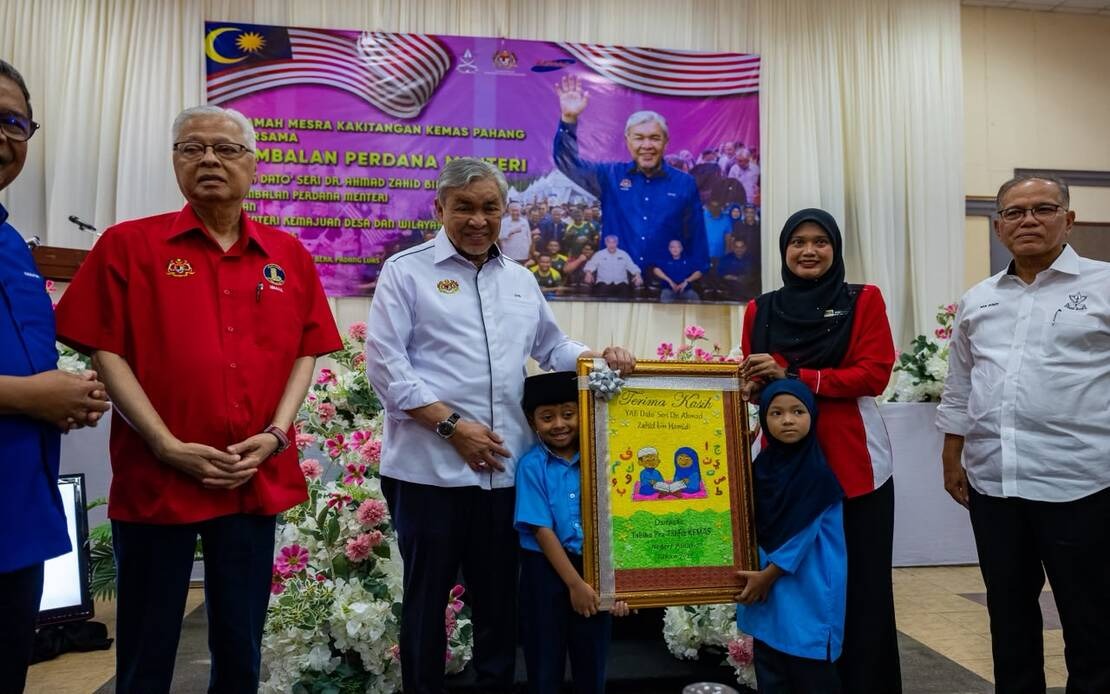
The Rural and Regional Development Ministry is embarking on an ambitious transformation of early childhood education, positioning community-run kindergartens and childcare facilities as engines of technological and spiritual development for Malaysia's youngest learners. Deputy Prime Minister Datuk Seri Dr Ahmad Zahid Hamidi unveiled the strategy during a community engagement event in Bera, Pahang, signalling the government's determination to modernise KEMAS institutions that have historically served as affordable, accessible education alternatives for rural and lower-income families.
The timing of this initiative reflects shifting priorities within Malaysia's education landscape. With the national school starting age now reduced from seven to six, early childhood education through KEMAS kindergartens (Tabika) and childcare centres (Taska) has acquired greater significance in a child's developmental journey. The ministry recognises that the foundation laid during these formative years increasingly determines preparedness for formal schooling, making quality provision a matter of national concern rather than merely local convenience.
Ahmad Zahid's remarks emphasised that technological advancement cannot proceed in isolation from moral and spiritual grounding. The integration of Smart Class facilities and smartboards across KEMAS institutions represents a deliberate attempt to close the digital divide between urban and rural childcare provision. However, this modernisation agenda is explicitly paired with an expansion of Islamic religious education, signalling a vision of holistic development where technological literacy and faith-based values reinforce rather than compete with each other.
A cornerstone of the expanded approach involves broadening the Quranic memorisation programme within KEMAS kindergartens. Currently limited to memorising surahs from the final section of the Quran, the new framework will introduce children to longer and more complex chapters including Surah Yasin, Al-Waqiah, Al-Mulk and As-Sajdah. This escalation demands corresponding investment in teacher training and curriculum design, as Ahmad Zahid stressed the necessity for KEMAS educators to themselves master memorisation techniques before introducing them to young learners in structured, age-appropriate formats.
The proposal reflects broader conversations within Malaysian education circles about balancing secular and religious knowledge streams. By positioning memorisation programmes as integral to KEMAS identity rather than supplementary activities, the ministry signals commitment to religious education as a core competency rather than an optional enhancement. For families selecting KEMAS facilities, this represents a deliberate pedagogical choice that distinguishes community-based provision from purely secular alternatives.
Implementing such an ambitious dual-track development requires unprecedented coordination across government levels. Ahmad Zahid called explicitly for closer collaboration between federal authorities, state governments, Members of Parliament, and state assembly members to secure technological infrastructure, funding and support. His appeal acknowledged that KEMAS expansion cannot succeed through ministerial directives alone but depends on political will and practical cooperation at every administrative tier. The Pahang government's existing contributions—securing land titles, providing grants and funding renovation works—were cited as exemplary models for other states.
The scale of KEMAS' historical reach underscores the stakes involved in this modernisation effort. Since establishment, KEMAS Tabika and Taska have collectively served approximately 8.4 million children, positioning the department as a foundational education provider for vast segments of Malaysia's population. Many contemporary working professionals and community leaders passed through KEMAS facilities, making the quality and relevance of current provision consequential for intergenerational mobility and social cohesion.
Ahmad Zahid framed the initiative within a broader narrative of institutional evolution and national identity formation. After six decades of grassroots community development work, KEMAS faces a choice between preservation and transformation. The deputy prime minister articulated a vision where the department neither abandons its legacy of accessibility and community service nor resists technological change, but instead harnesses modernisation to strengthen its core mission. This balancing act carries particular weight in Malaysia's context, where early education provision intersects with questions of cultural identity, religious observance, and preparation for a globally competitive economy.
The emphasis on political stability and openness to reform hints at underlying tensions within Malaysian governance. Effective implementation of this strategy requires sustained commitment across electoral cycles and bureaucratic transitions, suggesting that past initiatives may have faltered due to inconsistent support or shifting political priorities. By explicitly linking early education advancement to systemic political conditions, Ahmad Zahid positioned KEMAS transformation not as a isolated sectoral improvement but as dependent on broader institutional health and political maturity.
For Southeast Asian perspectives, Malaysia's KEMAS modernisation strategy offers instructive lessons about integrating technology and values in early childhood education within developing economies. Many countries in the region confront similar tensions between aspirations for digital competitiveness and concerns about preserving cultural and religious identity. Malaysia's attempt to synthesise these objectives through structured curriculum expansion and coordinated infrastructure investment provides a regional case study in how governments attempt to navigate such trade-offs, though the extent to which the dual strategy succeeds in practice remains to be demonstrated through implementation outcomes and educational performance metrics.
The pathway forward depends substantially on translating rhetorical commitments into resource allocation and teacher development. While Ahmad Zahid's vision encompasses technological sophistication and expanded religious content, realisation requires sustained investment in educator training, curriculum development and facilities maintenance. The success of this transformation will ultimately be measured not through infrastructure announcements but through the learning experiences and developmental outcomes of the millions of children passing through KEMAS facilities in coming years.

