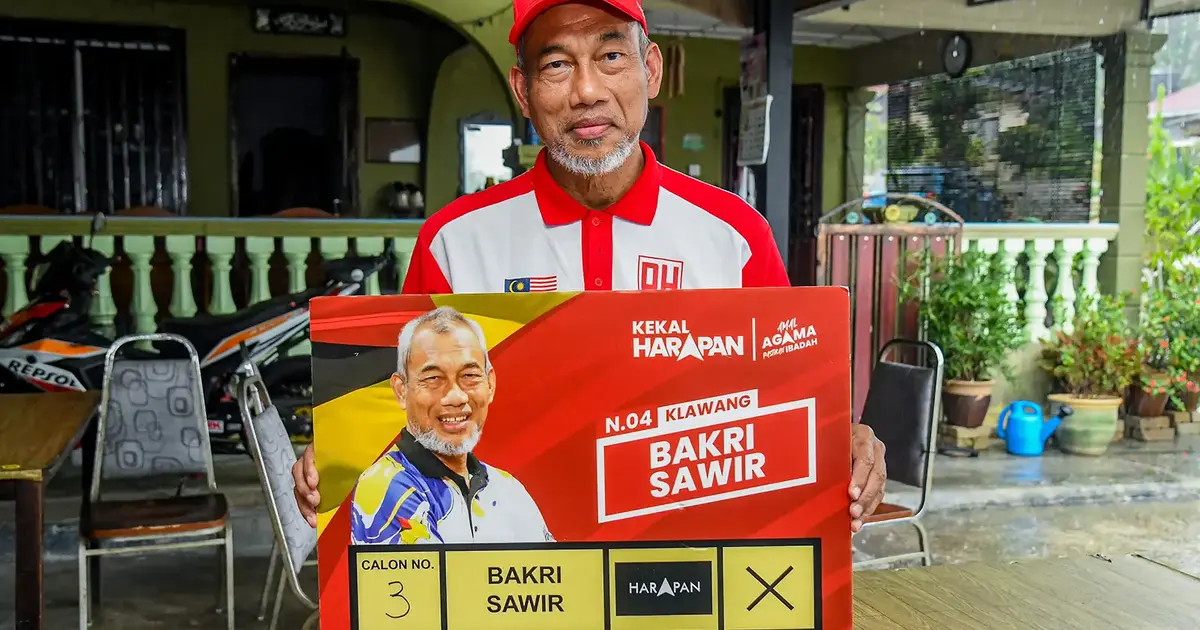
Bakri Sawir, the two-term state assemblyman representing Klawang, has brushed aside mounting pressure from the newly consolidated Barisan Nasional-Perikatan Nasional alliance, declaring that his previous electoral triumphs without Umno's backing demonstrate his capacity to secure the constituency again. The Pakatan Harapan representative's resolute stance reflects a growing confidence within the opposition coalition despite the apparent strengthening of forces arrayed against them in the political landscape.
The Klawang lawmaker's contentious relationship with Umno stretches back to the 2023 state elections, when he felt abandoned by the party despite their earlier working arrangements. This experience, rather than demoralizing him, appears to have steeled his resolve and reshaped his electoral strategy. Sawir has framed his previous victories as evidence that grassroots support and local constituency work can transcend traditional party machinery and coalition structures, a message increasingly critical as established political alignments continue to shift across Malaysia.
The formation of the BN-PN pact represents a significant realignment in Malaysian politics, consolidating support among traditionally conservative and Islamist-leaning voters. For opposition politicians like Sawir, such alliances pose formidable organizational and financial challenges. However, his historical track record suggests that incumbency, constituent services, and community engagement can offset these structural disadvantages. His determination to stand independently reflects a broader PH strategy of competing in constituencies where ground strength may compensate for organizational weakness.
Klawang's political trajectory provides important context for understanding Sawir's confidence. The constituency has demonstrated willingness to support opposition candidates even as broader state-level politics shifted dramatically. This suggests localized political factors—development priorities, community grievances, and personal credibility—may weigh more heavily than national coalition politics in determining outcomes. Sawir's familiarity with constituent concerns and demonstrated track record of delivering on local issues constitute tangible advantages that alliance politics alone cannot overcome.
The dynamic between national coalition-building and local electoral competition illuminates a fundamental tension within Malaysia's political system. While high-level party negotiations and strategic alliances capture media attention and shape legislative mathematics, on-the-ground contests often turn on different factors entirely. Sawir's assertion that he has won without Umno before suggests he believes Klawang voters prioritize responsive governance and local representation over party labels and national coalition affiliations.
For Pakatan Harapan, Sawir's confidence carries symbolic importance beyond a single state seat. Opposition politicians who project vulnerability invite primary challenges and trigger party defections, while those projecting strength galvanize supporters and deter potential challengers. By publicly committing to victory without external party support, Sawir sends a signal that PH is not retreating defensively in the face of strengthened competitors, but rather selectively contesting where genuine organizational advantages exist.
The broader implications for Malaysian politics remain complex. The BN-PN consolidation suggests ruling coalitions are optimizing their geographic strength and institutional resources. Simultaneously, scattered opposition victories in specific constituencies demonstrate that no coalition possesses monolithic control over electoral outcomes. Such variability necessitates localized political strategies precisely of the sort Sawir is articulating—campaigns built on constituent relationships rather than national party networks.
Sawir's history of electoral success and his current defiant posture also reflect evolving voter expectations in Malaysia. Increasingly, constituents evaluate representatives based on tangible service delivery, accessibility, and advocacy for community interests rather than purely on coalition membership or party affiliation. This shift empowers incumbent assemblymen with track records of constituent service, as Sawir clearly possesses, while potentially disadvantaging new candidates nominated primarily on party grounds.
The stakes for Klawang extend beyond local politics. A successful PH retention of the seat despite BN-PN pressures would suggest that opposition parties retain competitive capacity in certain constituencies even as broader national trends appear to favor the ruling coalition. Conversely, a loss would underscore the organizational power of consolidated BN-PN structures and their ability to translate coalition strength into electoral victories even in previously opposition strongholds.
As Malaysian politics continues evolving toward higher coalition consolidation and fiercer factional competition, individual representatives like Sawir will increasingly carry disproportionate symbolic and strategic importance. His expressed confidence that he can repeat previous victories without Umno support reflects not mere political bravado but rather a calculated assessment of local strengths and a deliberate strategy of positioning PH as capable of competing effectively in constituencies where ground organization and constituent relationships remain decisive factors despite shifting national political alignments.

