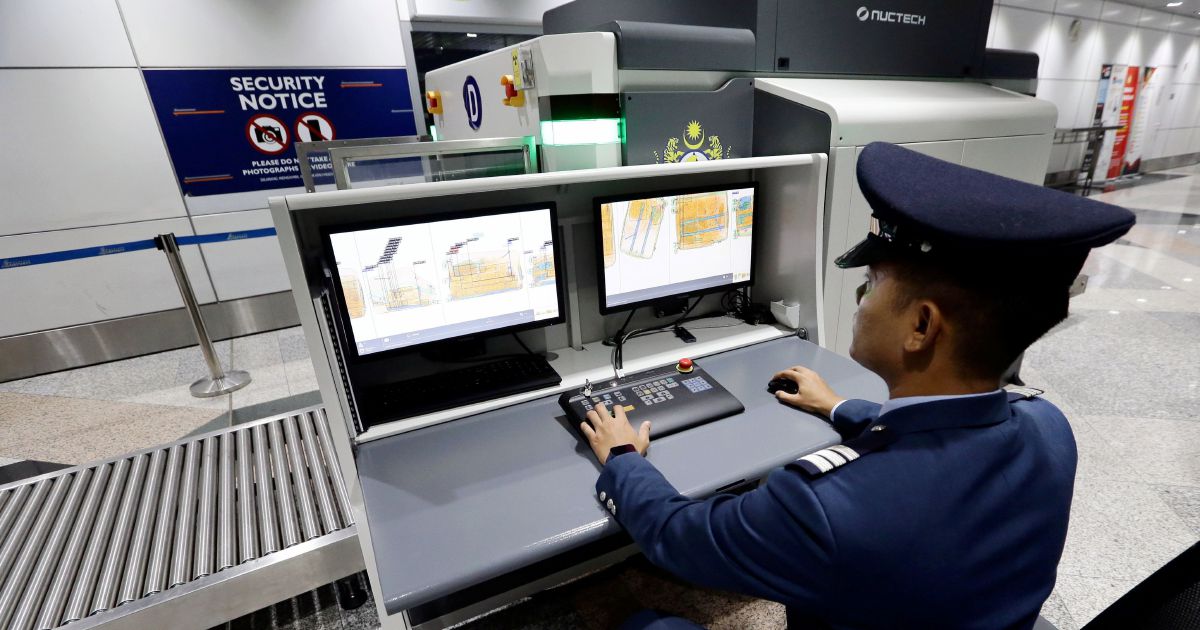
The technological capability of Kuala Lumpur International Airport's screening equipment is not the bottleneck in catching contraband, according to Home Minister Datuk Seri Saifuddin Nasution Ismail, who has sought to redirect the debate away from equipment failures and towards operational procedures that may be creating vulnerabilities in the nation's busiest international gateway.
Saifuddin's statement clarifies an important distinction in the ongoing discussion about security lapses at KLIA: the scanner machines deployed at the airport possess adequate technical specifications to identify illicit drugs and other prohibited substances. The issue instead lies in how screening protocols are structured and prioritised by personnel responsible for monitoring passenger flows and cargo movements through the facility.
Currently, the airport's screening procedures place greater emphasis on the detection of weapons and explosive devices, reflecting post-9/11 global security architectures that have become standard practice at major international hubs. While weapons remain a primary concern, this operational prioritisation has created a secondary effect where drug detection protocols receive comparatively less focus and resources, potentially explaining why certain shipments of controlled substances have evaded detection despite the advanced technological systems in place.
This revelation carries significant implications for Malaysia's border security and the country's international reputation as a transit hub. KLIA processes millions of passengers and tonnes of cargo annually, serving as a critical connection point between Southeast Asia, the Middle East, Africa, and Europe. Any vulnerability in screening procedures affects not merely individual smuggling incidents but potentially undermines Malaysia's standing in global counter-narcotics cooperation networks and may invite closer scrutiny from international partners.
The distinction Saifuddin has drawn between equipment capability and operational procedure is critical for understanding modern security challenges. Advanced scanners such as X-ray machines, computed tomography devices, and trace detection systems can indeed identify chemical signatures associated with controlled substances. However, these machines operate within frameworks determined by human decision-making: scanning duration, threshold sensitivity settings, and the protocols that determine whether flagged items warrant further investigation. When procedures emphasise certain threat categories over others, even sophisticated equipment becomes less effective at addressing deprioritised concerns.
The Home Ministry's acknowledgment that standard operating procedures rather than hardware represent the genuine vulnerability suggests potential pathways for remediation that may be less costly and more rapidly implementable than equipment replacement. Revising screening protocols to balance weapons and drug detection equally, retraining personnel on emerging smuggling methodologies, and adjusting staffing allocations to drug detection units could yield measurable improvements without requiring capital investment in new scanning machines.
For Malaysia, this assessment arrives at a moment of heightened regional focus on drug trafficking networks. Southeast Asia has become an increasingly critical battleground in global narcotics flows, with synthetic drugs and precursor chemicals moving through established trade corridors. Singapore, Thailand, and other neighbouring countries have intensified enforcement efforts, and any perception that Malaysia's largest airport represents a weak link in regional security could prompt diplomatic pressure or encourage traffickers to exploit the gateway more actively.
The Home Minister's frank acknowledgment also reflects evolving international expectations regarding airport security management. Beyond technical compliance with ICAO standards, airports are increasingly evaluated on their operational effectiveness in addressing contemporary smuggling methods. Competitors like Singapore's Changi Airport and Bangkok's Suvarnabhumi Airport have integrated multi-layered detection strategies that distribute scanning and detection responsibilities across multiple checkpoints and personnel specialisations, creating redundancy that compensates for any single procedure's limitations.
The path forward for KLIA likely involves a comprehensive audit of screening standard operating procedures, conducted either internally or with international security consultants, to identify specific gaps between protocol design and actual implementation. Staff retraining initiatives would need to address evolving drug smuggling tactics, including concealment methods that may deliberately exploit any known gaps between weapons-focused training and drug detection protocols. Intelligence sharing with regional counterparts could help identify specific smuggling routes or methods commonly used through KLIA that require targeted procedural responses.
Saifuddin's comments represent a necessary step in addressing public and international concerns about KLIA's security posture, moving beyond defensive posturing about equipment quality towards substantive engagement with operational deficiencies. The willingness to identify the actual problem—procedural gaps rather than technological obsolescence—suggests readiness to implement targeted reforms that could restore confidence in Malaysia's border security.
Implementing these changes requires coordination across multiple agencies, including the Malaysian Airport Holdings, customs authorities, immigration personnel, and federal police units responsible for aviation security. The success of such reforms depends not merely on revised written procedures but on sustained commitment to enforcement, regular auditing to verify compliance, and continuous adaptation as smuggling methodologies evolve. For Malaysia's standing as a reliable transit country and for KLIA's competitiveness as a regional hub, addressing these procedural vulnerabilities represents an investment with both immediate security dividends and longer-term strategic benefits.

