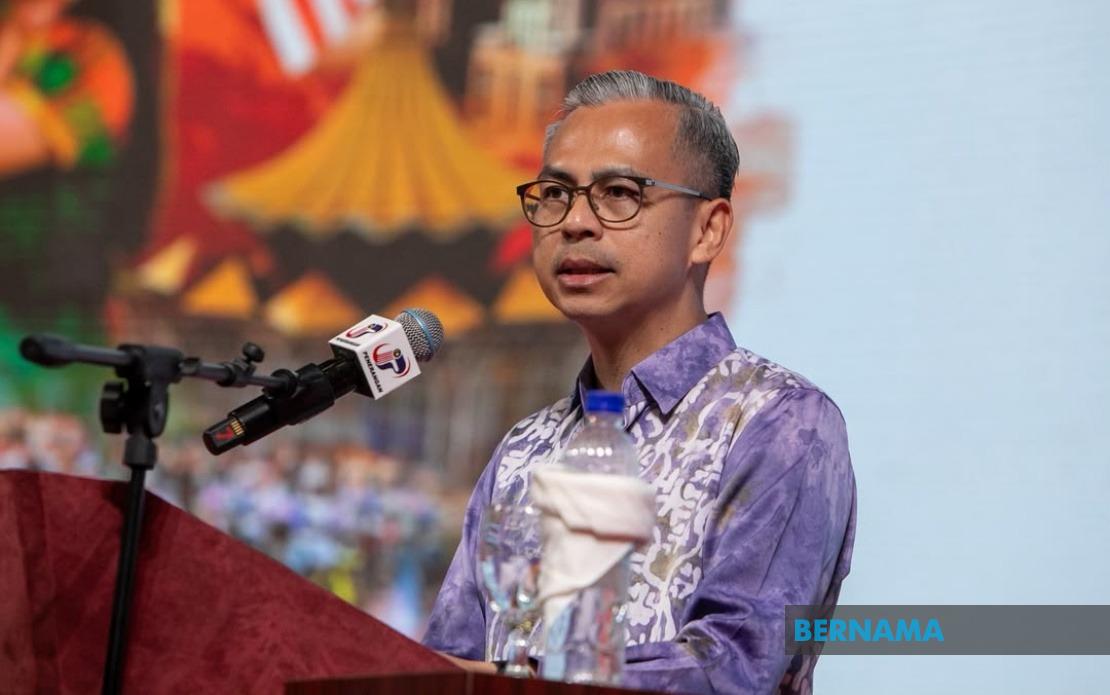
The government has committed to sustaining the Kembara Merdeka Jalur Gemilang (KMJG) convoy as a cornerstone initiative for building patriotic sentiment and strengthening national cohesion across Malaysia in the coming years. Communications Minister Datuk Seri Fahmi Fadzil made this declaration during the official launch of the 2026 National Month and Fly the Jalur Gemilang campaign held at the Sultan Azlan Shah Ministry of Health Training Institute in Tanjung Rambutan, Perak, on July 19. The announcement comes as the nation prepares to mark another cycle of independence celebrations under the overarching theme of Malaysia MADANI: Kesejahteraan Dinikmati, which translates to Malaysia MADANI: Shared Prosperity.
Fahmi's commitment underscores the government's determination to maintain momentum in grassroots engagement around national symbols and identity. The convoy, which travels across the country to promote the Jalur Gemilang flag and national pride, has become a recognizable feature of Malaysia's patriotic landscape. By preserving this initiative as a permanent fixture in the annual National Month calendar, policymakers are signalling their belief in the convoy's effectiveness as a vehicle for fostering deeper emotional connections between citizens and their country. This approach reflects a broader strategy to embed patriotism in everyday Malaysian life rather than treating it as a periodic exercise confined to specific commemoration periods.
The 2026 celebrations will be designed around principles of fiscal prudence and resource optimization, according to Fahmi's remarks. Despite tightened budgetary circumstances, the government remains unwilling to sacrifice the core messaging of national pride and independence awareness. This balancing act—delivering impactful celebrations within constrained financial parameters—presents a practical challenge for planners tasked with maintaining public enthusiasm while demonstrating governmental restraint. Such considerations are increasingly relevant for Malaysia's leadership, which must respond to citizen expectations for festive national commemoration while managing economic pressures and fiscal accountability.
A particularly notable element of the 2026 strategy involves intensifying the One House, One Jalur Gemilang initiative. This program encourages individual households across the nation to display the national flag as a visible expression of sovereignty, unity, and collective pride. The concept transforms patriotism from an abstract government directive into a tangible, household-level practice. By democratizing flag-flying as a widespread civilian practice rather than limiting it to official institutions, the initiative seeks to embed national symbols into the domestic spaces where Malaysians spend their daily lives. This grassroots approach potentially creates stronger, more personal attachments to national identity than top-down ceremonial exercises alone can achieve.
The launch event itself drew high-level political participation, reflecting the government's emphasis on this portfolio. Prime Minister Datuk Seri Anwar Ibrahim officiated the ceremony, joined by National Unity Minister Datuk Aaron Ago Dagang and Perak Menteri Besar Datuk Seri Saarani Mohamad. This gathering of senior officials from both the federal and state levels signals coordinated commitment to the national celebrations and suggests that unity-building efforts are being pursued as a unified governmental agenda rather than scattered departmental initiatives. The involvement of Malaysia's national unity portfolio underscores the administration's view that patriotic messaging and unity-building are intertwined objectives rather than separate concerns.
The broader context of these 2026 celebrations includes Malaysia's ongoing navigation of internal social divisions and the need to reinforce shared national identity. In recent years, questions of national cohesion have become increasingly prominent in Malaysian public discourse, making patriotic initiatives like KMJG and flag-flying campaigns valuable tools for political leadership. These symbolic efforts serve practical political purposes by providing platforms where diverse Malaysian communities can congregate around uncontested national symbols. The Jalur Gemilang, as a constitutional emblem of the federation, offers political actors a relatively neutral rallying point compared to more contentious social or political issues.
From a Southeast Asian perspective, Malaysia's sustained investment in patriotic symbolism reflects a pattern common to many regional nations. Countries throughout Southeast Asia employ national symbol campaigns and independence commemorations as methods for consolidating national identity, particularly in multiethnic contexts where alternative sources of binding national sentiment may be contested. Malaysia's approach through the KMJG convoy and household flag initiatives places it within this regional trend while adapting strategies to local contexts and resources. The convoy format, in particular, offers a mobile platform that reaches communities across Malaysia's diverse geography, from urban centers to rural areas that may experience lower visibility of national campaigns.
The choice of the Malaysia MADANI theme for 2026 celebrations reflects the government's attempt to link patriotic sentiment to substantive governance concepts. By framing national pride within the context of shared prosperity, policymakers are attempting to move beyond purely symbolic patriotism toward integrating national pride with socioeconomic aspirations. This framing suggests that loving one's country encompasses not just emotional attachment to symbols but also commitment to building a prosperous, inclusive society where shared prosperity extends across all demographic and geographic segments of the population. Whether this thematic connection resonates effectively with the public remains a question for coming months.
The government's emphasis on prudent resource management while maintaining patriotic initiatives also reflects lessons learned from previous celebration cycles. Rather than attempting elaborate spectacles that strain public finances, the 2026 approach appears to favor sustainable, repeatable activities that can be maintained across successive years without requiring exponential budgetary increases. This philosophy aligns with broader global trends toward environmental and fiscal sustainability in public programming. The KMJG convoy, as a relatively straightforward mobile initiative, and the One House, One Jalur Gemilang program, as a self-sustaining household activity requiring minimal government expenditure, both fit this model of sustainable patriotic engagement.
For Malaysian citizens and regional observers, these announcements signal that the government intends to keep national identity and unity-building as priority governance concerns extending through 2026 and beyond. The commitment to the KMJG convoy and related initiatives suggests these will become permanently embedded features of Malaysia's annual calendar rather than temporary experiments. This permanence potentially increases their cultural significance over time, as repeated annual engagement with these activities could deepen their role in shaping national consciousness. The sustained focus on symbolic patriotism, combined with the prosperity-centered theme, reflects an administration's attempt to address unity challenges while positioning patriotism as compatible with developmental aspirations.

