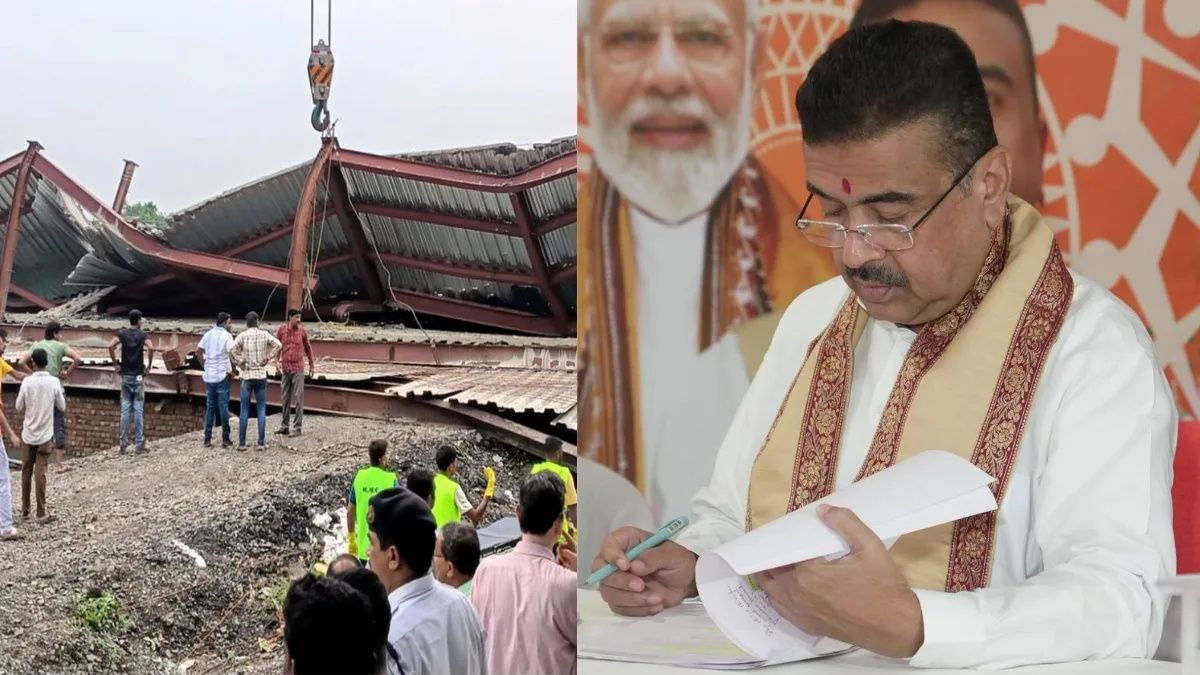
A warehouse collapse in Taratala, Kolkata has claimed 11 lives as rescue operations stretched into their second day on Thursday, with emergency personnel continuing to sift through debris in search of trapped workers. The latest fatality was recovered around 1.15pm and brought to the Trauma Care Centre at SSKM Hospital, bringing the confirmed death toll to double figures. Ongoing concerns about additional victims still buried beneath the rubble have prompted intensified search and recovery efforts from coordinated teams representing both national and state authorities.
The disaster has triggered a political firestorm in West Bengal, with Chief Minister Suvendu Adhikari launching a scathing parliamentary critique of the approval process that allowed the building to be constructed. Addressing the state assembly, Adhikari presented documentary evidence suggesting that the Taratala warehouse was sanctioned despite possessing significant structural deficiencies in its design specifications. The chief minister specifically implicated the previous Kolkata Municipal Corporation administration, which operated under Trinamool Congress control, alleging that building plan approval had proceeded irregularly and without proper scrutiny of safety standards.
Adhikari's accusations extended to individual officials, with public reference to documents bearing the signature of former Mayor Firhad Hakim. The chief minister asserted that a government fact-finding investigation had already concluded its preliminary work and was examining the conduct of the engineers and municipal officials responsible for sanctioning the original construction plan. His remarks characterised the approvals system under the previous administration as fundamentally compromised, with suggestions that corruption and what he termed "cut money" had created pervasive safety failures across the city's building sector.
The state government has moved swiftly to establish accountability through arrests. Five individuals are currently in custody, including the construction company's site supervisor, the fabricator responsible for the iron structural components, the land lessee, a labour contractor affiliated with Trimex, and a broker implicated in facilitating the building plan's approval through the municipal corporation. However, the primary accused, identified as Azgar, remains at large, prompting an active manhunt as part of the ongoing investigation.
In response to the catastrophe, Adhikari has implemented an extraordinary suspension of construction activities across a vast swath of the Kolkata metropolitan region. All building work except for projects deemed essential services will cease for four weeks across the Kolkata Municipal area and in surrounding administrative zones including Rajarhat-New Town, Maheshtala, Budge Budge, Pujali, Bishnupur, Sonarpur, and Baruipur. This moratorium effectively halts development activity across multiple districts, underscoring the seriousness with which the state government is treating the incident and the broader implications for urban safety across eastern India.
Central to the crisis response is an ambitious audit initiative targeting every approved building plan within the suspended zones. The state has constituted a high-level supervisory committee chaired by Additional Chief Secretary Rajesh Pandey to oversee this comprehensive review. The committee's composition reflects the magnitude of the undertaking, drawing expertise from technical institutes and infrastructure specialists including senior personnel from IIT Kharagpur, Rail India Technical and Economic Service, Indian Railway Construction Limited, and multiple state departments spanning fire safety, public works, and municipal administration.
The inclusion of external technical expertise from premier institutions signals official acknowledgment that municipal building approval systems require fundamental restructuring and external validation. By incorporating railway engineering specialists accustomed to stringent safety protocols, the government appears intent on importing best practices from sectors with demonstrated track records in structural integrity. This approach suggests recognition that existing municipal capacity may be insufficient to prevent future failures without external oversight and institutional learning from other sectors.
Adhikari has articulated an uncompromising stance toward accountability and compensation. The chief minister explicitly stated that prosecuted individuals would face not only imprisonment but potential confiscation of personal property to generate victim compensation funds. This threat of asset seizure represents a notably aggressive prosecutorial approach and signals willingness to pursue punitive measures beyond conventional criminal sentencing. The statement reflects political pressure to demonstrate decisive action and reassure the public that the state possesses teeth in pursuing those responsible for deaths resulting from negligence.
The rescue operation itself has showcased coordination between military and civilian disaster response agencies. The army and National Disaster Response Force have maintained continuous presence at the collapse site, working in apparent harmony with state and local authorities to locate survivors and recover remains. Adhikari publicly commended these agencies, suggesting that the administrative response, despite its critical dimensions regarding prior approvals, has at least achieved functional coordination in managing the immediate humanitarian crisis.
For the broader Southeast Asian region, this incident carries cautionary implications regarding rapid urbanisation outpacing regulatory capacity. India's construction sector has historically struggled with implementation gaps between established safety standards and on-the-ground compliance, a challenge magnified in metropolitan areas experiencing explosive growth. The Kolkata incident exemplifies how inadequate municipal oversight, combined with financial incentives for officials to expedite approvals, can compromise structural safety across entire urban regions.
The four-week construction freeze and subsequent audit represent a regional reset moment with potential implications across Indian cities grappling with similar governance challenges. Whether the West Bengal initiative establishes sustainable improvements depends on whether the audit committee's recommendations translate into durable institutional reforms, rather than temporary reactive measures. The credibility of building approval systems across major Indian cities now faces heightened scrutiny, particularly in regions where previous administrations face credibility deficits regarding regulatory integrity.
Beyond the immediate accountability phase, the disaster raises questions about whether municipal corporations possess adequate technical capacity to evaluate complex structural designs, or whether India's building sector requires more centralised technical gatekeeping mechanisms. The involvement of railway engineering expertise in the post-collapse audit suggests official recognition that municipal review processes may be systematically inadequate. Whether this translates into permanent institutional restructuring or reverts to previous patterns once political attention shifts will significantly determine whether the 11 lives lost yield lasting systemic improvements across Indian urban construction oversight.

