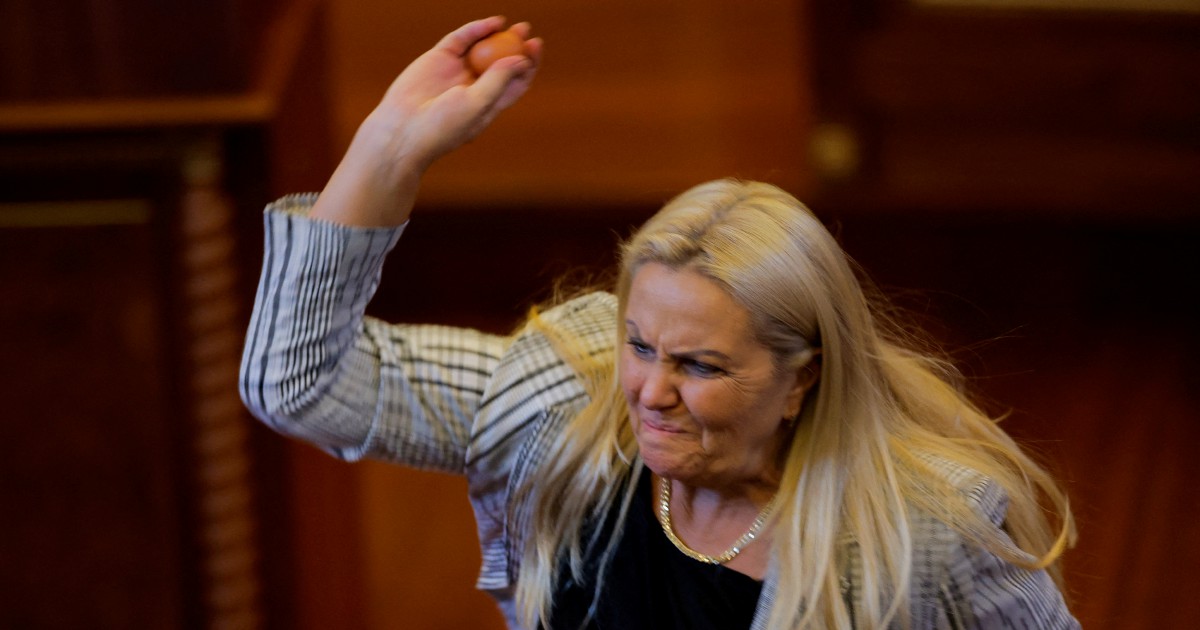
Volatile scenes erupted in Kosovo's legislature on Saturday when an opposition member launched an egg attack against caretaker Prime Minister Albin Kurti, forcing parliamentary officials to suspend proceedings and highlighting the severe deterioration of political discourse in the contested Balkan nation. The incident serves as a visceral symbol of the breakdown in institutional norms and parliamentary civility that has defined Kosovo's governance landscape in recent months, with antagonisms between rival political factions reaching levels that threaten the basic functioning of democratic institutions.
The physical assault occurred during what should have been routine parliamentary business, but has instead become emblematic of deeper institutional fractures. Such confrontations, rare in modern European legislatures, underscore how Kosovo's fractious political environment has devolved into personal hostilities that impede legislative work. The targeting of Kurti specifically reflects the polarization surrounding his leadership and policy positions, which have divided Kosovo's political establishment into increasingly hostile camps with little room for negotiation or compromise.
Albin Kurti's position as caretaker prime minister places him in an especially precarious situation, as his administration lacks the full mandate and authority that comes with a decisive electoral victory. This interim status compounds the legitimacy questions that opposition parties raise regarding his government's right to implement major policies, fueling resentment among rival factions who believe the administration has overreached its constitutional remit. The psychological dynamics of serving in a caretaker capacity while facing active political opposition create perpetual tension that destabilizes the executive branch.
The parliamentary suspension reflects the severity of the incident but also the challenge facing Kosovo's legislative bodies in maintaining order when members openly display contempt for one another through direct physical confrontation. Unlike verbal altercations or procedural disputes that parliaments can manage through established rules and speaker interventions, an assault requires immediate removal of members and questioning of whether the chamber can continue functioning. This episode forces examination of Kosovo's security protocols and parliamentary discipline mechanisms, which appear inadequate to prevent or deter such conduct.
The broader political crisis that prompted this outburst extends far beyond Saturday's dramatic moment. Kosovo has experienced persistent governmental instability, with successive administrations struggling to build stable coalitions and maintain parliamentary majorities. The succession of political crises has created an environment of mutual distrust, where opposition parties view government actions with deep suspicion and government ministers regard opposition challenges as illegitimate obstructions rather than legitimate democratic scrutiny. This toxicity permeates all parliamentary interactions and creates an atmosphere where escalating hostilities become normalized.
Snap elections loom as a probable outcome should the current political deadlock persist, placing Kosovo at risk of entering another expensive and destabilizing electoral cycle. For a young nation still consolidating democratic institutions and facing significant socioeconomic challenges, repeated elections drain state resources and divert attention from pressing priorities including economic development, healthcare reform, and infrastructure investment. Each electoral campaign reopens old grievances and prevents the forward momentum necessary for Kosovo to strengthen institutional capacity and address citizen concerns effectively.
The international dimension cannot be overlooked, as Kosovo's political instability reverberates through the Balkans and affects regional security dynamics. Kosovo's status remains disputed internationally, with Serbia refusing recognition, and external powers including the European Union and United States maintain significant interest in Kosovo's political trajectory. Chronic instability undermines Kosovo's ability to pursue crucial foreign policy objectives including European Union integration pathways and normalized regional relations that could facilitate broader Balkan development and stability.
For Malaysian and Southeast Asian observers, Kosovo's parliamentary dysfunction offers cautionary lessons about the fragility of democratic institutions when political competitors abandon constructive engagement in favor of confrontation. The incident illustrates how rapidly institutional norms can erode when partisan divisions harden and mutual respect evaporates. Nations transitioning toward democratic systems require careful attention to protecting parliamentary dignity, establishing consequence mechanisms for member misconduct, and fostering political cultures where disagreement occurs within professional boundaries.
The underlying causes of Kosovo's crisis—including contested legitimacy, insufficient institutional maturity, external pressures, and deep communal divisions—differ significantly from Southeast Asian contexts. However, the pattern whereby electoral instability produces weak governments lacking clear mandates, which then face obstruction from opposition forces, then spiral toward further electoral cycles, carries relevance for developing democracies across Asia managing similar tensions between governing coalitions and opposition blocs.
Kurti's administration must now navigate not only the political opposition but also the reputational damage from being physically attacked while exercising governmental functions. The incident may strengthen his narrative of facing illegitimate obstruction, or conversely, may weaken public confidence in his government's ability to maintain order and authority. The opposition party responsible faces potential consequences for member misconduct, though whether parliamentary discipline mechanisms will function effectively remains uncertain given the polarized environment.

