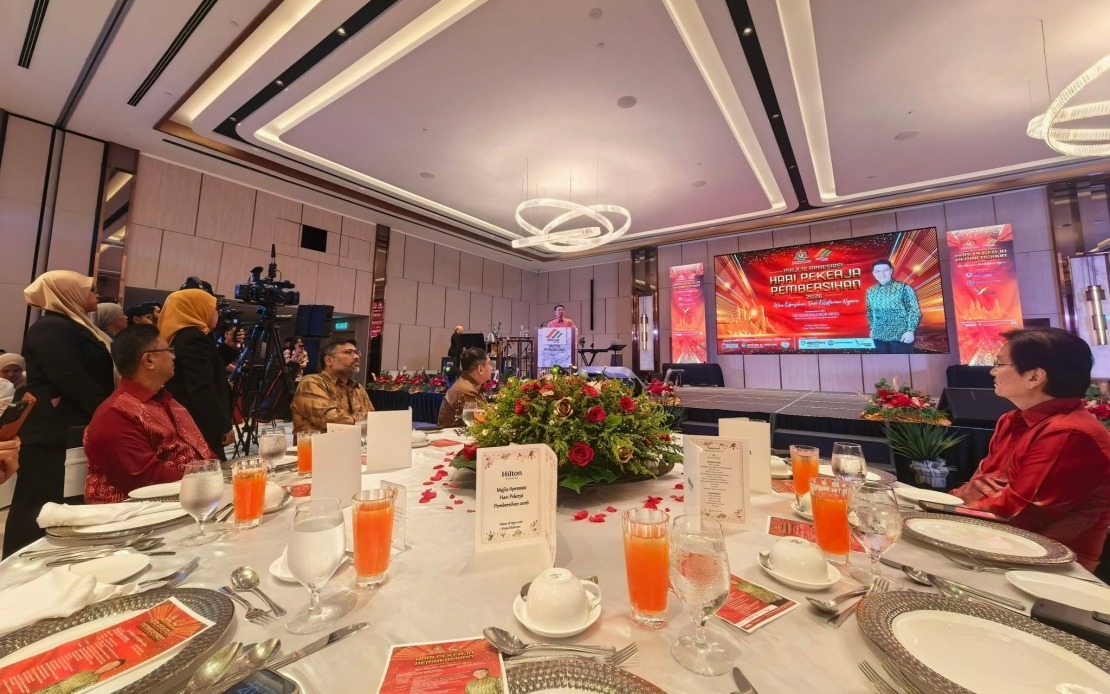
The Housing and Local Government Ministry (KPKT) is set to put forward recipients of the 2026 Cleaning Workers Award for state honours, seeking formal recognition from state rulers for their efforts in maintaining Malaysia's public spaces. Minister Nga Kor Ming announced the initiative at the 2026 Cleaning Workers Appreciation Day ceremony in Petaling Jaya on August 18, underscoring the government's commitment to honouring those who work in one of the country's most essential but often-overlooked sectors.
The decision emerged from discussions between Nga and KPKT secretary-general Datuk Dr Wira M Noor Azman Taib to elevate the status and recognition accorded to cleaning workers across the nation. Rather than limiting appreciation to national-level acknowledgment, the ministry intends to channel nominations through respective state palaces, enabling state rulers to formally confer honours on these workers. This approach transforms individual recognition into a structured, dignified framework that positions cleaning workers within the country's formal honours system.
The initiative builds on established practice in certain Malaysian states. Penang's state government has been honouring cleaning workers for nearly a decade, demonstrating the feasibility and value of such recognition at the subnational level. Nga pointed to this precedent as evidence that extending similar honours across all states represents a natural and overdue progression. The move reflects broader efforts to elevate the social standing of workers whose daily labour directly impacts public health and environmental quality but who frequently operate without significant acknowledgment from society at large.
The cleaning and solid waste management workforce in Malaysia comprises 26,889 workers employed by various concessionaires throughout the country. Many of these individuals have demonstrated remarkable longevity in their roles, with some completing over a decade of service and others having devoted nearly three decades to the sector. This depth of experience represents an invaluable institutional resource, yet recognition of such dedication has historically remained limited to ceremonial acknowledgment rather than formal state honours.
Nga emphasized that cleaning workers perform a function crucial to the nation's development and livability. Beyond the visible removal of waste and litter, these workers maintain the hygienic and aesthetic standards necessary for public health and community wellbeing. Despite operating largely outside public consciousness, their labour underpins the functioning of cities, towns, and neighbourhoods across Malaysia. The minister's framing positions cleaning work not as marginal labour but as foundational to national prosperity and social order.
However, Nga also stressed that maintaining public cleanliness cannot rest solely on the shoulders of dedicated workers. He articulated a vision of shared responsibility, wherein all Malaysians internalize the ethic of environmental stewardship. This perspective aligns with the ministry's broader aspiration of achieving "Malaysia Bersih, Rakyat Sejahtera" (Clean and Prosperous Malaysia), a slogan that reframes cleanliness as integral to national prosperity rather than a technical problem to be managed by specialists.
To operationalize this shared responsibility concept, the ministry has tasked the Solid Waste Management and Public Cleansing Corporation (SWCorp) with intensifying enforcement of the Community Service Order (PKM) scheme. As of mid-August, SWCorp had issued 14,807 offence notices for littering violations throughout 2026. This enforcement activity targets individuals who disregard public cleanliness norms, channelling them into community service programmes that combine punishment with educational objectives. To date, 548 individuals have undertaken such orders in participating states, with 419 having completed their service and 129 still actively serving.
The Community Service Order represents a departure from purely punitive approaches to littering offences. Rather than imposing fines that may carry minimal deterrent value, the scheme compels offenders to contribute labour toward public cleanliness initiatives. This methodology serves an educational function, instilling discipline and fostering genuine understanding of the labour required to maintain clean public spaces. By requiring violators to experience firsthand the work undertaken by cleaning professionals, the programme creates empathy and awareness that traditional penalties cannot achieve.
At the Appreciation Day ceremony, seven workers received the 2026 Cleaning Workers Award, representing employees from both Alam Flora Sdn Bhd (two recipients) and SWM Environment Sdn Bhd (five recipients). In addition to awards, three recipients received financial contributions as tangible expressions of government concern for worker welfare. These immediate recognitions complement the broader strategy of nominating recipients for state honours, creating a multi-layered recognition system that operates simultaneously at national and subnational levels.
The initiative carries particular significance for Malaysia's regional positioning and development aspirations. As the country pursues higher-income status and aims to position itself as a modern, competitive economy, the dignity accorded to all workers—particularly those in essential services—reflects societal values and national maturity. Recognizing cleaning workers through state honours signals that Malaysian society values contribution over status hierarchy, a positioning that strengthens social cohesion and reinforces inclusive development principles.
For Southeast Asia more broadly, Malaysia's move to formalize recognition of cleaning workers through state honours systems may influence regional approaches to service sector workers. Many neighbouring nations face similar challenges in according appropriate status to essential workers whose labour remains invisible to daily benefit-recipients. The Malaysian model, combining direct honours recognition with enforcement mechanisms that encourage public participation in cleanliness maintenance, offers a framework potentially adaptable to other contexts.
Moving forward, the success of this initiative depends on sustained political commitment and coordinated action across state governments. Implementation requires developing nomination procedures that identify worthy recipients fairly, ensuring that honour conferrals reflect genuine service and dedication rather than bureaucratic routine. Furthermore, the effectiveness of the Community Service Order scheme in reshaping public attitudes toward littering will significantly influence whether Malaysia achieves its cleanliness aspirations. The convergence of worker recognition and public education mechanisms represents an integrated approach to environmental management that addresses both supply-side (worker dignity) and demand-side (public behaviour) dimensions simultaneously.

