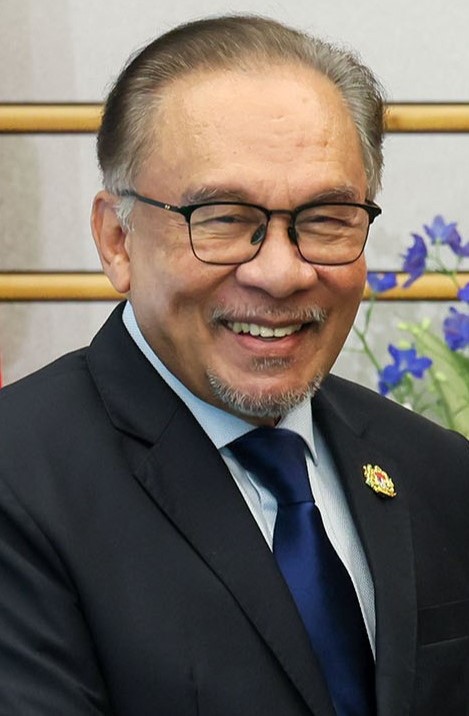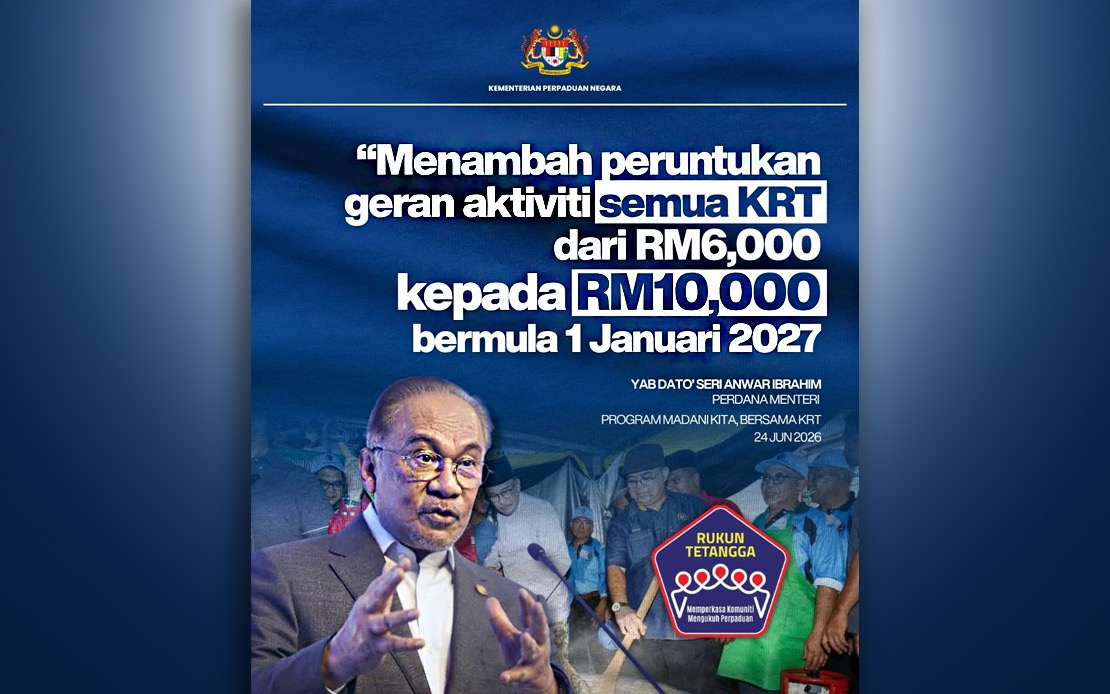
Prime Minister Datuk Seri Anwar Ibrahim has unveiled a substantial funding boost for Malaysia's grassroots community movement, announcing that the annual operational grant for neighbourhood watch areas will increase from RM6,000 to RM10,000 beginning January 1, 2027. The decision affects all 8,615 KRT units nationwide and was formally introduced during the MADANI KITA programme in Dataran Segamat, Johor. This represents a 66.7 percent increase in annual support and signals the government's determination to reinvigorate neighbourhood-level engagement as a cornerstone of national cohesion.
National Unity Minister Datuk Aaron Ago Dagang framed the grant enhancement as recognition of the KRT's enduring significance as a community institution spanning more than five decades. The KRT movement, which operates at the neighbourhood level, has evolved into a vital mechanism for fostering social bonds and collective problem-solving across Malaysia's diverse population. By elevating financial support, the government acknowledges that grassroots organisations require adequate resources to function effectively and respond to the evolving needs of their communities. This acknowledgment reflects a broader policy shift emphasising that national progress cannot be achieved through top-down initiatives alone.
The enhanced funding addresses a critical operational challenge for KRT units, many of which operate with minimal budgets in smaller towns and rural areas. The previous RM6,000 annual allocation often proved insufficient for organising meaningful community activities, purchasing necessary equipment, or maintaining meeting facilities. The additional RM4,000 annually will enable these neighbourhood groups to expand their operational capacity significantly. For a typical KRT comprising 50 to 100 households, this represents a meaningful increase in resources available for neighbourhood security patrols, social welfare assistance, and community development initiatives.
Aaron emphasised that the grant increase demonstrates the MADANI Government's commitment to empowering grassroots movements as drivers of societal development. The broader context involves recognising that unity and harmony do not emerge spontaneously but require sustained investment in community infrastructure and programming. Neighbourhood watch areas serve as accessible platforms where residents can interact across ethnic, religious, and socioeconomic lines. By strengthening financial support, the government creates conditions for these interactions to become more frequent and substantive.
Current KRT operations already demonstrate impressive scale and reach. The ministry's data indicates that approximately 250,000 individuals participate in KRT activities nationwide, while the movement's programmes reach more than 12 million Malaysians. Over the past year alone, KRT units conducted more than 100,000 community activities ranging from neighbourhood patrols to welfare assistance programmes. These figures underscore that while KRT operates at the hyperlocal level, its cumulative impact is genuinely national in scope.
The enhanced grant is expected to facilitate expansion of existing KRT programming across multiple domains. Unity activities—cultural festivals, interfaith dialogues, and joint meals celebrating national occasions—can be conducted more frequently and with better quality provisions. Community development projects addressing local infrastructure needs, skill-training initiatives, and youth engagement programmes become more feasible. Neighbourhood security operations, including volunteer patrol schedules and community safety awareness campaigns, can be sustained more consistently. Educational programmes targeting youth and adult literacy can be expanded, while local economic empowerment initiatives supporting small traders and entrepreneurs gain additional resources.
For Malaysian readers, the implications extend beyond neighbourhood management. KRT effectively functions as a decentralised platform for implementing government policies at grassroots level. Enhanced neighbourhood cohesion makes community health campaigns, disaster response coordination, and local environmental initiatives more effective. When neighbours know and trust one another, they respond more readily to collective action for public good. This has proven particularly valuable during pandemic response efforts and natural disaster situations where community cooperation determined outcomes.
The announcement also signals confidence in volunteer-driven governance models as alternatives to purely professional bureaucratic delivery. KRT operates through unpaid volunteers who are embedded within their own communities and understand local contexts intimately. By investing in these grassroots structures rather than solely expanding government agencies, Malaysia adopts an approach that builds social capital while reducing administrative costs. This is particularly relevant for Southeast Asian governments seeking efficient ways to extend services to remote areas and low-income communities.
Aaron stressed that neighbourliness itself—the quality of relationships between neighbouring households—constitutes Malaysia's fundamental source of national strength. In diverse societies, genuine unity emerges not from abstract national symbols but from daily interactions among people of different backgrounds sharing common spaces. Neighbourhood watch areas institutionalise these interactions and create regular occasions for cross-community engagement. The grant increase acknowledges that such institutionalised engagement requires financial resources to sustain programming and maintain facilities.
The ministry has signalled commitment to ensuring optimal utilisation of additional funds through monitoring and accountability mechanisms. This addresses a legitimate governance concern that increased funding produces intended community benefits rather than administrative inefficiency. Clear programme guidelines specifying eligible activities and transparent accounting procedures will likely accompany the grant rollout.
The January 2027 implementation timeline provides KRT units with planning opportunities to identify priority projects and develop comprehensive activity schedules. This implementation horizon also allows ministry officials to conduct training and support programmes helping KRT leaders maximise the additional funding's impact. By January 2027, economic conditions may have shifted, and planning now enables KRT units to position themselves strategically.
The grant enhancement occurs amid broader questions about community engagement and social fragmentation affecting Malaysia and Southeast Asia generally. As urbanisation accelerates and digital communication reshapes social interaction patterns, neighbourhood-based associations face declining participation in some areas. By investing substantially in KRT, the government demonstrates conviction that renewed community participation remains achievable through adequate resourcing and political support.
Ultimately, the RM10,000 annual grant represents more than budgetary adjustment; it reflects governmental recognition that Malaysia's stability and prosperity depend fundamentally on healthy communities where neighbours maintain meaningful relationships across difference. As Southeast Asian nations grapple with managing diversity, strengthening social cohesion, and building resilient local governance systems, Malaysia's neighbourhood watch expansion offers a model emphasising investment in hyperlocal institutions as catalysts for national development.