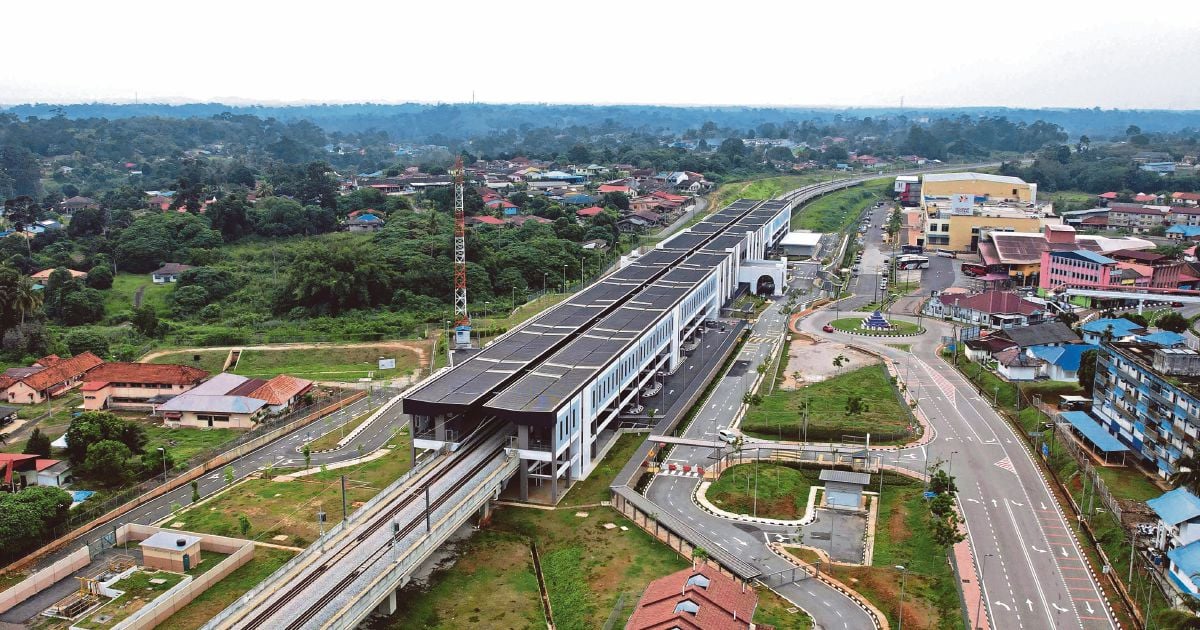
Malaysia's state railway operator, Keretapi Tanah Melayu Berhad (KTMB), has mobilised additional train services ahead of the Johor state election scheduled for this weekend, putting 7,464 extra seats into operation across its southern Electric Train Service network to facilitate voter movement.
The expanded capacity represents a significant operational commitment from the transport company, reflecting expectations of heightened passenger demand during the electoral period. By deploying additional trains rather than simply increasing frequency on existing services, KTMB has opted to provide discrete additional capacity that should ease congestion on what is typically a busy weekend corridor. The southern sector, which encompasses routes connecting major population centres in Johor and extending to Selangor and Kuala Lumpur, serves as a critical artery for inter-state travel and voter mobility.
Complementing the capacity expansion, KTMB has announced a 20 per cent fare reduction for the election period, substantially lowering the cost barrier for voters who might otherwise drive or consider alternative transport modes. This pricing strategy serves a dual purpose: it incentivises train usage, potentially reducing road congestion and improving traffic flow during peak election travel periods, while simultaneously demonstrating corporate citizenship during an important democratic exercise. For budget-conscious voters, particularly those travelling from neighbouring states or within Johor itself, the discount renders rail transport considerably more attractive than private vehicle travel, especially when factoring in petrol costs and parking expenses.
The initiative underscores how major transport infrastructure operators have begun factoring electoral events into their operational planning. Previous elections in Malaysia have generated substantial passenger spikes as voters return to their constituencies to cast ballots, particularly in scenarios where electoral boundaries do not align with residential mobility patterns. KTMB's proactive approach suggests the company has analysed ridership data from past electoral periods and determined that advance capacity planning yields superior outcomes for both passengers and operational efficiency compared to reactive crisis management during peak demand.
Geographically, the southern ETS corridor's relevance to the Johor election cannot be overstated. The line connects Kuala Lumpur Sentral, the nation's primary transport hub, directly to Johor Bahru and intermediate stations serving towns such as Bandar Tasek Lestari and Kluang. For voters based in the Klang Valley and beyond, the express service provides a faster, often cheaper alternative to driving the increasingly congested North-South Expressway, particularly during weekend travel when accidents and heavy traffic frequently create extended journey times. The discount effectively positions rail travel as the rational economic choice for this specific travel pattern.
The timing of KTMB's announcement reflects broader Malaysian infrastructure sector recognition that election periods concentrate unusual travel patterns within compressed timeframes. Unlike regular weekend patterns where passenger demand distributes across two or three days, election travel often compresses into a single day or morning rush as voters attempt to reach polling stations. By pre-positioning capacity rather than discovering shortages mid-election, KTMB demonstrates lessons learned from previous electoral cycles and broader transport management experience across the region.
From a broader sustainability perspective, the initiative aligns with governmental objectives to promote modal shift away from private vehicles toward public transport. Elections present unique opportunities to demonstrate rail service value to voters who might not regularly use such services, potentially generating habit formation and future ridership even after the electoral period concludes. The 20 per cent discount serves as a temporary but effective inducement mechanism that could convert one-time election travellers into regular commuters or occasional users, expanding the long-term revenue base.
The operational logistics of implementing 7,464 additional seats merit consideration. KTMB likely achieved this through scheduling additional train services at higher frequency, potentially extending operating hours, or both. The southern ETS network has undergone modernisation in recent years, with enhanced signalling and rolling stock improvements theoretically enabling higher service frequency. However, balancing additional trains against maintenance schedules, crew availability, and existing freight commitments represents a significant operational undertaking that requires advance planning, hence the public announcement providing voters with clear information about enhanced availability.
For Malaysia's transport ecosystem, KTMB's response to the election cycle validates continued investment in rail infrastructure and demonstrated political will to maintain competitive service standards. The decision to absorb the revenue impact of the 20 per cent discount, rather than passing costs to voters, represents a substantial financial commitment—effectively a subsidy to the electoral process through reduced fares. This choice likely reflects considerations of corporate reputation, public service obligations inherent in KTMB's concession arrangements, and recognition that temporary margin reduction during peak demand periods remains preferable to capacity shortfalls that could generate negative publicity.
The measure also highlights how electoral periods stress-test transport infrastructure, revealing bottleneck points and capacity constraints that might otherwise remain dormant during regular operations. Feedback from this weekend's heightened ridership may inform KTMB's longer-term capacity planning and investment prioritisation, particularly regarding whether southern corridor demand justifies permanent service enhancements. Election cycles thus function inadvertently as diagnostic tools for transport planners, demonstrating real-world demand patterns that modelling alone cannot fully capture.

