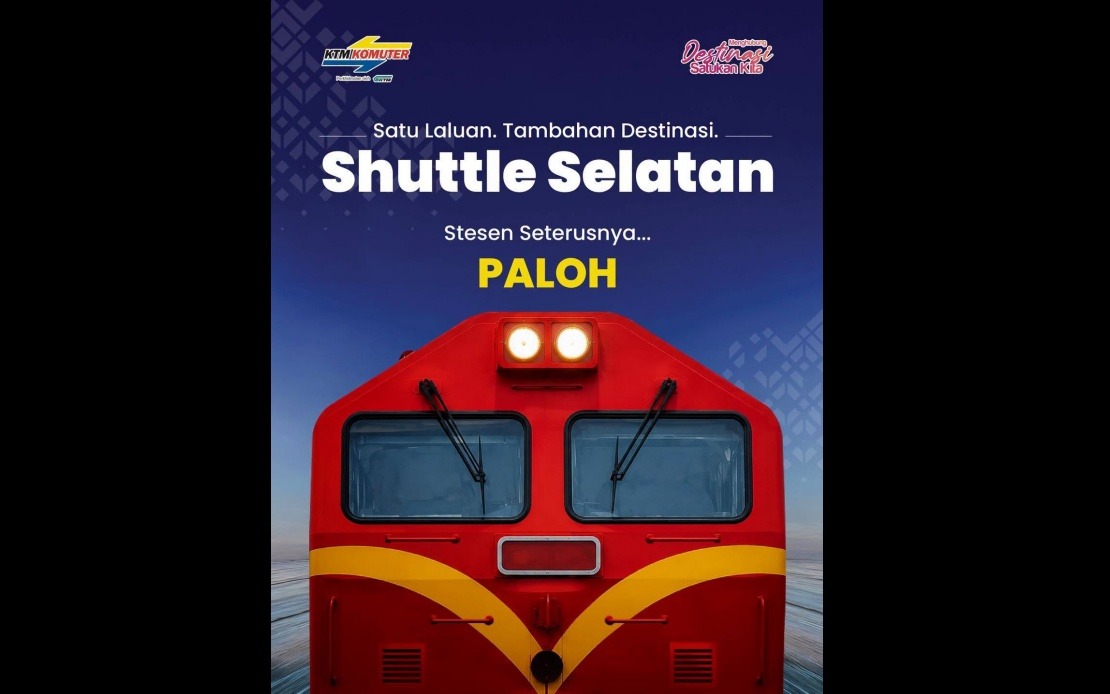
Malaysia's rail network is expanding southward with the launch of an extended Southern Shuttle service that will connect Paloh directly to Johor Bahru Sentral from August 8, marking a significant step in the government's push to enhance public transportation connectivity across the central Johor corridor. The initiative, announced by Keretapi Tanah Melayu Berhad (KTMB), comes less than three months after the service's initial debut and demonstrates the company's rapid scaling of this regional transit offering.
The expanded route will serve seven stations along the corridor: Paloh, Kluang, Renggam, Layang-Layang, Kulai, Kempas Baru and JB Sentral, with the full journey taking approximately two hours. This expansion utilises existing infrastructure from the Gemas-Johor Bahru Electrified Double-Track Project (PLBEGJB), allowing KTMB to deploy resources efficiently across the region's growing commuter demand. The Transport Ministry positioned this development as a strategic response to the need for direct rail connectivity between suburban communities and key economic zones in Kulai and the state capital.
Operational scope reflects genuine commuter requirements, with ten daily services running in each direction between the terminal stations. Morning services commence early at 3.55 am from Paloh, arriving in Johor Bahru by 5.52 am, while evening operations extend until 8.30 pm departure from the southern terminus, reaching Paloh at 10.27 pm. This scheduling deliberately accommodates cross-border workers who continue their journey into Singapore via the Johor Bahru land crossing, addressing a significant commuter segment that has traditionally relied on personal vehicles or limited shuttle arrangements.
Capacity planning suggests KTMB anticipates sustained ridership growth, with each train carrying up to 400 passengers per service. Beyond serving daily commuters, the rail link promises to reshape transport patterns within the region by offering a reliable alternative to congested highway routes. For Malaysian professionals working across the causeway, this development could meaningfully reduce travel time and costs while alleviating pressure on the already-congested causeway infrastructure during peak hours.
Promotional pricing will remain attractive through the remainder of this year, with the full Paloh-JB Sentral journey available at just RM7.70 per journey compared to the standard RM15.30 fare. This pricing strategy appears designed to build ridership momentum before new electric train stock arrives, creating habits and demand that justify investment in modern rolling stock. Additionally, the MyRailLife Pass programme will extend comprehensive benefits to the new service until December 31, providing free travel for children aged four to six, primary and secondary students, and persons with disabilities, subject to applicable conditions.
Interconnectivity emerges as a critical advantage within the broader southern corridor strategy. Kempas Baru Station will function as a transfer hub, enabling passengers to interchange with the Kempas Baru-Pasir Gudang route that serves the region's significant industrial zone. This multi-directional connectivity strengthens the economic rationale for rail investment by positioning the system as the backbone of workforce mobility across multiple employment centres, rather than a single-route solution. The Pasir Gudang industrial area benefits particularly from improved accessibility, potentially reshaping recruitment and commuting patterns for businesses headquartered in that manufacturing-intensive enclave.
Initial performance metrics indicate growing acceptance of this rail alternative among commuters. Since introduction, the Southern Shuttle recorded 3,209 passengers across its two initial routes, suggesting demand exists for this service category despite modest early adoption numbers. While these figures may appear modest in absolute terms, they establish proof of concept for a market segment that previous transport planning may have underestimated, validating the government's decision to proceed with rapid expansion.
The Johor-Singapore Special Economic Zone (JS-SEZ) positioning features prominently in official commentary, reflecting Putrajaya's broader economic integration ambitions with its island neighbour. Enhanced rail connectivity directly supports workforce mobility objectives within that framework, potentially attracting businesses that prioritise seamless cross-border operations. By reducing commute frictions, KTMB's expansion indirectly strengthens Johor's competitive positioning as a region offering convenience and efficiency comparable to Singapore's own transport networks.
Vehicle reduction targets feature in KTMB's articulation of this project's societal benefits, aligning with Malaysia's broader sustainability commitments and efforts to manage urban congestion. Each commuter switching from personal transport to rail reduces highway demand, particularly significant given that the causeway corridor remains a chronic congestion point during peak periods. From an environmental perspective, electrified rail represents substantially lower carbon intensity than internal combustion vehicles, contributing incrementally to national climate targets even as Malaysian transport demand continues rising.
The timing of this expansion carries political significance within Malaysia's transport modernisation agenda. The Transport Ministry framed this development as demonstrating government commitment to enhancing public mobility, particularly for suburban populations that previously lacked convenient rail access. This narrative resonates with urban planning philosophy increasingly prevalent across Southeast Asia, where mass transit investment receives political emphasis as both economic development catalyst and quality-of-life enhancement.
Operational challenges remain inherent to rapid service expansion in developing transit systems. KTMB must execute reliable daily operations across extended routes while managing growing passenger flows and maintaining service quality standards that justify promotional pricing strategies. Staff training, maintenance scheduling, and contingency planning across seven stations represents substantially greater complexity than the initial two-route configuration.
Looking forward, successful execution of this expanded service could validate further extensions within the broader southern corridor framework. Regional cities including Kluang and Renggam gain improved metropolitan access, potentially catalysing economic activity in communities historically peripheral to major development nodes. The service ultimately represents incremental but meaningful progress toward a more integrated southeastern Malaysian transport network, one that facilitates both human and economic movement across state and national boundaries with growing efficiency.

