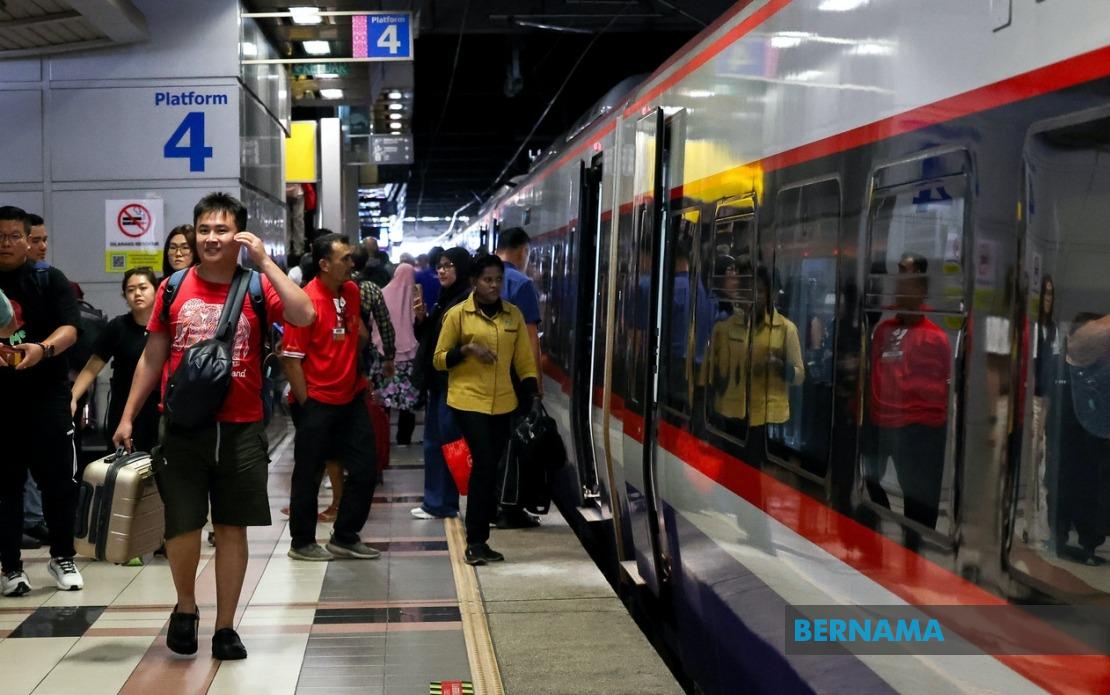
Keretapi Tanah Melayu Berhad (KTMB) has responded to mounting passenger demand by releasing 7,464 supplementary Electric Train Service seats ahead of the Johor state election scheduled for this coming weekend. The initiative reflects mounting pressure on the nation's rail infrastructure during periods of heightened electoral activity, when millions of voters attempt to return to their constituencies simultaneously. The additional capacity comes merely weeks after a previous allocation of seats sold out completely, underscoring the substantial logistical challenge that state and federal elections present to Malaysia's transport networks.
The expanded service encompasses two critical corridors linking the Klang Valley with Johor's administrative centre. KTMB will operate four extra train journeys on the KL Sentral to JB Sentral route, mirroring the addition of four supplementary services on the JB Sentral to Gemas segment. These operations will function across a three-day window from July 10 through 12, with each journey accommodating approximately 2,488 passengers daily. The dual-route approach reflects KTMB's recognition that voters travel through various gateways, with some originating from the Gemas corridor further south and others embarking from the greater Kuala Lumpur metropolitan region.
Ticket availability has been staggered to manage the anticipated rush. Sales for the southern JB Sentral-Gemas-JB Sentral route commenced on July 7 at 3.00 pm, while the northern KL Sentral-JB Sentral-KL Sentral corridor opens for bookings the following day at 9.00 am. This phased approach, while potentially frustrating for some prospective passengers, allows KTMB to distribute demand more evenly and prevents the platform congestion that could occur if all tickets became available simultaneously. The timing also provides voters with reasonable advance notice to secure transportation, though observers have noted that election periods frequently catch many citizens off-guard regarding travel arrangements.
To incentivize rail usage over private vehicles, KTMB has implemented a 20 per cent discount across all supplementary services during the designated operational window. This financial inducement serves multiple policy objectives simultaneously: it reduces strain on Malaysia's highway networks during peak electoral periods, lowers individual travel costs for voters who may face financial constraints, and bolsters passenger volumes for the state railway during commercially challenging periods. The promotional strategy reflects broader government transportation policies favouring public transit adoption, though questions persist about whether such temporary discounts translate into sustained modal shift among Malaysian commuters.
The railway operator has specifically encouraged cashless transactions to expedite the ticketing process and reduce bottlenecks at physical sales points. KTMB directs passengers toward its KITS Style mobile application, official website portal, and kiosk machines positioned throughout major stations. This multi-channel distribution strategy represents an evolution in how Malaysia's rail infrastructure manages surge capacity, moving away from reliance upon individual ticketing windows toward digitalized booking systems. For technology-literate voters—predominantly younger demographics and urbanites—this approach streamlines access; however, concerns about digital divides among elderly and rural voters warrant consideration.
Operational guidance from KTMB emphasizes punctuality and advance preparation. Passengers face a strict requirement to arrive minimum 30 minutes prior to scheduled departures, with platform access curtailed five minutes before trains depart. These protocols, while standard for rail operations globally, carry particular weight in the Malaysian context where cultural norms around timing and scheduling can differ markedly from transport operators' requirements. Election periods amplify this tension, as voters unfamiliar with rail protocols or first-time users may find themselves confused or inconvenienced by such rigid procedures.
The supply expansion itself illuminates underlying structural challenges within Malaysia's transportation ecosystem. That a state election necessitates emergency capacity additions suggests permanent infrastructure operates near optimal utilization levels during normal circumstances. Johor's geographic positioning relative to the Klang Valley—accounting for roughly half of Malaysia's population—means any major triggering event concentrating return travel creates immediate bottlenecks. Rather than viewing this weekend's measures as exceptional interventions, transport analysts increasingly frame them as temporary patches addressing chronic capacity insufficiencies.
From a broader Southeast Asian perspective, Malaysia's approach to election-related transportation differs considerably from neighbouring countries' strategies. Indonesia, with vastly larger populations and more dispersed governance structures, has deployed military assets to facilitate voter movement during presidential elections. Thailand has experimented with domestic airline discount programs during comparable periods. Singapore's compact geography renders such concerns largely theoretical. Malaysia's middle-ground reliance upon rail capacity expansion reflects the nation's intermediate scale, urbanization patterns, and existing transportation infrastructure configurations.
Contact mechanisms remain available through KTMB's call centre at 03-9779 1200 and official social media channels, though such contact points frequently experience overwhelming demand during election periods as citizens seek real-time information about service disruptions, schedule modifications, or ticketing complications. The railway operator's capacity to respond adequately to thousands of simultaneous enquiries typically strains customer service infrastructure, creating cascading frustration among voters attempting coordinated travel.
The initiative ultimately encapsulates how electoral politics intersects with Malaysia's transportation governance. While the weekend's expanded ETS capacity will undoubtedly facilitate voter movement and reduce highway congestion, the reactive rather than proactive nature of such measures continues to generate scrutiny from transport planners and civil society observers. Whether KTMB retains expanded permanent capacity post-election, or whether these additional trains revert to standard configurations, will indicate whether Malaysian policymakers view electoral periods as exceptional circumstances requiring temporary solutions or as recurring phenomena demanding structural transportation investments.

