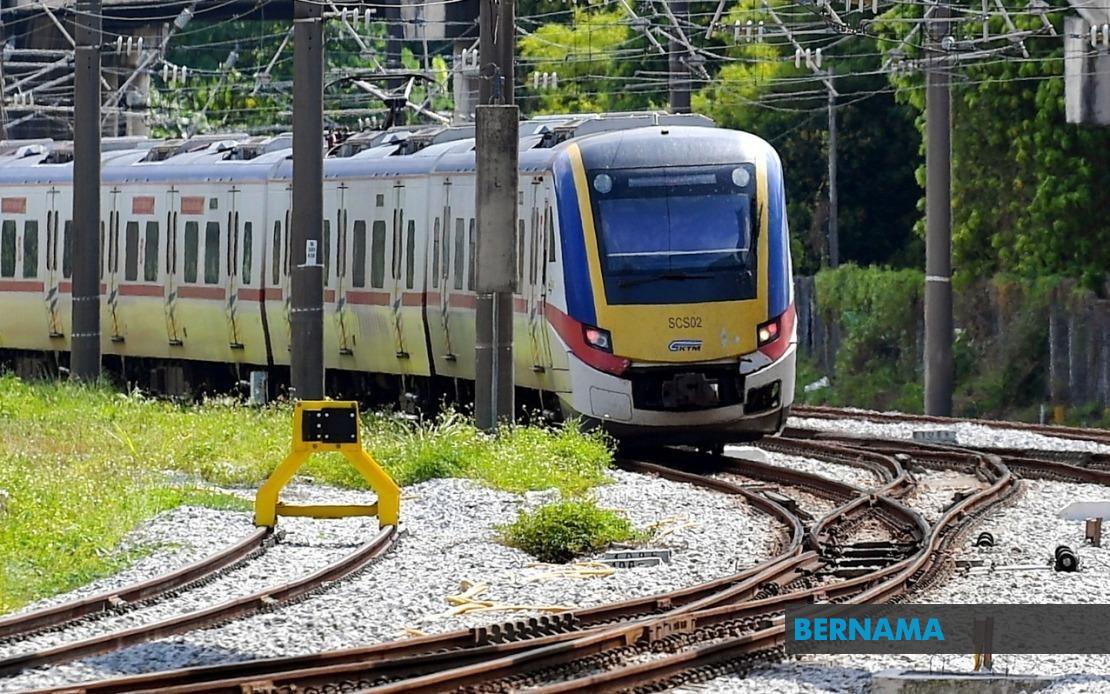
Keretapi Tanah Melayu Berhad (KTMB) is significantly ramping up its rail capacity ahead of Malaysia's National Day festivities and the school holiday period, deploying 124 extra train services that will collectively provide 38,944 additional seats across its electric rail networks. The expansion, which commenced ticketing yesterday, represents a major operational undertaking designed to prevent the bottlenecks that typically plague Malaysia's transport infrastructure during peak holiday travel seasons.
The bulk of this capacity injection will come through the Electric Train Service (ETS), which is adding 100 services featuring 31,600 seats spread across three separate two- or three-day windows. These intensified schedules will run from August 21 to 23, again from August 28 to 31, and finally from September 4 to 6. The timing reflects KTMB's understanding of travel patterns among Malaysian commuters, who tend to extend their holiday periods by combining weekends with public holidays. By staggering the additional services across these intervals rather than concentrating them on a single date, the operator aims to better distribute passenger flows and reduce station congestion.
Parallel to the ETS expansion, KTMB is also supplementing its Electric Multiple Unit (EMU) Plus service—which serves regional commuters and leisure travellers seeking a middle ground between economy and premium offerings—with 24 additional trains carrying 7,344 passengers. What distinguishes this deployment is the extension of EMU Plus coverage to Bandar Tasik Selatan, a southern suburb of Kuala Lumpur that has experienced rapid residential growth in recent years. This development signals KTMB's recognition that suburban areas beyond the traditional city corridors are generating meaningful passenger demand, particularly during holiday periods when families take extended trips from their homes.
Northern Malaysia will also benefit from the capacity expansion, though through a different mechanism. The Komuter service on the northern peninsular route—connecting Padang Besar, Butterworth, and points between—will see eight additional daily services during the August 27 to 31 window. This boost raises the total daily capacity on that vital cross-border route to 46 services, providing meaningful relief for commuters in Perlis and Kedah who depend on this line for both regular commuting and holiday travel. For residents and travellers in Malaysia's northernmost states, this represents a relatively rare opportunity to access enhanced rail capacity, as infrastructure investment has historically concentrated on the Klang Valley and western routes.
The strategic timing of this announcement merits closer examination within the broader context of Southeast Asian transport development. Malaysia's rail sector has long struggled with capacity constraints during holiday peaks, with passengers frequently reporting sold-out services weeks in advance. By pre-emptively announcing and releasing tickets yesterday, KTMB is attempting to influence booking behaviour and create smoother demand distribution. This contrasts with reactive approaches where operators simply increase capacity after congestion materialises. For Malaysian travellers accustomed to disappointment during holiday seasons, the proactive messaging represents a tangible shift in service orientation.
KTMB is simultaneously leveraging the National Day period for brand-building and customer appreciation activities spanning August 10 through 14. The operator is distributing vouchers, complimentary meal vouchers from KFC, free travel tickets, and RM16 discount codes, with the numerical reference marking the ETS' sixteenth anniversary since its inaugural service launched on August 12, 2010. These initiatives extend beyond mere promotional gimmickry; they reflect KTMB's attempt to rebuild passenger confidence following years of reliability concerns and competition from budget airlines and ride-sharing services that have eroded rail's market share among leisure travellers.
The historical context of ETS expansion provides important perspective on current operations. When KTMB introduced the service to Ipoh in 2010, it represented Malaysia's first high-speed rail corridor. The network subsequently extended northward to Butterworth and Padang Besar in 2015, establishing cross-border connectivity with Thailand. A southward expansion is scheduled for late 2025, which will presumably extend ETS coverage toward Johor, filling a long-standing gap in Malaysia's rail geography. This incremental but consistent expansion strategy suggests KTMB is building toward a more comprehensive national network, though capital constraints and political considerations have repeatedly delayed completion of originally promised corridors.
Passenger statistics underscore the genuine surge in ridership that these capacity additions address. Through July 2024, ETS services have carried 3.67 million passengers across the first seven months of the year—a 56 percent increase compared to 2.36 million in the equivalent period of 2023. The cumulative total since 2010 now stands at 44.3 million passengers, representing a substantial customer base despite the rail sector's ongoing competition from alternative transport modes. This growth trajectory, if sustained, will increasingly justify additional infrastructure investment and service expansion in subsequent years.
Group chief executive officer Datuk Azlan Shah Al Bakri attributed the ETS' strong performance to customer confidence in the reliability of Malaysia's rail transport system, though this framing merits scrutiny given widely documented complaints about delays and service inconsistencies. Nevertheless, the positive passenger trend suggests that sufficient portions of the travelling public perceive ETS as offering advantages—whether speed, comfort, cost-effectiveness, or environmental considerations—sufficient to overcome competing alternatives. The significant 56 percent year-on-year growth particularly during economic periods when discretionary travel might be expected to contract indicates robust underlying demand that extends beyond cyclical factors.
From a Southeast Asian perspective, Malaysia's capacity investments in rail transport position the country competitively relative to regional neighbours grappling with similar holiday-season transport crises. Thailand's railways face comparable National Day surges, while Indonesia's rail network operates under severe capacity constraints despite massive population. By demonstrating capacity planning and service expansion during peak demand periods, KTMB establishes operational best practices that may inform regional cooperation frameworks. Improved rail connectivity also facilitates enhanced movement across the Malaysia-Thailand border, supporting ASEAN's broader transport integration objectives.
The rollout of 38,944 additional seats represents meaningful but not transformative relief. Malaysia's railway network remains fundamentally undersized relative to overall transport demand, with aviation and private vehicle usage continuing to dominate holiday travel patterns. The ETS' contribution to holiday capacity, while valuable, captures only a fraction of total cross-country movements. However, the capacity additions serve an important symbolic function by signalling KTMB's commitment to infrastructure modernisation and customer-focused service planning. For Malaysian commuters who have endured previous holiday seasons characterized by sold-out trains and overcrowded stations, the announcement offers concrete reassurance that their feedback regarding capacity constraints is being translated into operational responses.

