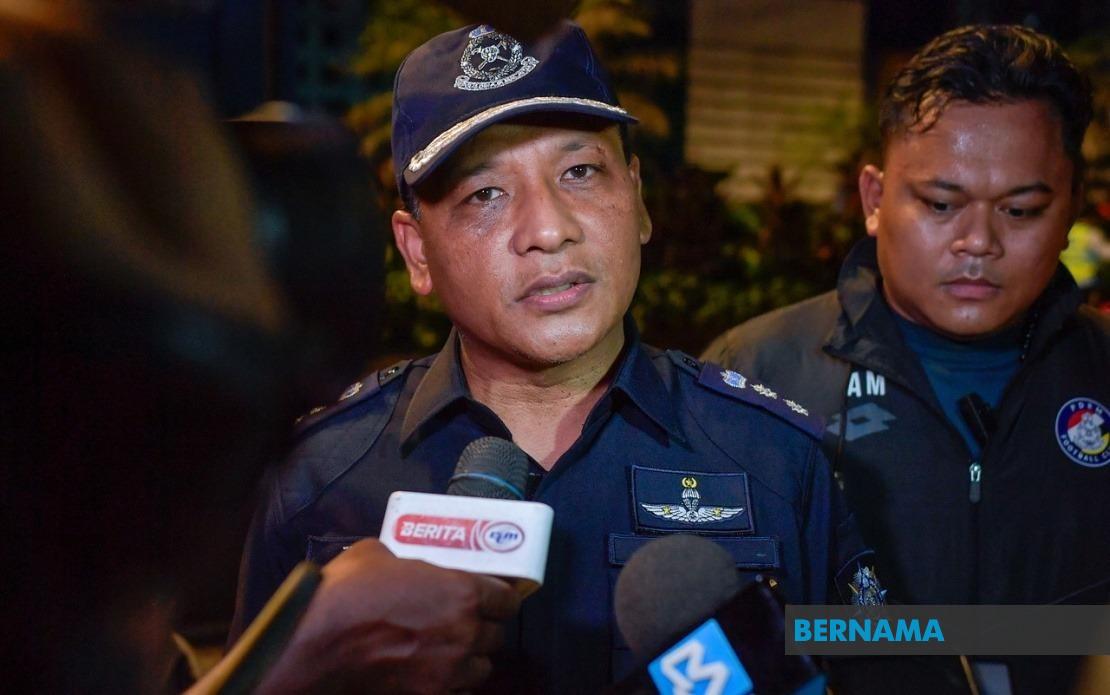
Authorities have advanced their investigation into a predawn collision involving an Immigration Department enforcement vehicle that resulted in the deaths of three members of a single family on Jalan Sultan Ismail in Kuala Lumpur. The police have completed their initial inquiry and will submit the investigation report to the Attorney General's Chambers tomorrow for prosecutorial review and determination of appropriate charges.
The Kuala Lumpur Traffic Investigation and Enforcement Department announced that the decision to escalate the matter to the Attorney General's Chambers followed consultations with the city's Prosecution Director. This procedural step marks a critical juncture in the case, as legal officials will now examine evidence gathered by investigators to decide whether formal charges should be filed against those implicated in the tragedy. The head of the General Crime and Public Order Division within the Attorney General's Chambers will receive the file, accompanied by both the prosecution director and the investigating officer for detailed evaluation.
Two drivers have been detained in connection with the incident and currently remain in police custody under a one-day remand extension. Both the Kuala Lumpur Immigration Department truck operator and the driver of a Proton Saga are being held as police conduct their enquiries. The investigation framework being applied is Section 41(1) of the Road Transport Act 1987, a provision that typically addresses offences involving motor vehicles and public safety violations. This legislative basis suggests that authorities are examining whether negligence or dangerous driving played a role in the tragedy.
The collision occurred in the early morning hours, around 1 am, when the Immigration Department's "Black Maria" prisoner transport vehicle, operating empty at the time, approached the junction at Jalan Sultan Ismail. The truck was reportedly en route to Chow Kit to conduct enforcement operations targeting individuals in the country illegally. At the critical moment, witnesses and investigators indicate that the truck proceeded through the intersection despite the traffic signal showing red, with its emergency beacon and siren activated, suggesting the driver may have assumed right of way.
Simultaneously, a Proton Saga was traversing the same junction with the green light, moving through what should have been a clear passage. The resulting collision between the two vehicles proved catastrophic. The impact caused the heavier truck to lose directional control, veer significantly off its intended path, and strike multiple pedestrians and an Inokom Matrix automobile in quick succession. The chaotic aftermath underscores the tremendous kinetic energy released during the crash and the vulnerability of pedestrians caught in the vicinity.
Three individuals from the same family perished in the incident. Shaik Mohd Firdaus Shaikh Yahya, aged 53, and his two daughters, Siti Nor Sazlin, 25, and Siti Darwisyah Auni, 12, were pronounced dead at the scene or shortly thereafter. The family's matriarch, Norhayati Razali, 55, sustained severe injuries and was admitted to the Intensive Care Unit at Kuala Lumpur Hospital, where she remains under critical care. The loss of a father and two daughters in a single tragic event has devastated the surviving family members and raised broader questions about road safety protocols, particularly for government vehicles operating under emergency conditions.
The incident raises significant concerns about operational procedures governing official vehicles engaged in enforcement activities. The use of emergency beacons and sirens creates a complex dynamic at intersections, particularly when other motorists legitimately possess right of way under traffic signal rules. Malaysian road safety authorities have long grappled with balancing the operational needs of emergency services against the imperative to protect civilian lives. This case will likely inform future discussions about intersection protocols and whether additional safeguards are necessary for official vehicles, regardless of their mission.
The referral to the Attorney General's Chambers will involve comprehensive scrutiny of police evidence, including witness statements, traffic signal timing records, vehicle maintenance logs, and potentially dashcam or security footage from nearby establishments. Prosecutors will weigh whether the available facts support criminal charges and, if so, at what severity level. The decision-making process is typically methodical and deliberate, as charging decisions carry profound implications for those involved and set precedent for how similar cases are handled across the jurisdiction.
For Malaysian road users and observers of the transport sector, this case exemplifies the ongoing tension between emergency response protocols and civilian safety. The tragedy underscores why intersections remain among the most dangerous urban environments, where split-second decisions and mechanical failures can have irreversible consequences. Regional analysts note that road fatalities remain a persistent public health challenge across Southeast Asia, often involving government or commercial vehicles where operational pressures may inadvertently compromise safety vigilance.
The path forward depends largely on how the Attorney General's office interprets the investigative evidence and applicable law. Should charges be filed, the subsequent trial will provide a public forum for examining precisely what occurred in those final moments before impact, potentially yielding insights that could influence national road safety policy. In the meantime, the surviving family members face the dual burden of grief and the uncertainty surrounding legal proceedings, while the broader community reflects on the fragility of safety even in a major urban setting where traffic infrastructure is ostensibly well-developed and regulated.

