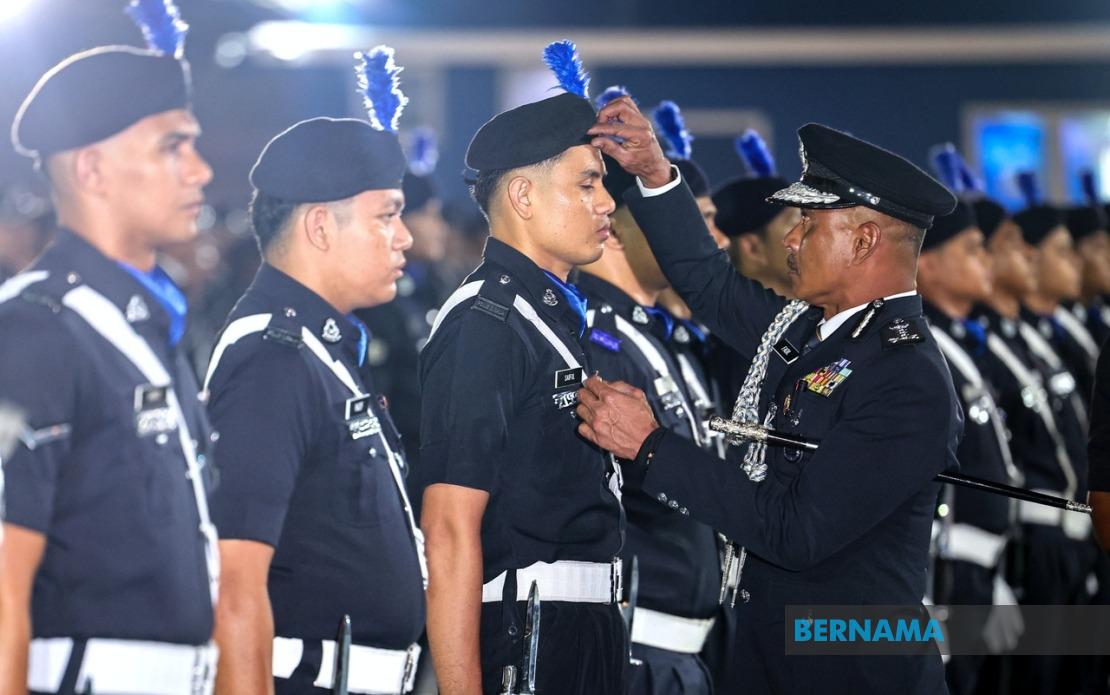
Kuala Lumpur's police force has fundamentally rethought how it organizes internal communications by scheduling its monthly assembly during night hours rather than daytime, a strategic shift designed to acknowledge and reinforce the actual operational rhythms of urban law enforcement in Malaysia's capital. The night-time gathering, held at Kuala Lumpur Police Contingent Headquarters, drew approximately 1,100 participants spanning senior officers, junior ranks, and civilian personnel, creating a significant logistical and cultural departure from conventional policing administration.
Datuk Fadil Marsus, the Kuala Lumpur Police chief, articulated the reasoning behind this unconventional scheduling decision during a press briefing following the assembly. His core argument centres on the empirical reality that criminal activity in Kuala Lumpur concentrates heavily during nocturnal hours, and simultaneously, the most intensive police operations, intelligence collection, and investigative work occur during the same period. Rather than maintaining administrative routines disconnected from operational realities, the police leadership has chosen to synchronise internal gatherings with the actual demands placed on frontline officers.
This scheduling innovation serves a broader strategic purpose beyond mere administrative convenience. By conducting the monthly assembly at night, the Kuala Lumpur police aim to cultivate what Datuk Fadil characterised as a more aggressive and sustained culture of night-time operational readiness. The concept reflects an acknowledgement that policing in a major metropolitan centre requires institutional values and behavioural patterns that match the city's non-stop nature. The shift signals to officers and staff that nocturnal vigilance is not merely a duty roster requirement but a core institutional priority worthy of executive attention and ceremonial inclusion.
The framing of Kuala Lumpur as a city that "never sleeps" carries significant implications for how the police force positions its operational identity. This metropolitan narrative, while common in discussions of major Asian cities, translates into concrete policing challenges. Night-time brings distinct crime patterns, including commercial burglaries, street crimes targeting late-night revellers and workers, and other offences that differ materially from daytime criminal activity. By anchoring their monthly assembly to night hours, the police administration visibly commits to treating these nocturnal challenges as central rather than peripheral to the force's mission.
The decision also addresses a potential institutional hazard: the risk that administrative and ceremonial functions remain detached from operational reality, creating a culture gap between leadership gatherings and frontline work. When monthly assemblies occur during standard business hours, officers predominantly engaged in night-shift duties may experience these gatherings as disconnected from their actual work environment and challenges. The night assembly ensures that a substantial portion of the force encounters internal communication and leadership messaging in temporal alignment with their lived operational experience.
Datuk Fadil explicitly addressed potential concerns about whether this scheduling change might compromise the force's capacity to maintain metropolitan security. He assured that relocating the assembly to night hours would not diminish police presence or effectiveness across Kuala Lumpur's streets and neighbourhoods. This reassurance becomes necessary because any restructuring of large-scale police gatherings raises legitimate questions about coverage and response capacity. With approximately 1,100 officers and staff attending, the gathering creates a temporary concentration that must be managed to prevent security gaps during one of the capital's highest-risk periods.
The operational logistics underlying this assembly schedule reveal sophisticated planning. The police must ensure that the meeting accommodates the night-shift workforce while maintaining uninterrupted patrols, rapid response capabilities, and intelligence operations across the metropolitan area. This likely requires staggered attendance, carefully timed rotations, and pre-positioned coverage adjustments. The ability to execute such complex scheduling demonstrates institutional maturity and operational depth within the force.
From a broader Southeast Asian perspective, this initiative reflects evolving approaches to police administration in the region's major urban centres. As cities across ASEAN grow increasingly complex, with 24-hour economies and persistent security challenges, police forces face pressure to align institutional practices with operational realities. Kuala Lumpur's approach may serve as a model for other metropolitan police commands grappling with similar tensions between conventional administrative schedules and the demands of round-the-clock urban policing.
The initiative also carries psychological and cultural dimensions worth examining. By conducting senior leadership gatherings during night hours, the Kuala Lumpur police send a message about institutional values and priorities. The assembly becomes not merely a communication forum but a symbolic affirmation that night-shift work commands the same leadership attention and ceremonial importance as daytime operations. For officers working midnight to dawn shifts, who sometimes experience marginalisation in police hierarchies oriented toward business hours, this scheduling shift may carry meaningful symbolic weight.
The sustainability of this approach will depend on how thoroughly the police integrate night-time assembly scheduling into their broader administrative culture. If this becomes a permanent practice rather than a one-off initiative, the force must develop supporting systems including night-adapted facilities, appropriate catering and facilities for participants, and scheduling protocols that genuinely accommodate the patterns of night-shift officers. The success will ultimately be measured not merely by the assembly's occurrence but by whether it genuinely strengthens operational culture and connection between leadership and night-time frontline personnel.
Looking forward, this innovation raises questions about other potential alignment between police administration and operational reality. If monthly assemblies warrant night scheduling, should other training programmes, promotion ceremonies, or strategic briefings similarly reconsider their temporal placement? The precedent set by Kuala Lumpur's police chief suggests a willingness to challenge conventional administrative assumptions in service of operational coherence, a mindset that could extend to other institutional practices across Malaysia's police system.

