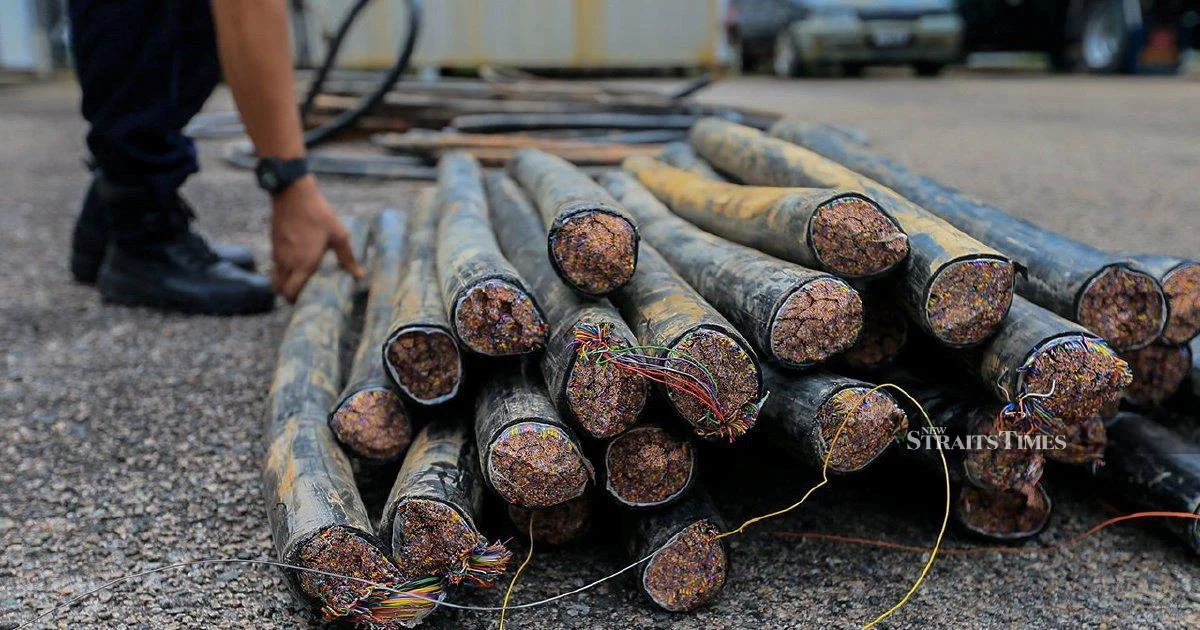
Kuala Lumpur's police force has achieved a notable victory against cable theft, one of the city's most persistent infrastructure crimes, with reported incidents dropping sharply in the first half of 2025. The Kuala Lumpur police contingent recorded just 71 cable theft reports spanning from January through May this year, a dramatic reversal from the troubling trajectory of 2024, when officers documented a total of 205 cases across the entire twelve-month period. This substantial decline suggests that intensified enforcement operations and targeted prevention strategies are beginning to yield tangible results in tackling a crime category that has long vexed municipal authorities and disrupted essential services across the nation's capital.
The improvement in curbing cable thefts carries particular significance for Malaysia's economic hub, where electrical and telecommunications infrastructure forms the backbone of commercial operations, financial services, and residential connectivity. Cable theft represents far more than simple property crime—it creates cascading disruptions that can cripple power supplies to hospitals, financial institutions, and manufacturing facilities, while simultaneously leaving entire residential neighbourhoods without electricity or internet access. The financial toll extends beyond immediate replacement costs, encompassing lost productivity, emergency repairs undertaken at premium rates, and the indirect expenses incurred by businesses forced to suspend operations. For a metropolitan area competing for regional investment and international business headquarters, such infrastructure vulnerabilities pose genuine competitive disadvantages.
Parallel to the reduction in reported cases, law enforcement has intensified its operational tempo, with police making 85 arrests related to cable theft offences during the five-month window. This indicates that officers are not merely experiencing fewer incidents but are actively pursuing and apprehending perpetrators with greater effectiveness. The arrest figures suggest that investigative work has improved, whether through enhanced intelligence gathering, better coordination between different police units, or improved community reporting mechanisms that allow authorities to respond more rapidly to incidents. The ratio of arrests to reported cases demonstrates sustained pressure on criminal networks that have historically specialized in this form of theft.
The underlying drivers of cable theft in urban Malaysia reflect broader socioeconomic pressures and the accessibility of high-value materials. Copper, aluminium, and other metals contained within electrical and telecommunications cables command consistent demand in scrap metal markets, creating a ready market for stolen materials. Organized criminal groups have developed sophisticated supply chains connecting street-level thieves with processing facilities and downstream buyers, often operating across state boundaries to obscure the origin of stolen goods. The relative ease of accessing cables—particularly those running through underdeveloped areas, along railway corridors, or in incomplete infrastructure projects—has traditionally made cable theft an attractive proposition for cash-strapped individuals and criminal syndicates alike.
Kuala Lumpur's success in reducing cable theft incidents likely reflects a multi-pronged approach combining increased police patrols, better coordination with utility companies, and improved physical security measures at high-risk locations. Telecommunications firms and electrical utilities have invested in surveillance systems, rapid-response protocols, and community awareness programmes designed to report suspicious activity. Police have similarly deployed resources more strategically, identifying hotspots where theft incidents cluster and maintaining visible presence in these vulnerable areas. Such partnerships between law enforcement and private infrastructure operators represent a practical acknowledgment that preventing such crimes requires cooperation across institutional boundaries.
The implications of this positive trend extend beyond Kuala Lumpur's administrative boundaries. As Malaysia's capital and principal economic engine, developments in KL crime patterns influence national security perceptions and business confidence. Other Malaysian cities facing persistent cable theft challenges may draw lessons from Kuala Lumpur's apparent success, adapting strategies that have proven effective in the capital to their own circumstances. Regional Southeast Asian cities grappling with similar infrastructure crime problems might likewise benefit from understanding the tactical approaches underpinning this improvement.
However, the substantial year-on-year comparison merits careful interpretation. The 2024 baseline of 205 annual cases itself represented a significant problem that warranted urgent intervention, suggesting that the crime had spiralled before police implemented enhanced countermeasures. The reduction from 2024 levels may partly reflect these newly intensified efforts rather than a fundamental shift in underlying criminal incentives or opportunity structures. Copper prices, scrap metal demand, and the economic desperation driving would-be thieves remain largely unchanged. Sustained vigilance and continued investment in prevention infrastructure will prove essential to consolidating these gains rather than witnessing a gradual creep upward in cases if enforcement attention diminishes.
The arrest of 85 suspects across five months, extrapolating to approximately 204 annual arrests at this pace, represents a significant personnel and resource investment. Courts face corresponding caseloads as these individuals proceed through the criminal justice system, raising questions about prosecution capacity, sentencing consistency, and rehabilitation prospects. Beyond incarceration, addressing the root causes driving individuals toward cable theft—unemployment, lack of economic opportunity, and addiction issues—requires interventions extending far beyond policing into social policy domains.
Looking forward, Kuala Lumpur's cable theft statistics will merit continued monitoring as a bellwether for urban crime trends and police effectiveness. Maintaining the current reduction trajectory demands sustained commitment to enforcement operations, infrastructure security upgrades, and coordination between public and private sector stakeholders. For Malaysian residents and businesses dependent on reliable electrical and telecommunications infrastructure, the recent improvement offers a welcome reassurance that persistent urban crime challenges can be meaningfully addressed through determined, focused law enforcement effort.