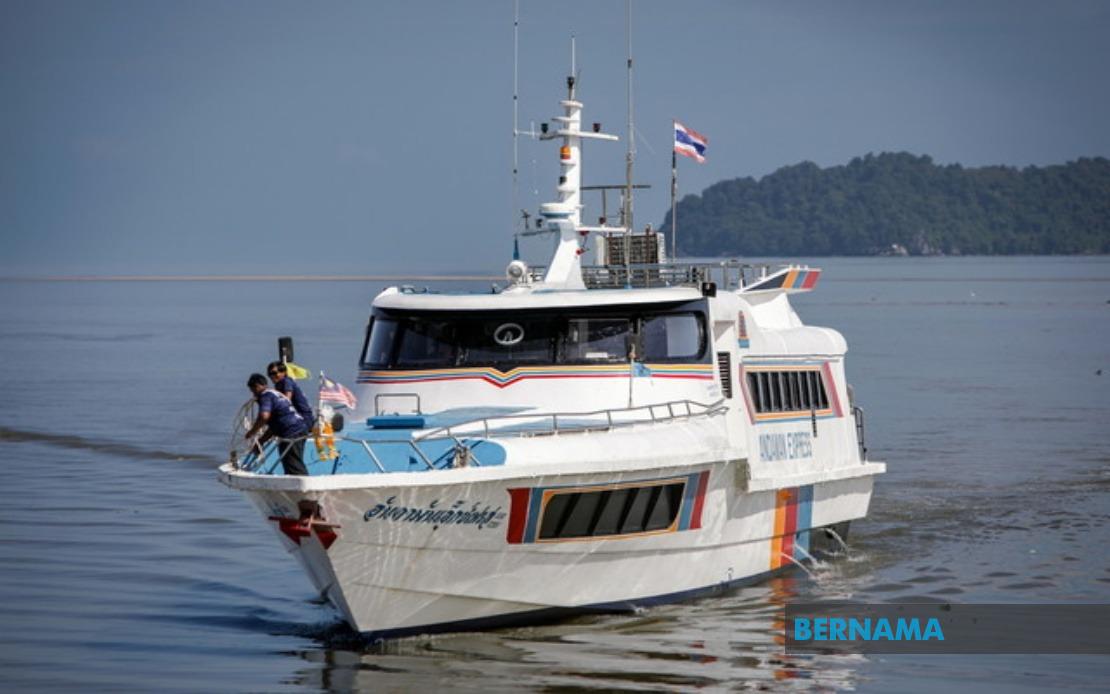
The maritime link between Kuala Perlis in Malaysia and Satun in Thailand will resume operations on Thursday, July 9, marking a significant milestone in the recovery of regional cross-border travel infrastructure. The service, dormant since the onset of the COVID-19 pandemic, represents more than just the restoration of a transportation route—it signals renewed commitment to deepening economic and tourism ties across the Andaman Sea corridor that connects two neighbouring nations with complementary tourism assets.
Perlis Menteri Besar Abu Bakar Hamzah unveiled the reopening plans during a working visit to Satun, where he participated in a comprehensive operational simulation at Tammalang Jetty. The exercise demonstrated the coordination mechanisms and safety protocols that both countries have established to facilitate smooth passenger and vehicle movements across the border. The simulation covered all critical operational aspects, from customs and immigration procedures to maritime safety standards, with full participation from relevant agencies in Malaysia and Thailand.
The strategic importance of this ferry service extends beyond immediate passenger convenience. Abu Bakar outlined an ambitious vision for leveraging the route to catalyse tourism development across three UNESCO Global Geopark designations—the Perlis Geopark on the Malaysian side and both the Satun UNESCO Global Geopark and Langkawi UNESCO Global Geopark in the broader region. The convergence of these three protected geological areas creates a unique transnational tourism ecosystem that could attract visitors seeking diverse natural heritage experiences across Southeast Asia.
To operationalise this regional cooperation framework, officials plan to establish a dedicated committee comprising representatives from Perlis, Satun, and Langkawi. This institutional arrangement will facilitate joint marketing initiatives, coordinated infrastructure development, and harmonised tourism standards across the three jurisdictions. Such collaboration is particularly valuable in an era when visitors increasingly seek multi-destination experiences that transcend traditional political boundaries, and when tourism value chains benefit from integrated regional approaches.
The initial service configuration will begin modestly with a single daily crossing, a cautious approach that allows operators and authorities to monitor performance, identify operational challenges, and build passenger confidence before scaling up frequency. Abu Bakar acknowledged that service expansion will follow demand patterns, suggesting a pragmatic response to market conditions rather than predetermined expansion targets. This measured implementation strategy reduces the risk of overcapitalisation while maintaining sufficient capacity to meet emerging demand.
Fare competitiveness emerged as a key priority in discussions between state government officials and ferry operators. The Perlis administration is actively engaging with commercial operators to ensure that ticket prices remain attractive compared to alternative travel routes while exploring promotional pricing strategies for the launch phase. Such pricing flexibility can prove instrumental in encouraging trial usage among potential passengers who may otherwise default to existing travel alternatives, whether overland routes through border crossings or longer maritime journeys via established ports.
Simultaneous with the ferry service restoration, the Kuala Perlis Roll-on-Roll-off Terminal is undergoing comprehensive upgrading to enhance operational capacity and efficiency. The improvement works include constructing dedicated traffic routes that will streamline vehicle processing and reduce bottlenecks during peak periods. These infrastructure enhancements reflect recognition that cross-border ferry operations serving both passenger and vehicle traffic require carefully designed facilities that balance throughput with security and safety compliance.
The regulatory framework supporting the reopening represents months of coordination between Malaysian and Thai authorities across multiple government departments. The Royal Malaysian Customs Department, Malaysian Immigration Department, Marine Department, and various security agencies have aligned their procedures and systems to enable frictionless border processing. This level of interagency alignment demonstrates that both governments recognise the strategic value of facilitating legitimate cross-border movement while maintaining border security integrity.
For Malaysian travellers and businesses, the Kuala Perlis-Satun link offers direct access to Thailand's Andaman coastal region without the necessity of circuitous land routes or flights. For Thai visitors, the ferry provides convenient maritime entry to northern Malaysian states and the broader Langkawi tourism destination, which has emerged as a premium regional tourism hub. The symmetrical benefits to both nations create natural incentives for maintaining service reliability and quality standards.
The reopening also carries broader implications for ASEAN connectivity objectives. As the regional bloc emphasises the importance of seamless intra-regional mobility and integrated economic zones, successful cross-border ferry operations demonstrate the feasibility of implementing practical connectivity measures. The Kuala Perlis-Satun route exemplifies how bilateral infrastructure cooperation can advance the collective ASEAN agenda of regional integration while respecting the sovereign prerogatives of individual member states.
Tourism industry analysts have noted that post-pandemic travel patterns increasingly favour authentic cultural and natural heritage experiences over conventional urban tourism. The convergence of three geopark designations in this region positions the Kuala Perlis-Satun-Langkawi triangle as an attractive proposition for visitors seeking geological diversity, cultural immersion, and nature-based recreation. The ferry service functions as the enabling infrastructure that transforms geographic proximity into accessible tourism opportunity.
Success of the reopened ferry service will ultimately depend on consistent operational performance, competitive pricing, reliable scheduling, and effective marketing to target audiences in both Malaysia and Thailand. The simulation exercises suggest operational readiness, but the true test will emerge through weeks and months of actual service delivery. If the inaugural phase demonstrates stable operations and generates passenger volumes justifying continued investment, expansion of services and deepening of tourism cooperation through the proposed multi-jurisdiction committee could follow.

