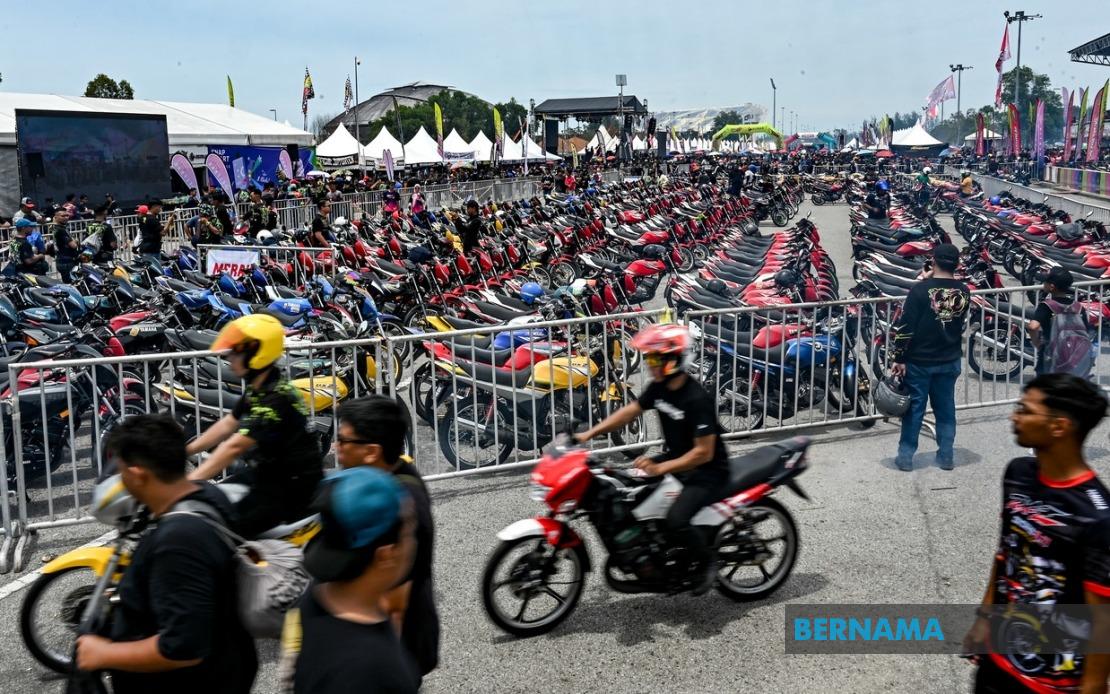
The Kuala Terengganu City Council (MBKT) has incurred substantial cleanup expenses following the RXZ Members 8.0 event held at the Gong Badak Motor Racing Circuit near Kuala Nerus over the weekend, highlighting growing tension between large-scale event hosting and municipal waste management capacity. The council expended RM40,000 to restore the venue to acceptable standards, a figure that encompasses staffing costs for extended hours, additional waste collection vehicles deployed to the site, and the extended operational expenses at the Sungai Ikan landfill facility.
Mayor Lizan Che Mamat attributed the significant financial outlay to a combination of logistical challenges that emerged during the event's cleanup phase. The council's workforce operated on overtime schedules to manage the volume of debris left scattered across the venue, while the landfill required extended operations to process incoming waste loads. What began as a municipal waste management exercise evolved into a resource-intensive operation that strained the council's budget and personnel capacity during a period when Kuala Terengganu was hosting concurrent tourism and economic activities.
The scale of rubbish retrieved from the event grounds underscored the magnitude of the cleanup challenge. Approximately 130 tonnes of solid waste was collected, predominantly comprising food and beverage packaging discarded by attendees. This volume necessitated a marked increase in the frequency of collection runs, as standard waste management protocols proved inadequate for the generated debris. The composition of waste—largely disposable food containers—suggests that despite the festival atmosphere, attendees generated typical urban consumption patterns without adhering to environmental responsibility.
Lizan acknowledged that despite organisers provisioning rubbish receptacles throughout the venue, attendees continued disposing of waste indiscriminately across the grounds. This pattern reflects a broader challenge facing event management across Malaysia: the gap between infrastructure provision and public behavioural compliance. The presence of designated bins did not translate into their utilisation, indicating that waste management at large public gatherings requires approaches extending beyond simply installing collection points.
The event's attendance figure exceeded 100,000 people, substantially surpassing what waste infrastructure at the Gong Badak venue was calibrated to accommodate. The mayor suggested this unanticipated crowd size contributed to inadequate bin capacity, though he simultaneously emphasised that attendees should have utilised designated collection zones rather than dispersing waste across the motorsports circuit. This distinction between infrastructure insufficiency and user non-compliance reflects the nuanced reality of public event management, where both organisers and participants share responsibility for environmental stewardship.
Looking forward, MBKT intends to implement structural reforms to prevent recurrence of such cleanup burdens on municipal finances. The council is contemplating mandatory submission of waste management plans from event organisers seeking local authority approval, transforming solid waste handling from an afterthought into a pre-event consideration. This proactive approach would shift responsibility upstream, requiring organisers to anticipate, plan for, and fund appropriate waste infrastructure proportionate to expected attendance.
Simultaneously, the council is evaluating whether to increase the cleaning deposit imposed on event organisers. This financial mechanism, restructured appropriately, could offset municipal cleanup costs incurred when organisers' waste management provisions prove inadequate. Such deposits function as both an incentive for effective event planning and a revenue source to compensate public authorities for environmental remediation beyond contracted arrangements.
Mayor Lizan emphasised that Kuala Terengganu remains supportive of hosting large-scale gatherings, recognising their role in stimulating tourism revenue and generating economic activity within the state. Events of the RXZ Members 8.0 calibre attract visitors, encourage spending at local establishments, and elevate Terengganu's profile as an event destination. The council's concern, however, centres on ensuring that the external costs associated with such activities—particularly environmental cleanup—do not disproportionately burden municipal resources.
The situation reflects a tension increasingly visible across Malaysian municipalities. As cities seek to develop events portfolios to compete for tourism revenue, they must navigate the administrative and environmental consequences. The RM40,000 expenditure represents not merely a financial item but a manifestation of systemic gaps in event governance, where the public sector absorbs costs that arguably should be distributed among organisers and participants.
For other Malaysian local authorities hosting similar events, the Kuala Terengganu experience provides instructive lessons. Implementing mandatory waste management plans, establishing adequate deposits, and deploying pre-event coordination with organisers regarding environmental protocols could substantially reduce post-event municipal expenditure. The example also underscores how public behaviour modification campaigns targeting event attendees—emphasising the environmental and financial consequences of littering—might improve compliance with waste management infrastructure.
Beyond the immediate financial implications, the RXZ Members 8.0 cleanup challenge signals the necessity for a more sophisticated approach to event governance in Malaysia. As citizen participation in large gatherings continues growing, municipal councils must develop frameworks treating waste management not as an afterthought but as integral to event planning from inception. The alternative—continued absorption of substantial cleanup costs by already-stretched municipal budgets—remains unsustainable and inequitable to taxpayers bearing these expenses.

