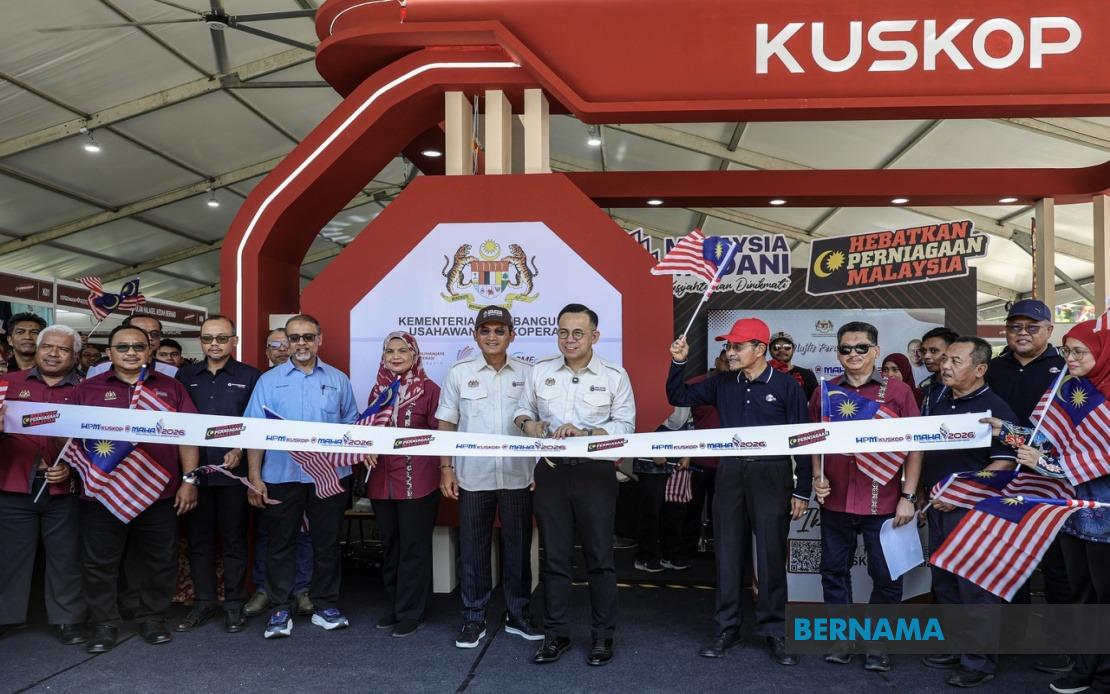
The Ministry of Entrepreneur and Cooperatives Development (KUSKOP) has launched its inaugural presence at Malaysia's premier agricultural showcase, positioning itself as a significant platform for small business promotion at MAHA 2026 in Serdang. The ministry's pavilion represents a strategic expansion of efforts to connect entrepreneurs, cooperatives, and micro, small and medium enterprises (MSMEs) directly with consumers and potential business partners at one of the nation's largest biennial exhibitions.
Minister Steven Sim revealed that the HPMKUSKOP@MAHA 2026 site has already demonstrated considerable commercial momentum, recording RM110,000 in sales within the opening days of the event. This early performance suggests strong market appetite for the products and services being showcased, though the ministry remains focused on achieving its broader RM500,000 sales objective before the exhibition concludes. The trajectory of early sales indicates that reaching this target remains realistic, provided visitor traffic and purchasing patterns continue their current momentum.
The ministry's commitment to the event is reflected in the scale of its participation, with approximately 66 companies and cooperatives brought together under a single pavilion space. This consolidation allows visitors to explore a diverse range of offerings in one location, from agricultural products to value-added goods and services. The inclusion of MSMEs demonstrates KUSKOP's focus on nurturing and promoting Malaysia's small business ecosystem, providing these enterprises with exposure to a massive consumer base.
Visitor engagement has exceeded initial expectations, with attendance figures surpassing 100,000 over the initial days of MAHA 2026. This substantial footfall reflects the agricultural show's enduring appeal to Malaysian families and farming communities. For the participating companies and cooperatives, this volume of visitors presents significant opportunities for direct sales, market research, brand awareness, and establishing new business relationships that could extend beyond the exhibition period.
The debut of the KUSKOP pavilion at MAHA represents a deliberate strategy to position the ministry's mandate within Malaysia's broader economic development framework. By securing prominent exhibition space and mobilising a diverse portfolio of business enterprises, KUSKOP is signalling that cooperative models and small business development are essential components of national prosperity. This approach aligns with government priorities emphasising inclusive economic growth and the empowerment of local entrepreneurs across rural and urban areas.
For Malaysian MSMEs, participation in such high-profile exhibitions serves multiple strategic purposes beyond immediate sales generation. The experience of engaging directly with large volumes of consumers provides invaluable market feedback, helps businesses refine their sales pitches and product presentations, and creates networking opportunities with other enterprises. Additionally, media coverage of MAHA 2026, including the KUSKOP pavilion's performance, generates free publicity that extends the reach of participating companies far beyond the physical exhibition space.
The timing of MAHA 2026 is particularly significant for the agricultural sector, occurring during a period when government initiatives emphasise food security and agribusiness development. Minister Steven Sim's positive commentary on the event, combined with his acknowledgement of the organisational work undertaken by the Ministry of Agriculture and Food Security under Datuk Seri Mohamad Sabu, indicates strong inter-ministerial coordination. This collaborative approach strengthens the support ecosystem for businesses operating within agriculture and related value-added sectors.
The attendance of KUSKOP secretary-general Datuk Seri Khairul Dzaimee Daud at the official opening underscores the ministry's commitment to monitoring and supporting the pavilion's performance throughout MAHA 2026. This high-level presence ensures that any logistical challenges or opportunities can be addressed promptly, and helps maintain momentum towards the RM500,000 sales target. The ministry's involvement also signals to participating companies that their efforts have governmental backing and recognition.
From a regional perspective, Malaysia's approach to promoting cooperatives and MSMEs through agricultural exhibitions influences broader Southeast Asian economic development patterns. The success of initiatives like the KUSKOP pavilion at MAHA demonstrates how public institutions can effectively facilitate private sector growth and contribute to inclusive economic expansion. Other ASEAN nations facing similar challenges in supporting small business ecosystems may look to Malaysia's strategies as potential models for their own initiatives.
The financial target of RM500,000 should be contextualised within the broader value generated by such exhibitions. While direct sales are important, the intangible benefits of brand exposure, business networking, and consumer feedback often exceed the immediate monetary transactions. For many participating MSMEs, MAHA 2026 may serve as a springboard for accessing new distribution channels, forming partnerships with larger retailers, or developing export opportunities that could generate revenue well into the future.
Looking forward, the success of the inaugural KUSKOP pavilion at MAHA 2026 will likely influence the ministry's exhibition strategy for subsequent years. Strong performance metrics could justify expanded participation, additional pavilion space, or enhanced support services for exhibiting companies. Conversely, lessons learned from this first outing will inform improvements in selection criteria for participating firms, booth layout and design, promotional activities, and staff training to ensure even greater impact at future events.

