The Ministry of Entrepreneur Development and Cooperatives (KUSKOP) has made substantial progress in strengthening Malaysia's entrepreneurial ecosystem, disbursing nearly RM7 billion across its portfolio of support schemes during the opening half of 2026. This considerable allocation, channelled through the flagship Power Up 10K initiative, has reached more than 213,000 micro, small and medium enterprises throughout the country, representing a significant stride in the government's commitment to nurturing business competitiveness at the grassroots level.
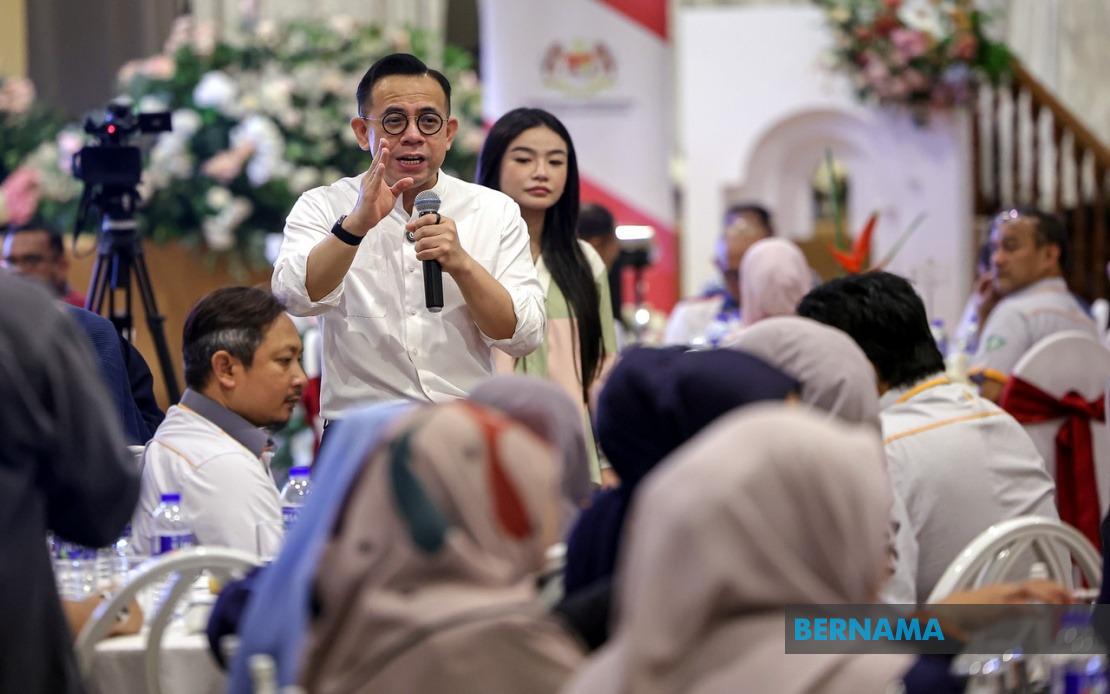
Minister Steven Sim revealed the achievement during an address at the Negeri Sembilan KUSKOP staff and agencies assembly, emphasizing that the ministry remains focused on delivering its ambitious RM15 billion disbursement target for the full year. The distribution demonstrates that halfway through 2026, KUSKOP is well-positioned to meet its objectives, provided momentum continues across all state and federal support mechanisms. The scale of outreach reflects the genuine demand among entrepreneurs seeking capital and technical assistance to stabilize their operations amid persistent economic volatility.
Statewide performance metrics illustrate effective programme penetration into regional economies. Negeri Sembilan alone received RM345 million channelled to approximately 6,600 local entrepreneurs through Power Up mechanisms, highlighting how national initiatives translate into tangible community benefits. This localized success suggests that KUSKOP's administrative infrastructure and partner agencies are functioning cohesively, moving capital from federal coffers to business owners without excessive bureaucratic friction. The visible concentration of resources in smaller states demonstrates that the ministry's distribution networks are reaching beyond major urban centres, addressing a critical concern for rural and semi-urban entrepreneurship.
Sim articulated a strategic reorientation within KUSKOP's operational philosophy, emphasizing that state and federal agencies must function as proactive facilitators rather than passive repositories of assistance programmes. The minister stressed that effective public service delivery in the entrepreneurship domain demands that government entities assume responsibility for identifying and reaching eligible businesses, rather than expecting entrepreneurs to navigate complex application ecosystems independently. This fundamental shift in mindset carries implications for how Malaysia's support infrastructure adapts to serve the MSME sector more responsively and inclusively.
Central to this reframing is a deliberate effort to reduce the compliance burden that entrepreneurs face when accessing government support. Sim acknowledged that while global factors such as oil price fluctuations remain beyond national policy control, government-imposed regulatory and administrative costs represent an addressable constraint on business viability. By streamlining compliance requirements and simplifying application procedures, KUSKOP aims to liberate entrepreneurial energy currently expended on bureaucratic navigation, directing it instead toward productive business expansion and innovation. This approach recognizes that hidden administrative costs often constitute a steeper barrier to MSME growth than financing constraints themselves.
The ministry's emphasis on expanding business resources encompasses both financial and non-financial support. Beyond direct lending and grants, KUSKOP's network of agencies provides technical assistance, market access, and capacity-building programmes designed to enhance operational efficiency across the MSME sector. By bundling diverse forms of assistance within integrated schemes, the Power Up initiative addresses the multifaceted needs of entrepreneurs operating in competitive markets where access to capital alone cannot guarantee sustainable growth or resilience. This comprehensive approach reflects international best practices in entrepreneurship development, where holistic support outperforms isolated financial intervention.
Sim's call for intensified competitive engagement among state-level agencies introduces an interesting dynamic within Malaysia's development apparatus. Rather than encouraging complacency or territorial protection of government resources, the minister explicitly advocated for proactive outreach competition, whereby agencies vie to accelerate fund disbursements and maximize programme uptake through aggressive promotion. This competitive framework, if implemented authentically, could generate beneficial spillover effects where agencies learn from one another's successful promotional strategies and administrative innovations. However, translating such competition into sustainable organizational behaviour requires careful management to avoid counterproductive inter-agency tensions or quality compromises in fund allocation decisions.
The strategic emphasis on social media and grassroots roadshow promotion reflects recognition that traditional information asymmetries continue limiting MSME access to available assistance. Many eligible entrepreneurs remain unaware of specific schemes, qualification criteria, and application procedures, creating gaps between government supply of entrepreneurial support and effective demand. Digital and physical outreach amplifies programme visibility, particularly among younger entrepreneurs and those operating in regional areas with limited exposure to formal government communication channels. This multi-channel approach acknowledges diverse information-consumption patterns across Malaysia's entrepreneurial population, ensuring no segment remains unnecessarily excluded from awareness of available resources.
The resilience imperative underpinning KUSKOP's strategy reflects Malaysia's positioning within an increasingly volatile global economic landscape. Trade tensions, supply chain disruptions, and currency volatility impose headwinds on MSME profitability and expansion prospects. By fortifying the entrepreneurial base with sustained financial and operational support, Malaysia aims to maintain job creation capacity and income generation in lower-income segments despite external economic shocks. A resilient and competitive MSME sector functions as economic ballast during downturns, absorbing employment that would otherwise concentrate in vulnerable corporate sectors or remain entirely displaced.
The RM7 billion disbursement through the first half of 2026 establishes a baseline for assessing whether KUSKOP will achieve its full-year RM15 billion target or exceed it. Momentum matters significantly in organizational performance, and the ministry's strong mid-year showing suggests that coordination mechanisms and funding pipelines are functioning effectively. However, seasonal variations in entrepreneurial funding demand, potential administrative delays in subsequent quarters, and evolving economic conditions could influence second-half performance. Tracking actual versus projected disbursements will provide important indicators of KUSKOP's operational efficiency and capacity to scale support effectively across diverse regional contexts and enterprise categories.
For Malaysian entrepreneurs and Southeast Asian observers monitoring the region's development trajectory, KUSKOP's performance carries broader significance. Malaysia's commitment to sustained MSME financing and operational support positions the country as a serious participant in inclusive economic development, contrast with regional peers that provide more sporadic or underfunded entrepreneurship initiatives. The demonstrated capacity to channel substantial resources to over 213,000 businesses reflects institutional maturity and administrative capability that newer development agencies struggle to replicate. This track record enhances Malaysia's credibility as an economic partner and competitive destination for investors seeking predictable, supportive policy environments for business establishment and expansion.

