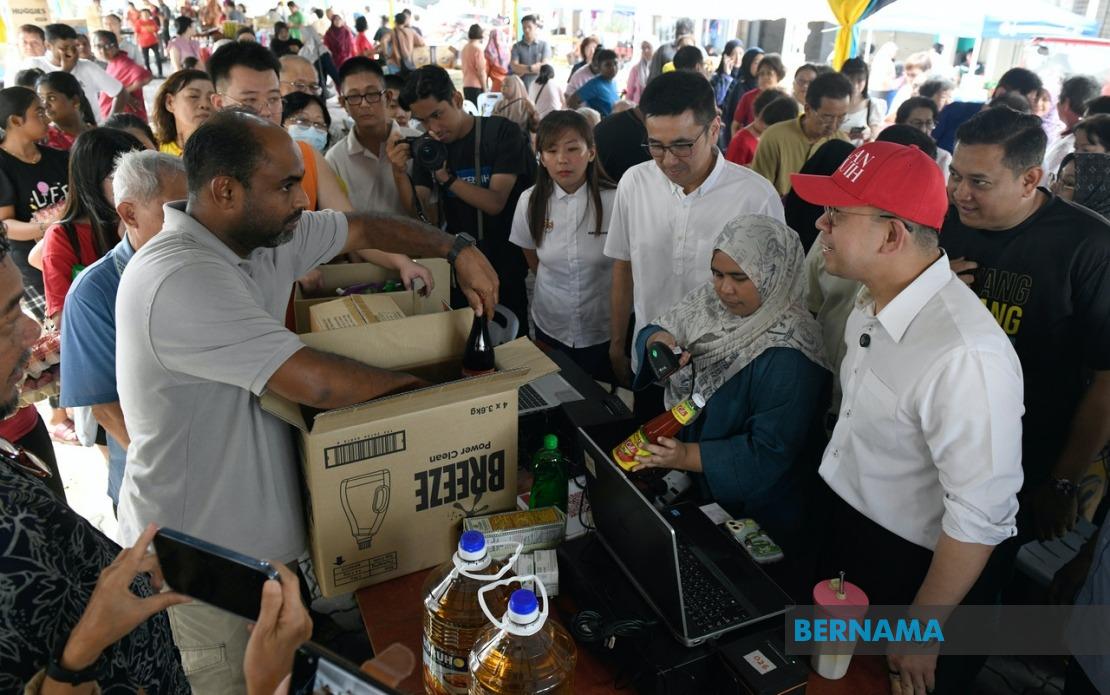
The Ministry of Entrepreneur and Cooperatives Development (KUSKOP) is doubling down on its commitment to empower grassroots business communities, positioning small traders and cooperative ventures as crucial players in capturing the momentum of Malaysia's thriving retail and wholesale sectors. Speaking at the Jualan MADANI KUSKOP (JMK) programme launch in the Jawi state constituency, Minister Steven Sim Chee Keong underscored the government's determination to expand initiatives that directly strengthen the foundations of the nation's entrepreneurial ecosystem through targeted interventions and capacity-building efforts.
Fresh data from the Department of Statistics Malaysia reveals the sector's impressive trajectory, with wholesale and retail trade recording a sales value approaching RM175 billion in April 2026. This represents a robust year-on-year increase of 15.3 per cent, signalling sustained consumer appetite and market dynamism across Malaysia's retail landscape. The strength of these figures reflects a confluence of government interventions aimed at cost reduction, price stabilisation and wage improvements that have bolstered household purchasing power and domestic consumption patterns throughout the economy.
Sim attributed this sustained expansion to collaborative efforts spanning government agencies, private sector operators and community stakeholders working in concert to create conditions favourable for trading activity. The minister characterised the current environment as one where strong domestic demand is the primary locomotive driving sectoral growth, creating fertile ground for entrepreneurs at all scales to expand operations and capture market share. This observation carries particular significance for Malaysia's business landscape, where domestic consumption patterns remain relatively resilient compared to export-dependent sectors facing headwinds from global trade dynamics.
For Malaysian micro, small and medium enterprises seeking expansion pathways, the current environment presents genuine opportunities to broaden customer networks and deepen participation within local supply chains. Rather than viewing small businesses as passive beneficiaries of broader economic trends, KUSKOP's strategic framing positions them as active agents capable of driving inclusive growth when provided with appropriate support mechanisms and market access channels. The ministry's grassroots engagement approach reflects recognition that sustainable economic development cannot emanate from top-down structures alone but requires mobilisation of entrepreneurial energy at community level.
The minister acknowledged the external pressures confronting Malaysia's open economy, referencing tariff wars, trade friction and geopolitical instabilities that continue roiling global commerce. Despite these international headwinds, Malaysia has maintained relatively encouraging economic performance, a testament to the diversification of its trading relationships and the resilience of domestic demand. For small and medium enterprises operating primarily within local markets, this insulation from certain global shocks provides a strategic advantage, though exposure to imported input costs and competitive pressures from international operators remains a persistent challenge requiring policy attention.
Sim, who represents Bukit Mertajam in Parliament, framed KUSKOP's expanded programmes as instrumental in ensuring that the benefits of sectoral growth distribute widely across Malaysian society rather than concentrating among established players. This emphasis on inclusive participation reflects broader policy priorities aimed at strengthening the middle class and supporting aspirant entrepreneurs seeking to transition from informal to formalised business operations. The cooperative model, in particular, offers pathways for small operators to pool resources, negotiate better terms with suppliers and retailers, and achieve economies of scale otherwise unavailable to individual traders.
The JMK programme represents one manifestation of KUSKOP's multi-pronged approach to supporting grassroots economic participation. By implementing various initiatives targeting MSMEs and cooperative networks, the ministry seeks to create ecosystems where small businesses can access training, financing, market information and networking opportunities essential for competitive sustainability. For traders operating in the wholesale and retail spaces, such structured support can meaningfully enhance operational efficiency and market positioning without requiring fundamental business model transformation.
Government commitment to ensuring equitable distribution of growth benefits carries particular resonance for Malaysia's entrepreneurial communities, where many small operators historically faced constraints accessing capital, technology and market channels that larger enterprises take for granted. By positioning local entrepreneurs as essential drivers of national economic performance, policymakers acknowledge that broad-based prosperity cannot rely exclusively on multinational corporations and large domestic conglomerates but requires vibrant small business sectors creating employment and wealth at community level.
The timing of these initiatives coincides with evolving consumer preferences and retail modernisation trends reshaping Malaysian commerce. Small traders increasingly face competition from e-commerce platforms and organised retail chains, necessitating adaptation and innovation in service delivery and customer engagement. KUSKOP's support programmes must therefore encompass digital capability development alongside traditional business fundamentals to ensure small operators remain competitive within contemporary market contexts. This digital dimension becomes particularly crucial as younger consumers increasingly conduct shopping through online channels and expect omnichannel retail experiences.
Cooperative structures offer particular promise for addressing collective challenges confronting small traders, from bulk purchasing and collective marketing to shared logistics and distribution infrastructure. Malaysia's cooperative movement, historically rooted in agricultural communities, increasingly encompasses retail and trading cooperatives enabling members to consolidate purchasing power and competitive positioning. Strengthening these institutions through targeted government support can amplify the impact of individual entrepreneurial efforts while building community resilience and social cohesion alongside economic objectives.
The broader economic context reveals sustained sectoral expansion even amid global uncertainty, suggesting sufficient market demand to accommodate additional small operator participation provided adequate support mechanisms exist. KUSKOP's expanded initiatives therefore arrive at a propitious moment when market conditions favour business growth yet competition remains manageable for efficiently operated ventures. However, translating macro-level sectoral expansion into widespread micro-level business success requires tailored interventions addressing specific constraints confronting different trader categories and operational contexts.
Looking forward, KUSKOP's continued emphasis on grassroots engagement and small business empowerment reflects recognition that Malaysia's long-term economic resilience depends partly on distributing entrepreneurial opportunity beyond elite business circles. By methodically strengthening cooperative networks and supporting MSME capacity development, the government invests in institutional foundations for sustained inclusive growth. This approach extends beyond immediate sectoral performance metrics to encompass broader social and political objectives centred on broad-based prosperity and economic opportunity.

